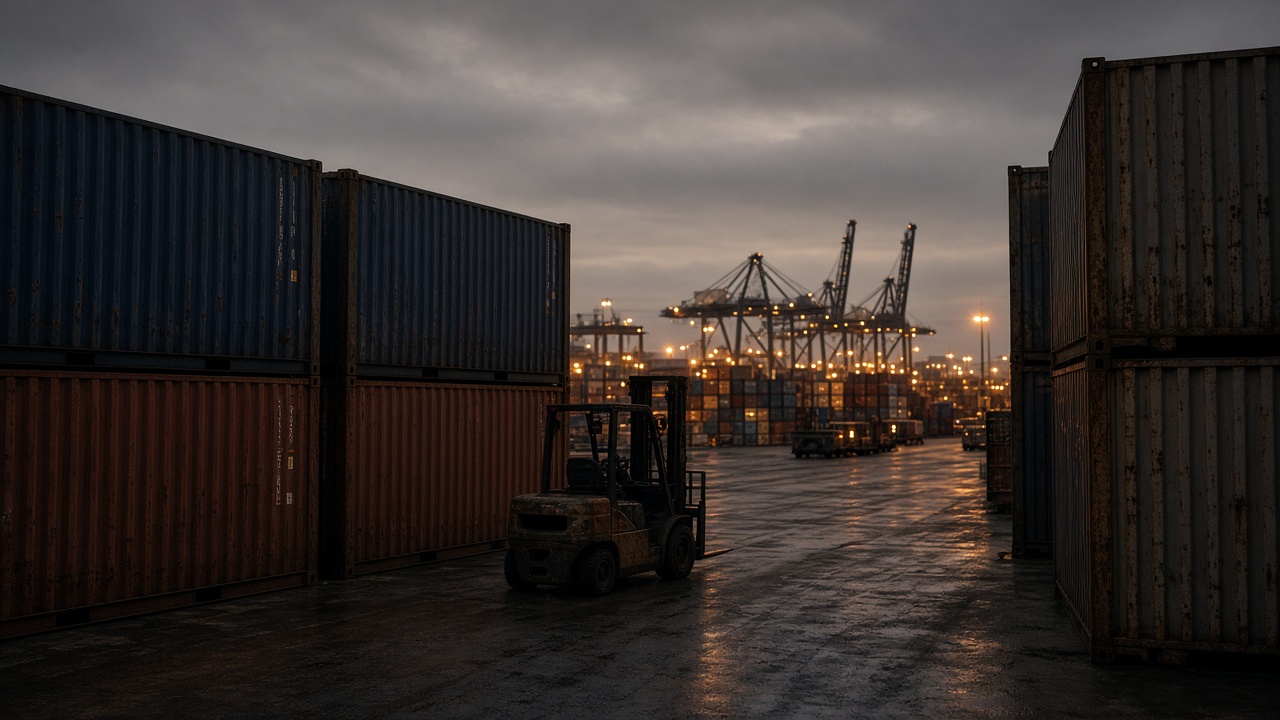
ProW Taiwan Ltd., a Kaohsiung startup building OCR agents for container-yard paperwork, closed a NT$45 million seed round led by Taiwania Capital and AppWorks, with Evergreen Marine’s venture unit joining as a strategic observer, the company said Monday.
What the product does
ProW’s software reads bills of lading, gate tickets, and handwritten tally sheets from photos snapped on rugged phones, then pushes structured fields into terminal operating systems. Founders met at National Sun Yat-sen University’s port logistics lab and piloted at a small freight forwarder yard near Kaohsiung’s Seventh Container Terminal (KC7), where CERTUS Automation has deployed large-scale OCR on cranes and gates.
Chief executive Lin Wei-hung said the round funds Mandarin-English model tuning for smudged scans and an on-premise option for yards that refuse cloud uploads of customs data.
The money and ownership
Seed investors received roughly 18% combined, with founders retaining 62% before an employee pool refresh, according to a term sheet summary shown to InfoHandle. Taiwania’s check continues its pattern of backing document-AI teams such as Sightify in Taipei; AppWorks adds go-to-market coaches for Southeast Asian forwarders.
Evergreen’s venture arm did not take equity but secured a six-month exclusive pilot at a subsidiary yard, a structure common when strategics want optionality without valuing a pre-revenue vendor.
Problem sizing
Kaohsiung handles a large share of Taiwan’s container throughput; KC7 alone runs automated gates with OCR portals on a dozen inbound and outbound lanes. Yet smaller yards and trucking depots still rekey PDFs emailed from ships’ agents—a bottleneck when typhoon delays compress clearance windows.
ProW claims its agents cut manual entry time by half in the pilot, with human reviewers focusing on low-confidence fields highlighted in red, similar to logistics OCR dashboards marketed by Sightify for invoices and shipping orders.
Competitive landscape
Global players such as PortSwift sell API-first parsers for bills of lading; ProW bets on yard-level mobile capture and Taiwanese customs field names. Incumbent terminal vendors may bundle OCR upgrades, so ProW must integrate with PASS middleware ecosystems or remain a niche overlay.
Go-to-market
Revenue is per-container fees plus setup for on-prem GPUs. The company hires five engineers in Kaohsiung’s Asia New Bay Area office and two customer success staff who speak Mandarin, Vietnamese, and Tagalog to match crew demographics.
Risks investors cited
Data residency rules and liability for mis-typed hazardous-material codes remain hurdles. ProW carries errors-and-omissions insurance through a local broker and logs human overrides for audit.
What success would fund
If the Evergreen pilot hits accuracy targets, a Series A could finance expansion to Taichung and Keelung yards. Until then, ProW is a seed-stage bet that southern Taiwan’s port paperwork—still paper-heavy outside KC7’s automated gates—can afford software margins when labor overtime spikes before holiday peaks.
Founder background and cap table hygiene
Lin previously led a customs-brokerage digitization team at a Kaohsiung forwarder, leaving in 2024 after seeing how often gate clerks retyped container numbers from faxed manifests. Co-founder and CTO Huang Po-ting built document parsers at a Taipei systems integrator; the pair met through AppWorks’ accelerator office hours.
Legal counsel structured the seed as a Taiwan SAFE-style note converting at Series A with a 20% discount, standard for local pre-A rounds. Previous angel notes from university professors converted in the round, leaving no unresolved side letters, according to the summary.
Regulatory conversations
ProW briefed the Kaohsiung Maritime Bureau on audit trails but does not need a separate license because it sells software to licensed operators. Customs officials said they welcome digitization if originals remain available for spot checks—a requirement ProW meets by storing image hashes alongside extracted fields.
AppWorks mentors urged ProW to publish benchmark accuracy on public container-form datasets before marketing abroad, a transparency step that could shorten procurement reviews with Taiwanese forwarders still skeptical of black-box OCR.
Lin told staff the seed runway covers 18 months of burn at current salaries, long enough to finish the Evergreen pilot and sign two paying yards even if Series A markets soften after year-end.