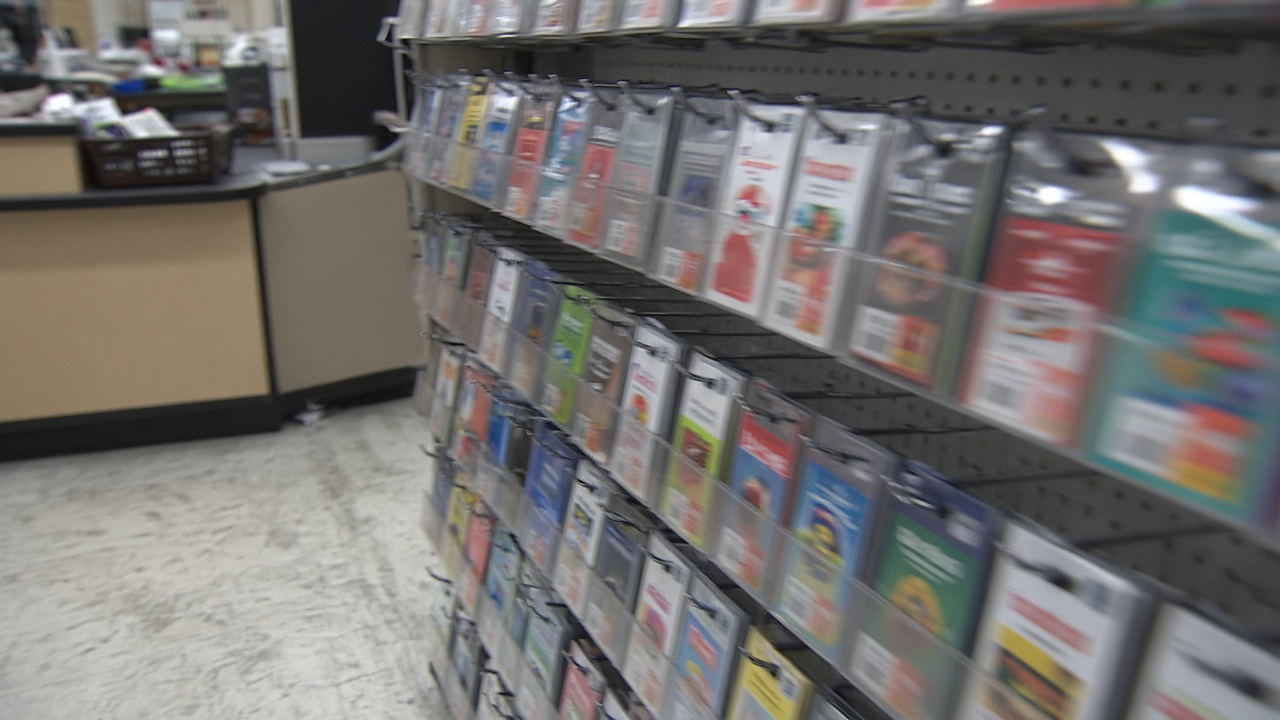
The card is still in the drawer. Plastic, maybe metallic, printed with a store logo you half-remember from a holiday party. Someone spent forty dollars so you would not have to choose a sweater size. You meant to use it. You moved apartments. You forgot which email held the balance. Meanwhile, the retailer already has a name for what happens next: breakage.
That single accounting word is the answer to a paradox that feels personal and turns out to be structural. Why do companies keep selling gifts that so often go unused — and why does “unused” show up as revenue on a 10-K?
What “breakage” actually means
When you buy a gift card, the seller does not book a sale of coffee, shoes, or streaming credits. It books a liability: money received for a promise not yet kept. Starbucks calls these stored value cards. Amazon parks unredeemed gift cards inside accrued expenses. The cash is already in the bank. The product has not left the warehouse — or the espresso machine.
Over time, historical redemption patterns tell finance teams that some fraction of those promises will never be called. Accounting standards let companies recognize that expected unredeemed portion as revenue in proportion to how the rest of the pool is redeemed. That recognition is breakage. It is not a late fee scraped off your balance in the U.S. for most major retail cards. It is a statistical claim that some cards will die quietly in drawers.
The float is the first gift
Even before breakage, unused balances are an interest-free loan. Starbucks reported about $1.72 billion in stored-value-card and loyalty-program deferred revenue at the end of fiscal 2024, with roughly $1.6 billion classified as current. Amazon disclosed $5.4 billion in unredeemed gift-card liabilities as of December 31, 2024, up from $5.3 billion a year earlier.
Those piles are not theoretical. They fund working capital while marketing teams keep cards by the register — the most efficient ask for money that does not require inventing a new product. A reloadable Starbucks Card tied to Rewards is both a payment rail and a loyalty hook. An Amazon gift card is a prepaid shopping cart. The more cards that sit half-spent, the longer the float lasts.
Amounts loaded onto stored value cards are initially recorded as deferred revenue and recognized as revenue upon redemption. … Based on historical redemption rates, a portion of stored value cards is not expected to be redeemed and will be recognized as breakage over time in proportion to stored value card redemptions.
Why the drawer wins so often
Behavioral research and retailer disclosure language rhyme. Cards are bought under time pressure — birthdays, Secret Santa, last-minute flights. The recipient gets optionality, not a decision. Optionality decays. Small leftover balances feel not worth a special trip. Digital codes bury themselves in inboxes. Physical cards migrate into junk drawers next to dead batteries.
Issuers design against expiration in many U.S. markets precisely because consumer-protection law and brand trust punish countdown clocks. Starbucks notes that in many company-operated markets, including the United States, cards do not expire and do not accrue service fees that nibble balances. The absence of a fee does not mean the absence of breakage. It means the company waits for statistical silence instead of charging for it.
States still want a cut — sometimes
Breakage is not a free-for-all against unclaimed-property law. Roughly three dozen states exempt many gift cards from escheatment, often when the card has no expiration date and no inactivity fee — California, Illinois, Florida, Texas, and others among them. A smaller set of jurisdictions, including Delaware, New York, New Jersey, and Georgia, still treat some unused balances as reportable after dormancy periods that commonly run three to five years.
Delaware matters because so many corporations are domiciled there. Its statute can require gift-card escheatment after five years and measures the unclaimed amount with reference to the issuer’s cost of providing the goods, not always the full face value. New Jersey and Nevada frameworks have used partial remittance concepts. The map is a patchwork, which is why compliance shops and law-firm advisories treat gift-card programs as an ongoing tax-and-treasury problem, not a one-time policy memo.

Fraud, packaging, and the other fight
In 2025, statehouses spent more energy on gift-card fraud packaging and employee-training rules than on rewriting escheatment math, according to unclaimed-property advisories from firms tracking the bills. Thieves drain cards at grocery kiosks; legislatures answer with display and training mandates. That fight is adjacent to breakage but reveals the same truth: the plastic rectangle is valuable enough to steal, regulate, and account for as a balance-sheet line item.
Cash-back rules for tiny leftover balances are also shifting in some states — California has debated raising the threshold at which a consumer can demand cash for a residual balance. Those consumer-protection tweaks do not erase breakage for the bulk of never-redeemed cards. They police the last three dollars, not the forgotten fifty.
What the numbers refuse to romanticize
Starbucks’s $207.6 million in fiscal 2024 breakage is small next to total company revenue and large next to any single café’s annual rent. Amazon’s $5.4 billion liability is not annual free money; it is the stock of promises still outstanding, with breakage recognized according to usage patterns the company does not always break out as a single headline number. Secondary blogs that invent neat “hundreds of millions a year” for every big retailer often blur liability stock with breakage flow. The filings are clearer when you keep those two ideas apart.
Still, the incentive stack is hard to miss. Cards pull cash forward. Loyalty programs wrap cards in points. Register-adjacent merchandising turns gifting into a habit. Statistical non-redemption turns some of that habit into recognized revenue. None of that requires a villainous plot to make you lose your birthday money. It requires a product that is easy to buy under social pressure and easy to postpone using.
Who owns the silence when the owner has no address?
Unclaimed-property doctrine generally looks first to the owner’s last known address. Gift-card programs often collect none. When the holder’s books show no address, many statutes send the question to the issuer’s state of domicile — which is why Delaware’s five-year clock and cost-based remittance rules punch above their geographic weight for corporate America.
That default rule is not a trivia footnote. It shapes how aggressively companies chase owner data at activation, how they design “no fee, no expiry” products that qualify for exemptions in friendlier states, and how they budget for audits that reconstruct years of activations sold through grocery partners who never captured a ZIP code.
Compliance advisers therefore treat gift-card ledgers as living systems: product classification, dormancy trigger, reportable amount, due-diligence letters, and filing calendars. A card that is exempt in Texas can still create a Delaware question if the corporate domicile and recordkeeping line up that way. The consumer experiences a forgotten balance. The treasury team experiences a multi-state matrix.
Breakage is not the same as “stealing your birthday”
It is tempting to moralize. The cleaner read is institutional. Retailers sell optionality because shoppers demand it under social deadlines. Accounting rules require liabilities until redemption patterns justify releasing them. Statehouses decide whether silence belongs to commerce or to the public purse. Marketing departments notice that cards near the register outsell many seasonal SKUs without needing a new supply chain.
None of that requires a secret plan to maximize lost cards. It does require noticing that a product can be profitable when used and still profitable, in a quieter way, when unused. The 10-K language is careful: breakage is recognized over time in proportion to redemptions, informed by historical patterns and by remittances under unclaimed-property law where they apply. The model is probabilistic. Your particular drawer is a single data point.
For journalists and investors, the discipline is to separate three piles: cash collected today, liabilities still outstanding, and breakage recognized this period. Conflating Amazon’s multi-billion-dollar liability stock with Starbucks’s nine-figure annual breakage flow is how secondary commentary turns a filing into a myth. The myths sell. The footnotes pay.
How to read the next holiday display
When a wall of cards appears in October, you are looking at deferred revenue recruitment. When a company reports breakage in a 10-K footnote, you are looking at the portion of last year’s promises the models no longer expect to keep. When a state updates an unclaimed-property bulletin, you are looking at the political argument over who should hold the silence — the issuer or the treasury.
Holiday seasons amplify the pattern. Cards move in December; breakage recognition trails across subsequent quarters as redemption curves play out. A finance team that understands the lag can forecast without pretending every activation is a latte already poured. A reader who understands the lag can stop mistaking a liability footnote for a morality play — and still decide to spend the balance before the model does.
The practical move for households is boring and effective: photograph the code, store the balance in a password manager, spend the last five dollars on purpose. The practical move for readers of filings is sharper: treat gift-card programs as a financing and accounting story, not as seasonal décor. The drawer is full because the business model works whether or not you ever order the drink. For InfoHandle readers, the takeaway is evidentiary: cite the breakage line when stored-value growth matters, the liability line when forgotten cash is the subplot, and the state map when a legislature claims consumer protection while leaving escheatment untouched. The drawer is personal. The footnotes are public.