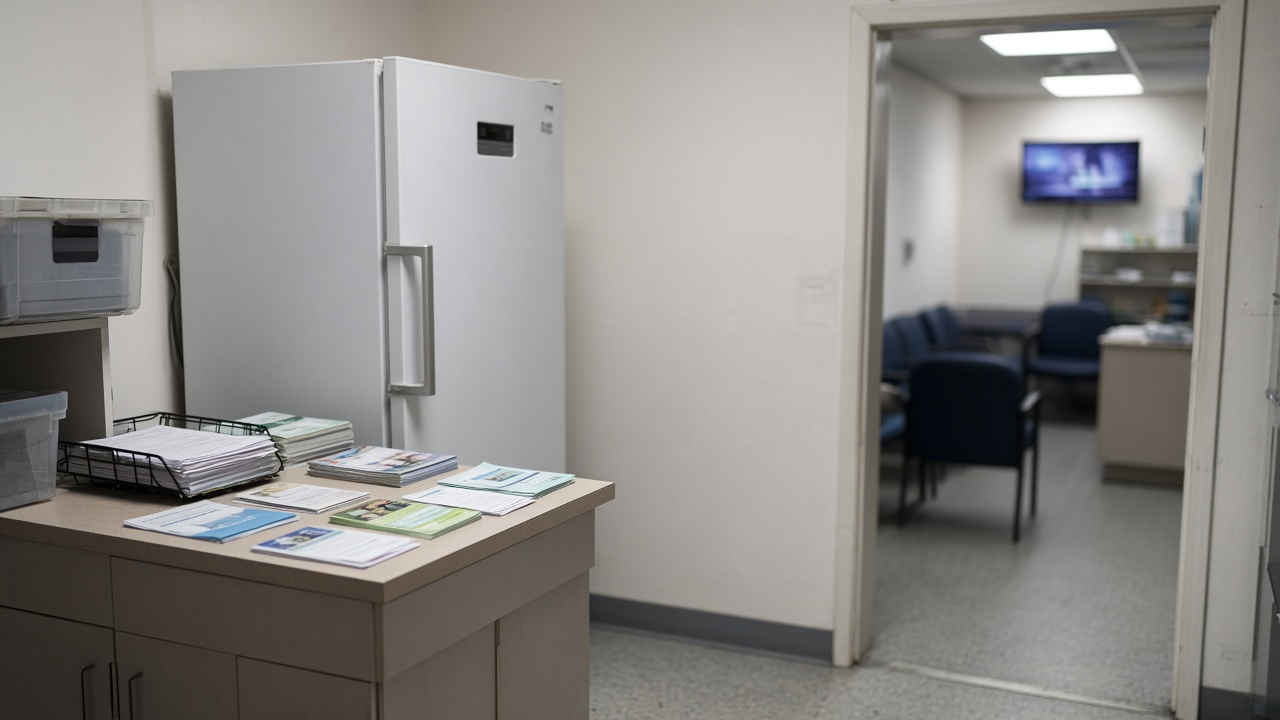
We should publish regional pharmacy flu-vaccine stock maps before the next NHS television campaign airs, because broadcast demand spikes without inventory transparency strand elderly patients who cannot drive to a second postcode when the jab their GP redirected them to is already gone.
Why maps belong ahead of TV
NHS England is right to push pharmacy access as respiratory admissions tick up; pharmacists delivered millions of doses last season and shorten queues for GP surgeries preparing for winter pressures. But TV and social spots that tell viewers to “walk into your local pharmacy” assume stock exists on the shelf that day. Community pharmacies order on weekly cycles; a national spot on a Sunday evening can empty participating branches by Monday lunch while neighbouring postcodes still have fridges full. That is not equity—it is postcode roulette with clinical consequences.
A live map—updated daily from wholesaler dispatch and pharmacy reporting, anonymised at site level but accurate at integrated care system scale—would let campaigns say “check availability near you” instead of issuing a blanket call that floods the same high-street brands.
The objection—and why it fails
Officials will cite commercial sensitivity and fears that criminals could target vaccine shipments. Flu vaccine is not a controlled drug; stock positions are already known to wholesalers and NHS regional teams. Publishing ICS-level green-amber-red bands does not reveal truck routes—it reveals what planners already see while patients do not.
Pharmacy chains may resist showing empty sites. That is precisely the signal patients need before they bus across town. Transparency hurts less than a televised promise that sends clinically vulnerable people into closed doors.
What NHS England and DHSC should do
Delay the next broadcast burst until a minimal map API ships on nhs.uk: participating pharmacies, same-day appointment slots where booked, and dose status as reported by 6 a.m. UKHSA time. Pair the map with UKHSA surveillance colours so campaigns target regions where admissions rise and stock is adequate—not nationwide blasts that ignore both.
Fund locum cover for pharmacies that spike after TV, and publish expected replenishment dates when fridges run dry. The National Pharmacy Association has asked for clearer delivery schedules; maps make those schedules public accountability rather than whispered branch manager lore.
What we are not saying
We are not arguing against flu vaccination or pharmacy expansion. We are not asking patients to ignore clinical advice. We are saying marketing without inventory data wastes trust—and trust is the scarce resource when anti-vaccine noise rises every autumn.
Publish the maps before the cameras roll, or stop pretending a TV push is a plan when fridges tell a different story.
How this pairs with this edition’s reporting
Our health desk is tracking respiratory admissions and pharmacy rollout separately; patients experience them as one system. A stock map unifies the story ministers want told: pharmacies can absorb demand if planners show where doses actually are. Without it, the next campaign will again measure success in impressions while ward clerks measure failure in redirected patients—and that gap is editorially unacceptable for a service asking households to act on broadcast instructions.