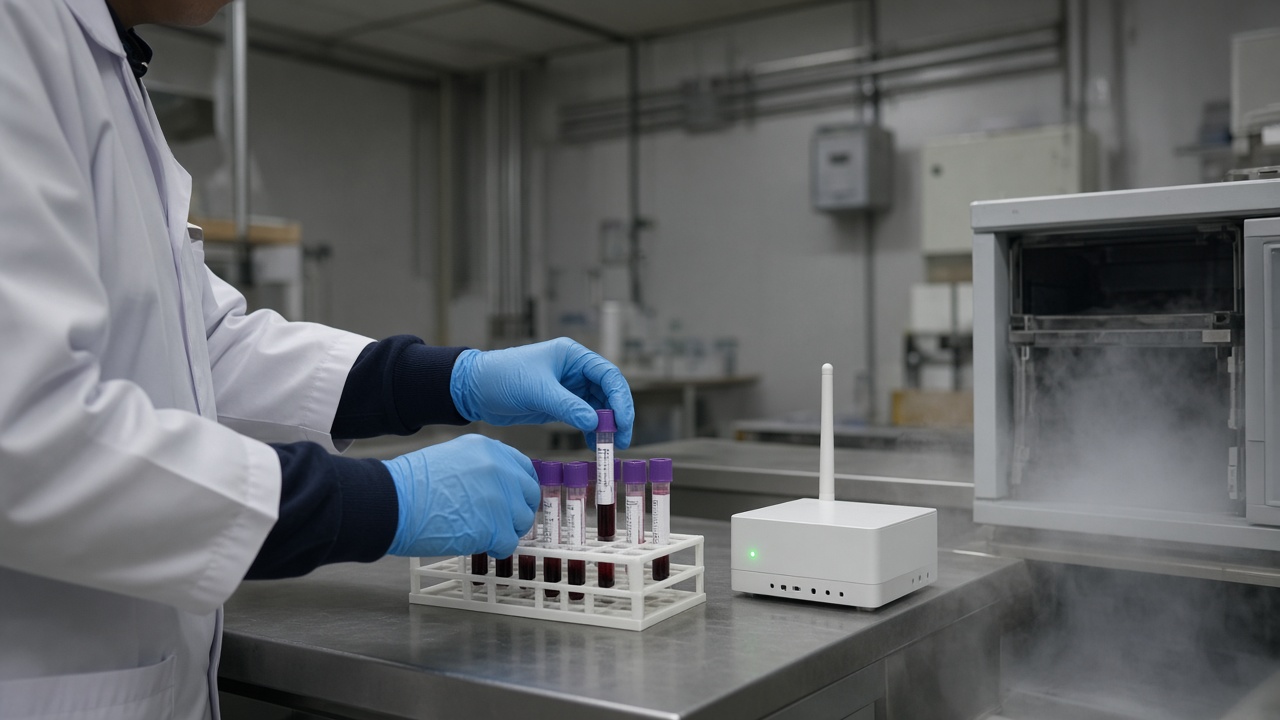
TrackLab Systems Co., a Hsinchu lab-automation startup, shipped its first production lot of LoRa sample trackers to two Japan clinical research organizations so cold-chain blood tubes carry tamper-evident location logs aligned with PMDA audit templates, according to export manifests the company filed with Hsinchu customs and onboarding decks investors shared Monday. The deal is purchase-order revenue, not a disclosed venture round—founders said the Japan CROs paid upfront for hardware and a twelve-month compliance PDF service after ITRI-validated drift tests.
What the shipment actually bought
Each tracker strap mounts on reusable tube racks, logging handoffs between phlebotomy vans, central labs, and −80°C freezers without GPS in patient corridors where privacy rules forbid it. Gateways at CRO sites sync hashed chain-of-custody rows exporters can drop into PMDA-style audit appendices—paper that used to take coordinators weekends to retype from clipboard scans.
TrackLab charges per rack per month after hardware acceptance, with a buyout option at eighteen months—a structure founders pitched as capex-light for mid-size CROs, not SaaS infinity.
Who got diluted and who gained power
No new equity closed with the shipment; prior seed investors hold fifty-five percent fully diluted after a 2025 angel note conversion. Japan buyers received acceptance milestones tied to three successful audit dry runs, not board seats. Founders keep CEO and CTO roles; a CRO procurement officer holds technical veto on firmware changes affecting log formats—a concession common in regulated exports.
The business in one sentence
TrackLab sells tamper-evident sample location discipline to Japan CROs that lose slots when blood tube chain-of-custody paperwork fails spot checks.
Why Hsinchu, why Japan now
Hsinchu biotech suppliers already feed reagents to Japanese trials; TrackLab piggybacks integrator relationships ITRI introduced at a Sakai trade desk last spring. PMDA emphasis on data integrity after 2024 warning letters pushed CROs to digitize handoffs; LoRa was chosen over cellular SIMs to avoid per-tube M2M fees on low-margin Phase II studies.
Round versus rescue
Last year's NT$18 million seed was first institutional money, not a down round. This Japan PO converts pilots to revenue without announcing Series A; founders told angels follow-on checks hinge on two more CRO renewals, not press coverage—a governance line cap-table watchers prefer.
What if the next round does not exist
At current rack pricing, twelve months of runway assumes four CRO sites live and two Taiwan hospital pilots converting. Without Series A in eighteen months, TrackLab likely stays a Hsinchu-Japan corridor specialist—viable if CRO renewals hit, not a unicorn slide. Break-even at roughly one hundred twenty racks per founder projections shared with seed holders.
Competitive landscape
Global cold-chain giants sell passive loggers; TrackLab differentiates on LoRa mesh inside campus footprints and PMDA-aligned PDF templates bundled per lot. Larger LIMS vendors could embed similar features; the startup bets mid-tier CROs want neutral hardware escrow over single-vendor software lock-in.
Exporter takeaway
Trackers do not replace phlebotomist training; they reduce email arguments about whether a rack sat on a loading dock too long. Po-Chun Hsu's desk watches PO-to-renewal paths, not lab glamour photos: seed cap table intact, buyer milestones, and a corridor story that lives or dies on audit dry runs—not a billboard fundraise.
Bureau of Foreign Trade listed TrackLab in a September medtech export workshop slide deck; listing is guidance, not endorsement. Founders declined valuation chatter; customs filings show shipment value only, modest enough to signal operational focus.
Hardware and wet season
Trackers use replaceable coin cells rated for twelve months in −20°C to 40°C lab bands; CROs must log battery swaps in the same PDF appendices or audits fail completeness checks founders documented in onboarding. LoRa gateways ship with UPS backups for fifteen-minute outage windows—long enough for freezer door events, not campus-wide blackouts.
Typhoon season logistics routed the first lot through Taoyuan air cargo after Kaohsiung humidity delayed desiccant repacks; Japan customs cleared units under existing medtech importer licenses held by the CROs, not TrackLab directly—a liability split common in Taiwan export startups.
ITRI offered calibration scripts TrackLab mirrored; deviations require written justification in customer packets. Two Taiwan hospital pilots watch the Japan dry runs before signing; if PMDA dry runs pass, founders may announce Series A conversations without closing—a distinction cap-table bloggers often blur.
Employee pool refreshed to eight percent post-shipment milestone; no founder secondary in the PO. Angels hold pro-rata rights on the next priced round if renewals hit by March—a timeline Po-Chun Hsu's desk notes because it ties equity story to customer paper, not demo-day hype.