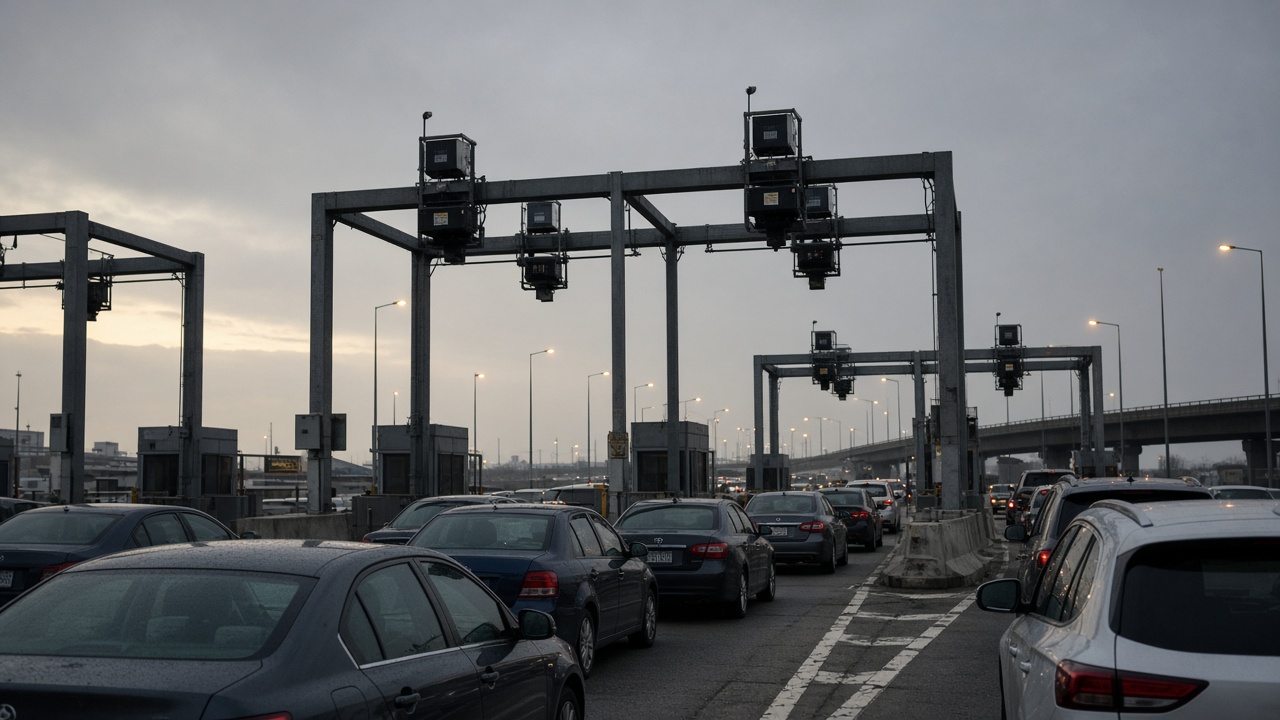
We should require Korea Expressway Corporation to update toll and congestion tables in real time before this Chuseok’s return surge—not publish static PDFs at midnight that drivers treat as gospel while Hi-Pass lanes and alternate routes diverge within hours. Holiday traffic is a forecasting problem; pretending yesterday’s chart is today’s road is a policy choice that wastes fuel, hours, and patience.
What drivers already face
MOLIT’s holiday plan again promises extra staff at bottleneck toll plazas and temporary lane reversals on key corridors. KOTSA’s pre-holiday brief cites millions of outbound trips and return peaks on the last holiday evening. Yet the corporation’s public tables—segment times, estimated delays, discount lane eligibility—still arrive as batch files updated on a fixed schedule. Navigation apps ingest them, but the source of truth lags live loop detectors and plaza queue cameras by hours on return day.
Our correspondents on the credit-card and travel desks reported Jeju and regional airport load factors spiking for midnight returns; the same families hitting highways afterward inherit stale guidance. When a driver chooses the Seohaean over the Gyeongbu based on a six-hour-old delay figure, the mistake is measured in missed ancestral rites and unsafe late-night speeding to catch up.
What real-time tables would change
Live publication does not require perfect prediction. It requires timestamped segment speeds, plaza queue lengths, and Hi-Pass failure rates refreshed at least every fifteen minutes with obvious “as of” clocks. Drivers could see that a “green” corridor flipped amber without trusting a social media rumor. Truckers—who pay disproportionate tolls—could reroute before idle engines stack particulates near school zones.
The corporation will argue its existing app and variable-message signs already broadcast alerts. Signs are spot fixes; apps bury data under membership prompts. A single open data table—machine-readable, mirrored to major map vendors—sets a baseline every other channel must beat.
The objection—and its limit
Officials warn that granular live data could trigger herding: everyone flees to the same alternate route and creates new jams. That risk exists, but herding already happens on stale PDFs when influencers screenshot outdated tables. Transparent timestamps let drivers judge freshness; opacity invites viral guesses.
Others cite cybersecurity—exposing live infrastructure data aids sabotage. Expressway sensors are already reachable to partners under contract; extending read-only feeds to the public is a scope change, not a new attack surface, if published through CDN caches without control interfaces.
What authorities should do
MOLIT should mandate open API publication before the return peak, with penalties for data older than thirty minutes during declared holiday windows. Police traffic units should link lane reversal decisions to the same feed so drivers see why a corridor closed. Hi-Pass operators must publish lane outage counts—not just “system maintenance” banners—because failed antenna lanes are where return-day rage turns into unsafe merges.
We are not asking for toll holidays or fuel subsidies—those are separate fiscal fights. We ask for the same transparency Seoul commuters expect on subway arrival boards, applied to intercity asphalt where Chuseok reconciliation still happens in person.
What we are not saying
This editorial does not blame front-line toll workers or police directing merge lanes in rain. It does not claim live tables eliminate congestion; they reduce blind routing. If the corporation cannot modernize before return night, it should at least stamp every PDF with automatic expiry times so navigation apps stop treating them as eternal.
Chuseok return traffic is predictable; stale tables are a choice. Drivers deserve numbers that move as fast as their vans full of songpyeon—not charts frozen while the holiday already ended on the road.