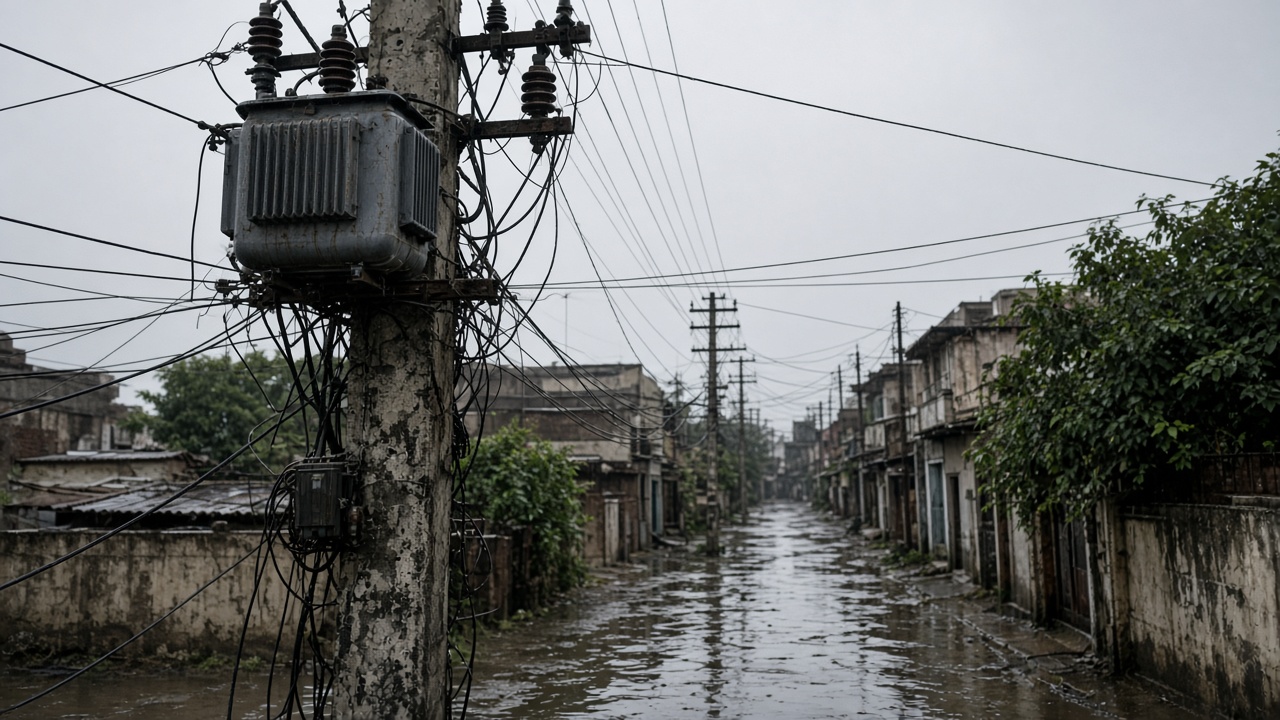
We should require state power distribution companies to publish live monsoon outage maps with feeder-level timestamps before assembly poll season—not bury failures in post-storm PDFs and helpline busy tones. Voters and small factories lose production hours when transformers trip in clusters; politicians notice only after WhatsApp complaints trend, by which time ice cream stock and vaccine cold chains are already ruined.
What households already endure
Southwest monsoon withdrawal is crossing Nagpur this week, but late-season lows still dump hours of rain on ageing urban feeders. Ministry of Power reform bulletins praise smart-meter rollouts; they rarely mandate the outage cartography consumers need when a feeder serving two wards fails for six hours. Discoms tweet “restored” without saying who was never on the fault list.
Our environment and business desks reported Assam gauge upgrades and Pune EV output in the same edition—different beats, same infrastructure truth: electricity maps are civic data. Poll season makes them political; they should be operational year-round.
What live maps would change
Timestamped feeder outages—refreshed every fifteen minutes, mirrored to open data APIs—let clinics reschedule vaccines, bakeries pause orders, and reporters verify discom claims. Maps need not expose SCADA secrets; aggregated feeder IDs without substation schematics suffice. Navigation apps already ingest traffic; there is no reason outage layers cannot meet the same standard.
Discoms will argue maps invite blame games. Blame games already happen without maps—only the discom controls the narrative. Transparency shifts accountability from viral screenshots to measurable downtime per constituency.
The objection—and its limit
Regulators worry publishing outages could reveal grid weaknesses to saboteurs. Feeder-level data is already knowable to anyone with a phone on a dark street; formal publication does not create the vulnerability—it documents it. Cybersecurity means protecting control systems, not hiding consumer pain.
Some states cite legacy IT contracts that cannot API-export outages. Those contracts were written before poll-season social media; renegotiate them or fund lightweight overlays from call-center ticket timestamps.
What authorities should do
Forum of Regulators should tie tariff determinations to outage transparency metrics—minutes off per 1,000 consumers, published weekly during monsoon. Ministry of Power should withhold reform grants from discoms that cannot produce machine-readable outage logs. Election Commission advisories already curb new project inaugurations near polls; outage opacity should face similar scrutiny when incumbents blame “unprecedented weather” without data.
We are not asking for tariff subsidies in this editorial—only for maps. Subsidies without visibility reproduce the same patronage networks that leave transformers unreplaced until a minister’s constituency calls.
What we are not saying
We do not blame lineworkers climbing poles in rain. We do not claim maps end monsoon failures; they end gaslighting. If discoms cannot modernize before the next state contest, stamp every press release with feeder IDs and restoration clocks so voters judge outages on records, not anecdotes.
Poll season is predictable; outage fog is a choice. Publish the maps before slogans start—so when the lights fail, the data already speaks.
How regulators could enforce it
State electricity regulatory commissions already collect interruption data for SAIFI and SAIDI metrics, but publication formats vary and urban feeders are under-reported. A ministry template—CSV feeds, API keys for civic hackers, plain-language consumer pages—would cost less than another smart-meter pilot that never ships outage layers. Discoms that miss uptime targets should face automatic compensation credits on consumer bills, not just fines that finance departments net against.
Until that happens, voters will keep filming sparks on Instagram while discoms call each video “isolated.” Maps would make isolation measurable—and that is why incumbents delay them until polls pass.