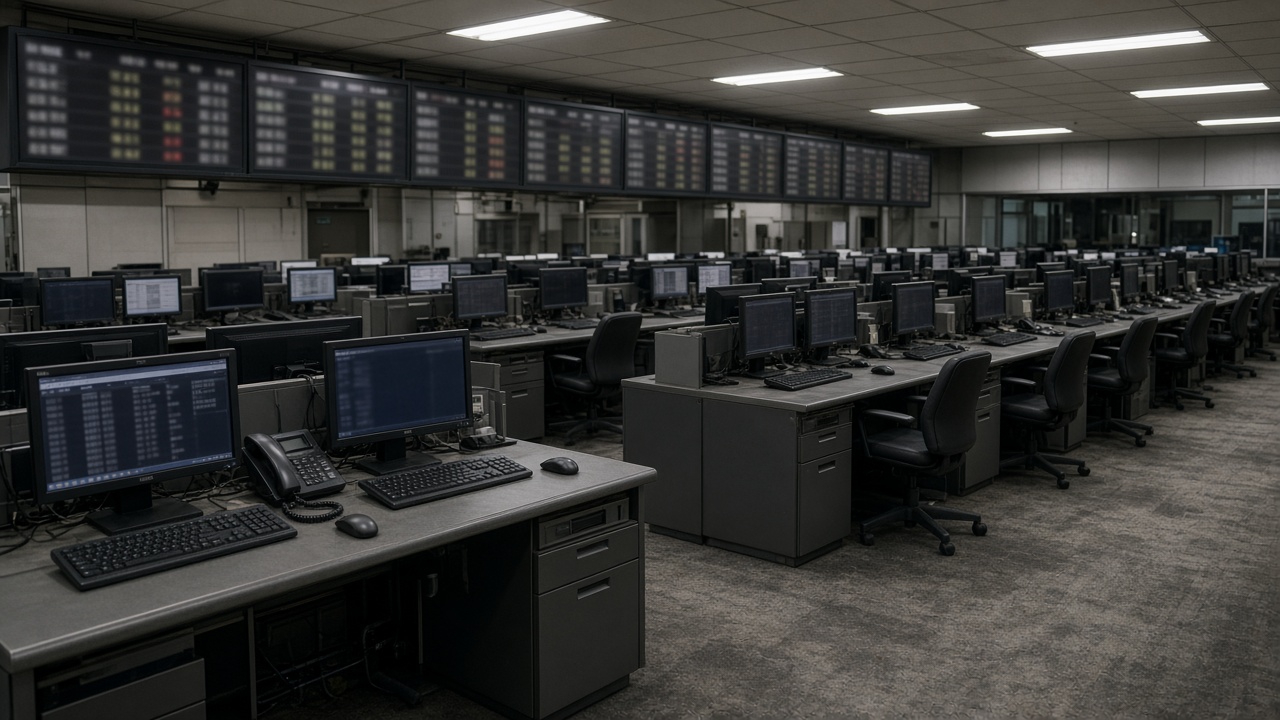
We should require the Tokyo Stock Exchange and the Financial Services Agency to publish a single, time-stamped circuit-breaker schedule before every post-holiday cash reopen—not let securities firms substitute apology banners for market structure—because Thursday’s exporter-led Nikkei bounce arrived alongside scattered volatility halts that hit mobile apps before official notices reached English pages, and retail investors should not learn halt rules from broker PR after the fact.
Broker apologies are not market infrastructure
Major online brokers issued “system congestion” notices Wednesday as Silver Week returnees logged in simultaneously with overseas hedge funds repositioning after the UN week. Those messages expressed regret for slow order screens; they did not explain whether a broad-based trading halt, a single-stock pause, or a liquidity safeguard had triggered. When confidence is fragile after typhoon outages and FX swings, vague regret reads like concealment even when engineers are honestly patching load balancers.
Our stocks desk documented exporters leading the first full Tokyo cash session while chip and trading-house names gapped on reopen liquidity. That is legitimate price discovery. What is not legitimate is asking households to infer halt mechanics from scattered posts on social media while JPX’s English special-trading page updates minutes later than the Japanese ticker.
What clarity would look like
JPX already operates price-limit bands and volatility interruption schemes codified in market regulations. The public-facing gap is packaging: a pre-open PDF listing broad-index trigger levels, expected halt durations, and whether auctions resume with call or continuous matching. FSA should mandate that document drop at 8:00 a.m. on the first cash day after any three-day holiday, with a persistent banner on jpx.co.jp until the close.
Securities firms should mirror the same PDF—not marketing copy about “supporting customers”—inside order tickets. If a halt fires, the ticket should show the exchange timestamp and the rule paragraph, the way aviation apps show FAA ground-stop codes instead of “sorry for the delay.”
Strongest objection
Market operators argue that publishing triggers invites gaming. Sophisticated players already model limits from rule books; retail is the audience left guessing. Another objection: halts are rare on reopen days. Rare is not never—post-holiday flows plus typhoon-linked commodity repricing are exactly when gaps cluster.
We are not asking JPX to disclose surveillance algorithms or member firm positions. We are asking for the same halt transparency major U.S. venues publish before Fed days—adapted to Japan’s auction culture.
What we are not saying
This editorial does not blame market makers for Thursday’s exporter rally. It does not demand new circuit-breaker tiers mid-session. It rejects the habit of treating post-holiday volatility as a customer-service problem solvable with empathy copy while structural notices lag.
Concrete steps
FSA market division should schedule a post-reopen hearing—not a voluntary working group—requiring JPX and top online brokers to align halt banners with exchange timestamps within one second-class SLA. Diet members on financial affairs committees should ask for reopen-day logs from this week’s session: how many halts, how long, which notice channels fired first.
Readers cannot control typhoon supply chains or UN diplomacy, but they can demand that the cash market they fund with pension flows speaks in rules before regrets. Japan’s first post-holiday session after a disaster season is the right moment to treat circuit breakers as public infrastructure—not as backstage broker etiquette.