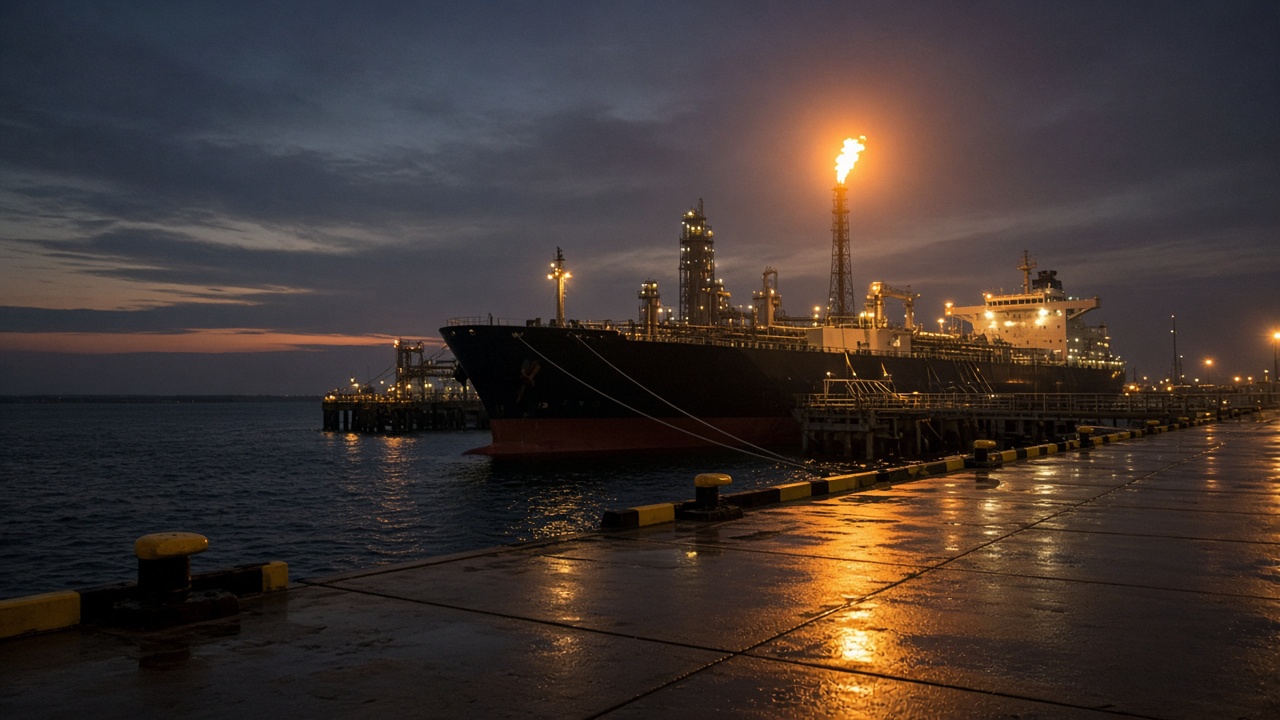
At 4:12 a.m. on a humid September morning, the flare stack at Sabine Pass glows orange against a flat Gulf sky while a Q-Max tanker sits on ballast, waiting for the next liquefaction train to finish chilling methane to minus 260 degrees Fahrenheit. Three hundred miles north, in the Marcellus shale, a landowner’s royalty check still reflects Appalachian geology—not Rotterdam futures—but the molecules leaving this Louisiana dock are the reason her neighbor’s winter gas bill now tracks a war scare in the Strait of Hormuz.
For a decade, politicians and drillers sold Americans a simple bargain: hydraulic fracturing would flood the country with cheap gas, decouple households from OPEC drama, and let utilities retire coal. The first half of that story happened. U.S. dry gas production set records in 2025 and 2026, and the Henry Hub benchmark spent much of summer below three dollars per million British thermal units. The second half arrived on tankers. Liquefaction plants along the Gulf and Chesapeake Bay turned the shale surplus into an export commodity, and every new billion cubic feet per day of outbound LNG tightened the link between a furnace in Ohio and a bidding war in Tokyo.
The promise that fracking would “insulate” America
When Congress lifted the crude export ban in 2015, natural gas was treated as a different animal. Gas was harder to ship without pipelines or cryogenic plants, so the political talk stayed domestic: manufacturing renaissance, cleaner power, lower heating bills. Export licenses existed, but volumes were tiny—roughly 0.06 percent of U.S. dry production in 2014, according to the Institute for Energy Economics and Financial Analysis, which tracks federal data. The assumption embedded in stump speeches was that molecules burned in Pittsburgh would stay in Pittsburgh’s price zone.
That changed once Cheniere Energy proved Sabine Pass could run profitably and developers lined up Gulf Coast sites with deepwater access. By 2024, LNG exports averaged 11.9 billion cubic feet per day, or about 11.6 percent of national dry gas output. In the spring of 2025, the U.S. Energy Information Administration noted a symbolic crossover: feedgas flowing to liquefaction plants exceeded half the volume of gas burned for electricity nationwide on some days. The country was no longer just burning its glut; it was freezing it and mailing it abroad.
How molecules get a passport
The physics are blunt. Pipelines move gas at near-atmospheric pressure across continents. LNG compresses the same energy into a ship that can cross oceans. Building that bridge takes multibillion-dollar trains, storage spheres, and regasification terminals in Europe and Asia willing to pay a premium when Russian pipeline gas is weaponized or Middle East shipping lanes choke.
Federal regulators approve each terminal’s export authority; the market decides dispatch. When European spot prices spike—as they did after renewed attacks on vessels near the Strait of Hormuz in July 2026—Gulf Coast operators maximize throughput even if domestic inventories are comfortable. Maintenance at Freeport LNG, one of the largest U.S. plants, briefly idled about two billion cubic feet per day of capacity that month, but the EIA’s short-term outlook still described price spreads to Europe and Asia as “elevated” because global buyers were competing for every spare molecule.
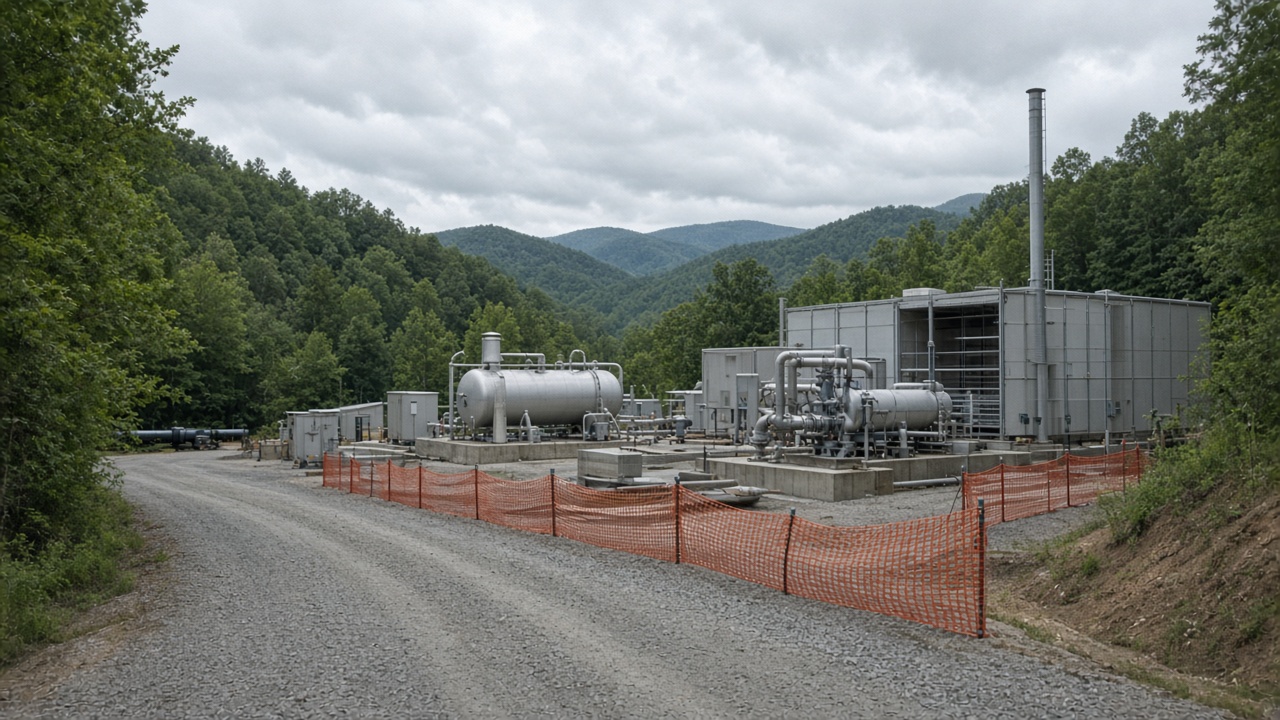
Upstream, the Marcellus and Permian basins keep breaking production records, yet the marginal barrel—or cubic foot—now clears at the water’s edge. New trains under construction push that margin higher. The EIA forecasts U.S. LNG exports averaging 17.0 billion cubic feet per day for 2026, rising toward 18.6 billion in 2027 as Corpus Christi Stage 3, Golden Pass, Port Arthur, and Rio Grande phases enter service. Pipeline exports to Mexico add another increment, including gas feeding Mexico’s Pacific Coast LNG projects that re-export American molecules to Asia.
Engineers describe the system as “pull” rather than “push.” Wells do not shut in because Cleveland furnaces dial down; they shut in when Gulf Coast liquefiers cannot take more feedgas without backing up interstate pipes. That is why maintenance at a single plant—Freeport’s summer outage removed roughly two billion cubic feet per day of demand—can move national prices within a week. Traders watch feedgas nominations the way stock investors watch chip foundry utilization.
Europe’s role sharpened after Russia throttled pipeline flows to the continent. U.S. LNG cargoes to Europe hit a record 10.3 billion cubic feet per day in 2025, the EIA reported, accounting for a majority slice of American export volumes. When Asian buyers bid aggressively during heat waves or supply scares, cargoes that were earmarked for Rotterdam can be diverted mid-voyage. The flexibility helps allies but also means domestic price relief from high storage can evaporate if overseas premiums widen overnight.
Henry Hub stopped being a basement price
Henry Hub in Louisiana is still the U.S. pricing benchmark, but it behaves more like a coastal clearinghouse than an inland surplus dump. When export demand runs hot, Hub prices rise even if storage fields look healthy. The EIA’s July 2026 short-term outlook attributed firmer 2025–2026 gas prices partly to “strong export growth that persistently outpaces U.S. natural gas production”—a sentence that would have sounded exotic when shale boosters promised a permanent domestic discount.
Electricity customers feel the pass-through because gas-fired plants supply roughly forty percent of U.S. power. Industrial buyers signing long-term contracts must compete with liquefiers that can redirect cargoes toward whichever continent pays most this week. The effect is not uniform: Gulf Coast industrial users sit next to export plants; New England still imports occasional LNG cargoes in winter because pipeline constraints from Pennsylvania limit cheap Marcellus gas reaching Boston on the coldest days.
That geographic split explains why national averages mislead. A household in Houston may see modest Hub moves reflected quickly in retail rates, while a condo association in Massachusetts pays winter premiums tied to imported spot LNG—even when domestic production is at a record. Export linkage is not a single national experience; it is a patchwork of pipeline bottlenecks, utility regulation, and proximity to the freeze plants that set the marginal price.
Higher natural gas prices in 2025 and 2026 are the result of strong export growth that persistently outpaces U.S. natural gas production.
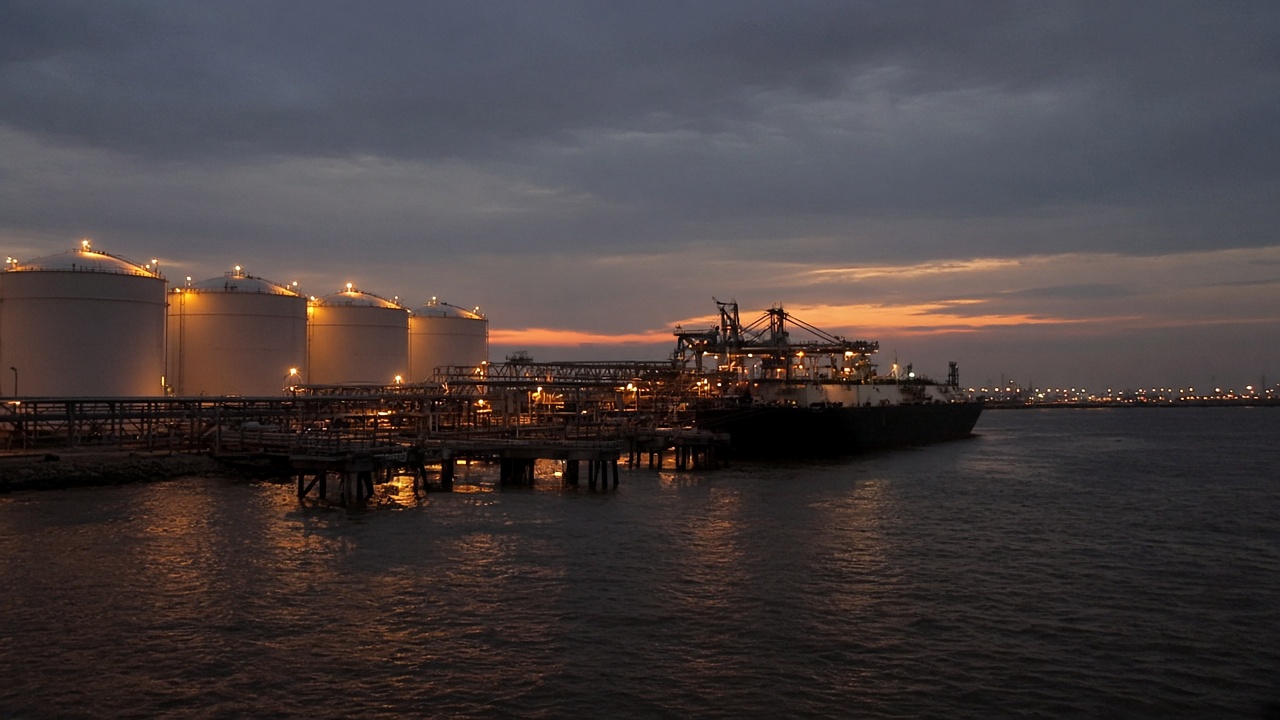
Who pays first, and who only sees a line item
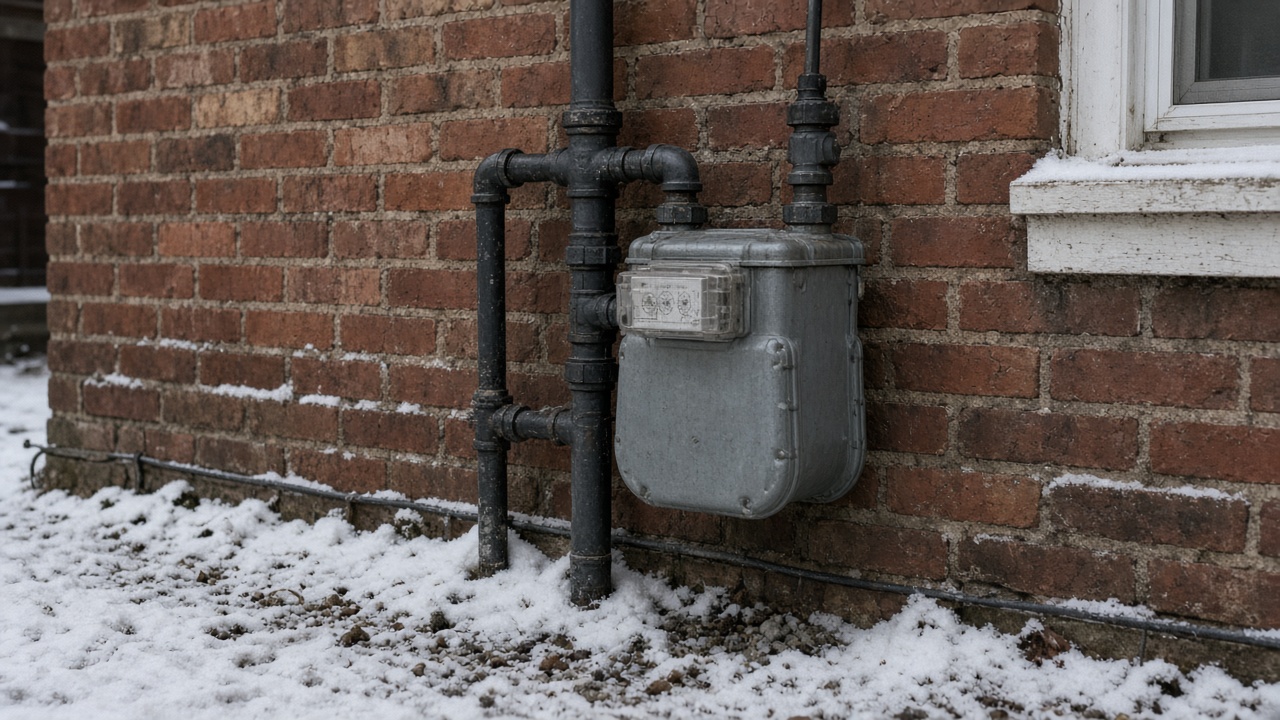
Residential bills bundle commodity, pipeline tariff, and utility margin. The Henry Hub slice can be smaller than delivery charges, which is why a moderate Hub forecast—near $2.87 per million Btu in the third quarter of 2026 in the EIA outlook—does not guarantee a tame winter bill in Maine or Minnesota. Cold snaps still spike daily prices, and regions without pipeline headroom import LNG at global spot rates, ironically including fuel produced on the Gulf Coast, chilled, shipped, and unloaded again in Boston Harbor.
Lower-income households on budget billing may not see real-time price signals, but they absorb them when regulators approve fuel-cost adjustments. Commercial users with hedging desks watch basis differentials widen between production zones and consuming cities. Data-center developers scouting Virginia or Ohio power deals increasingly model gas volatility exported from Louisiana docks—not because servers burn methane directly, but because marginal grid power still comes from combined-cycle turbines.
The political fight is about linkage, not logos
Industry groups argue exports improve the trade balance, support Gulf Coast jobs, and give allies an alternative to hostile suppliers. Environmental critics counter that locking in liquefaction infrastructure extends fossil dependence. A third camp—often Midwestern manufacturers and some consumer advocates—focuses on price linkage: once export capacity crosses a threshold, domestic gas behaves like a globally traded commodity, and the “energy independence” slogan becomes a marketing layer on top of arbitrage math.
Pause proposals surface after price spikes, but existing terminals hold long-term contracts and sunk costs. The Department of Energy can scrutinize new permits; it cannot easily unbuild trains already earning tolling fees. Litigation over climate and community impacts slows some projects, yet the EIA still expects net U.S. gas exports—LNG plus pipelines—to reach 20.5 billion cubic feet per day by 2027, up from 18.7 billion in 2026.
What forecasters agree on—and what they cannot model
Consensus numbers are unusually aligned for a fuel that panicked markets in 2022: production growth, rising exports, and inventories that entered the 2026–2027 winter well above the five-year average should cap extreme Hub averages. The EIA’s outlook even trimmed third-quarter 2026 Hub forecasts by fifty cents per million Btu as record output and softer LNG feedgas demand rebuilt storage.
Utility planners still run stress tests. A polar vortex that simultaneously freezes wellheads in Texas, spikes heating load in the Midwest, and keeps LNG feedgas high can produce price spikes that look nothing like the annual average on a chart. The Federal Energy Regulatory Commission’s pipeline approval docket is littered with proposals to move more gas out of the Permian and Appalachia toward demand centers; each new long-haul line also creates another path toward export docks, reinforcing the coastal pull.
Consumers hunting actionable advice face a split screen. Locking in a fixed rate with a retail gas marketer hedges Hub moves but not always delivery surcharges. Weatherizing a home still pays back on therms saved, regardless of whether those therms would have been liquefied. Electrifying heat pumps shifts exposure from gas markets to power markets that are themselves increasingly gas-sensitive. None of those choices repeal export economics; they only change which bill absorbs the shock.
Tail risk lives offshore. A prolonged Hormuz disruption, a colder-than-forecast La Niña winter, or simultaneous outages at multiple Gulf plants could still yank Hub prices upward fast enough to hit power bills before regulators finish hearings. IEEFA analysts warn that proposed capacity additions through 2029 could raise export capability by more than eighty percent from 2025 levels, further exposing domestic consumers to global volatility even if average years look calm.
Back at Sabine Pass, the tanker will sail whether or not Congress debates linkage. The paradox is not that America ran out of gas—it is that success at producing gas created an export machine efficient enough to re-import world prices at the kitchen register. Fracking delivered abundance; liquefaction delivered a new kind of scarcity, measured in winter bills that rise when a shipping lane flares half a world away.
Read the fine print on the next utility insert: the commodity adjustment line is where global LNG markets touch local politics. Until export capacity stops growing faster than the pipes that serve American basements, that line will keep twitching every time a tanker lights its boilers on the Sabine River—and every time a buyer in Rotterdam bids one cargo more.