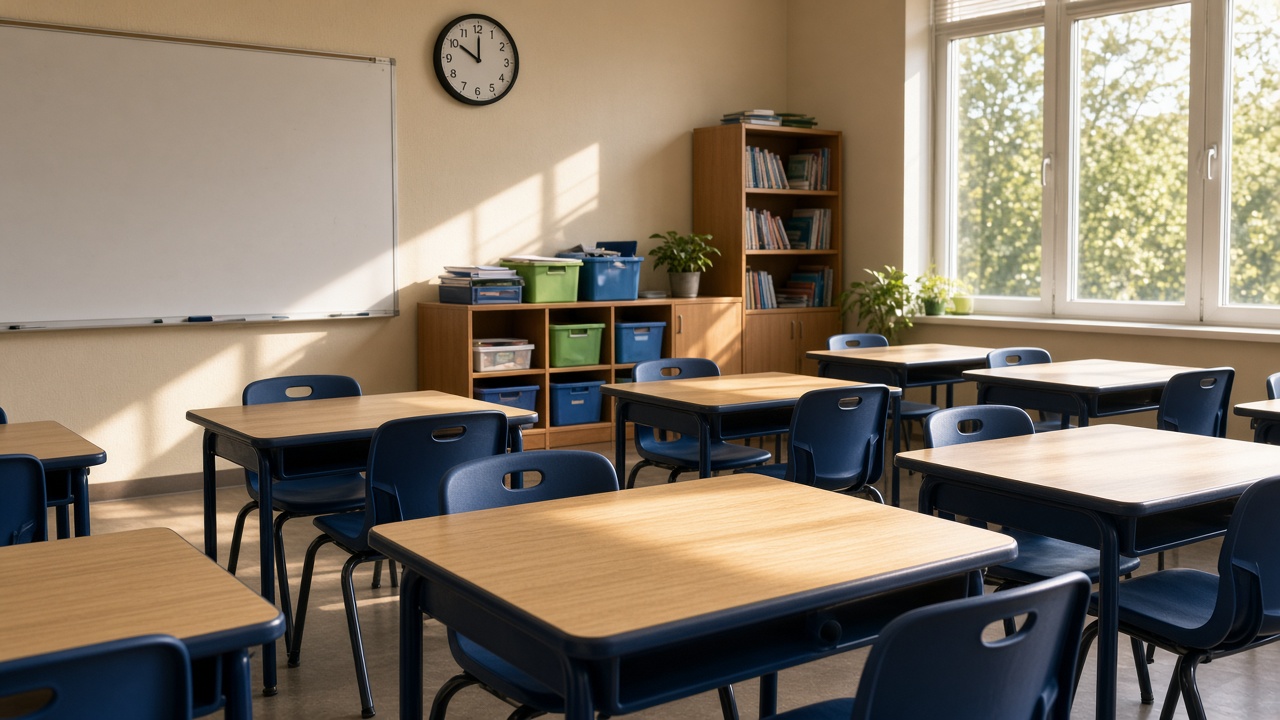
At 8.15am on Thursday, tens of thousands of Primary 6 pupils sit PSLE English Language Paper 1—the first written paper of a week that will decide secondary school posting for many households. We should say plainly what that hour means: it is not a neutral calendar marker. It is the moment schools’ year-long exam choreography meets parents’ sleep debt, and national rhetoric about holistic education meets a scoring system that still sorts children sharply.
Our argument is not that Singapore should abolish high-stakes exams overnight. It is that the state still leaves the emotional and logistical burden of PSLE English day on schools and families while policy speeches celebrate reduced drill and fuller curricula. That mismatch is visible today in every gate where pupils line up with transparent files and guardians whisper last-minute reminders they know teachers forbid.
What the timetable fixes—and what it cannot
The Singapore Examinations and Assessment Board timetable is precise: Standard English Paper 1 runs 8.15 to 9.25am, Paper 2 from 10.30am to 12.20pm; Foundation English follows the same morning rhythm with a shorter second paper. Schools execute flawlessly on timing—seating plans, invigilator ratios, toilet escorts—because they have no choice.
What the timetable does not carry is the months of composition drills, the tuition centres that market “last-mile” grammar packs, or the sibling care arrangements parents stitch together so one child sits exams while another still needs breakfast. MOE has trimmed some weighted assessments and pushed Full Subject-Based Banding, yet PSLE English remains a gatekeeper subject: fail the language hurdle and pathways narrow regardless of talent elsewhere.
The objection—and its limit
Officials will reply that standards matter in a multilingual society, that English proficiency underpins secondary readiness, and that stress is partly a parenting culture problem. There is partial truth: competitive sign-ups for tuition are not invented by civil servants. But when national tests cluster in one September window, when posting algorithms reward every mark, and when employers still ask which secondary school you attended, telling households to breathe easier is policy theatre.
Schools are caught in the middle. Principals want calmer cultures; teachers still face value-added metrics tied to cohort outcomes. Today’s English papers are the sharp edge of that contradiction.
What should change
First, publish a national stress audit tied to PSLE week—sleep surveys, counselling caseloads, clinic visits—not as a stunt but as a dashboard MOE reports alongside pass rates. Second, cap commercially marketed “crash courses” in the four weeks before PSLE through advertising guidelines that treat exam panic like tobacco: legal, but not glorified outside regulated channels. Third, expand post-PSLE placement counselling so one English score does not feel like a life sentence; Full Subject-Based Banding only helps if families believe it.
Until then, 8.15am remains a private crisis dressed as public routine. Pupils will write compositional narratives about kindness or courage while wondering if their introduction paragraph is “PSLE enough.” Teachers will patrol silence they did not choose. Ministers will tweet encouragement from offices where no one sits a timed synthesis question today.
We owe children an English exam that tests language without treating Thursday morning as the only proof they matter. The papers will finish by lunchtime; the stress policy built will not. Fixing that is not a classroom task alone—it is a government accountability task we keep postponing until the next cohort lines up at the gate.