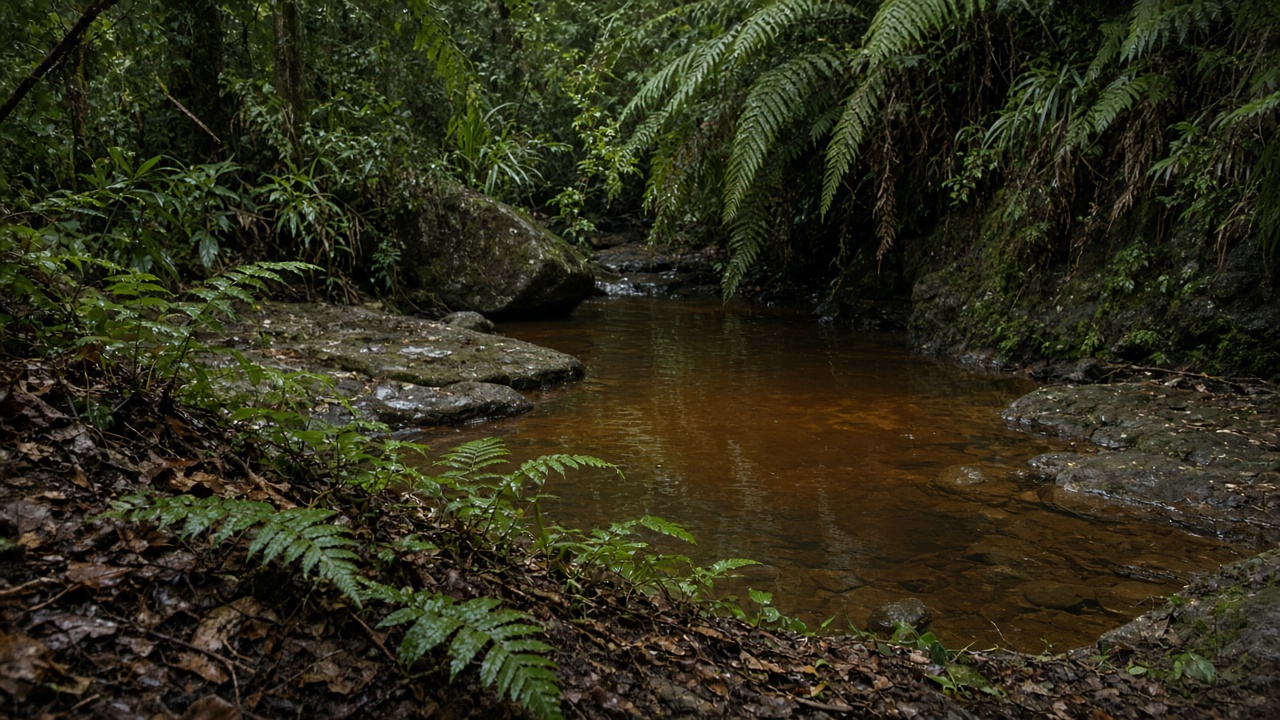
Scientists sampling streams in Royal National Park south of Sydney report that leaf-green tree frogs living downstream of Metropolitan Mine wastewater carried heavier chytrid fungus infections than frogs in nearby unexposed waterways, according to a study published in the Journal of Hazardous Materials Advances and highlighted by ABC Science on Thursday.
Design and findings
Researchers surveyed the upper Hacking River catchment between December 2022 and February 2023, months after unlicensed coal-contaminated discharges from the Peabody-operated mine flowed into Camp Gully Creek. They recorded 166 frogs across exposed and reference sites, swabbing 45 animals for Batrachochytrium dendrobatidis, the pathogen behind chytridiomycosis. Eighteen frogs tested positive overall; infection intensity was higher in leaf-green tree frogs at exposed sites, and symptomatic or dead leaf-green frogs appeared only where mine-influenced flows were present.
Counts of stony creek frogs and overall frog abundance did not differ significantly between site types, the authors report—an important limit that shows the signal is species-specific rather than a blanket crash in amphibian numbers. Dataset documentation on Macquarie University’s repository lists principle component analyses, mixed models and water-quality probes tied to electrical conductivity and other mine-linked parameters.
Regulatory backdrop
The NSW Environment Protection Authority previously fined Metropolitan Mine more than $500,000 and imposed clean-up orders after the 2022 overflow events that sent coal slurry toward park waterways. Peabody has said it completed visible sediment removal and now publishes selected water-quality data online; it also funds a three-year rehabilitation program for the southern stuttering frog, another chytrid-vulnerable species.
ABC’s earlier reporting from 2023 documented scientists’ concerns that pollution stress might weaken frog immune responses where chytrid already lurks in the landscape—a hypothesis this peer-reviewed paper advances with swab data but does not finally prove as sole causation.
What park managers face
Royal National Park is Australia’s oldest national park and a tourist gateway minutes from Helensburgh. Frog declines from chytrid have been documented globally; locally, any additional stressor in discharge plumes raises stakes for biodiversity officers who must balance conservation with legacy mining approvals. The study’s authors call for continued monitoring where wastewater meets public bushland, especially as climate volatility increases spill risk.
Limits readers should keep
Association is not experiment: the team could not randomly assign mines to creeks. Seasonal sampling in one summer window may miss recovery trajectories Peabody claims followed clean-up. Still, for policymakers the paper offers a measurable hook—infection load—not just anecdotal reports of sick frogs after black slurry events.
Expect the EPA’s licence review for Metropolitan to cite both the fine history and this journal entry. For bushwalkers, the practical message is narrower: reported pathology sat in specific tributaries studied by licensed scientists, not across every track in the park. For ecologists, the next question is whether reduced conductivity and sediment loads translate into lower chytrid intensity in repeat surveys—data the authors have now placed in open repositories for independent replication.
NSW National Parks and Wildlife Service issued the scientific licence under which field teams operated; any future discharge conditions will likely require third-party amphibian monitoring, not just water chemistry dashboards on a mine website.