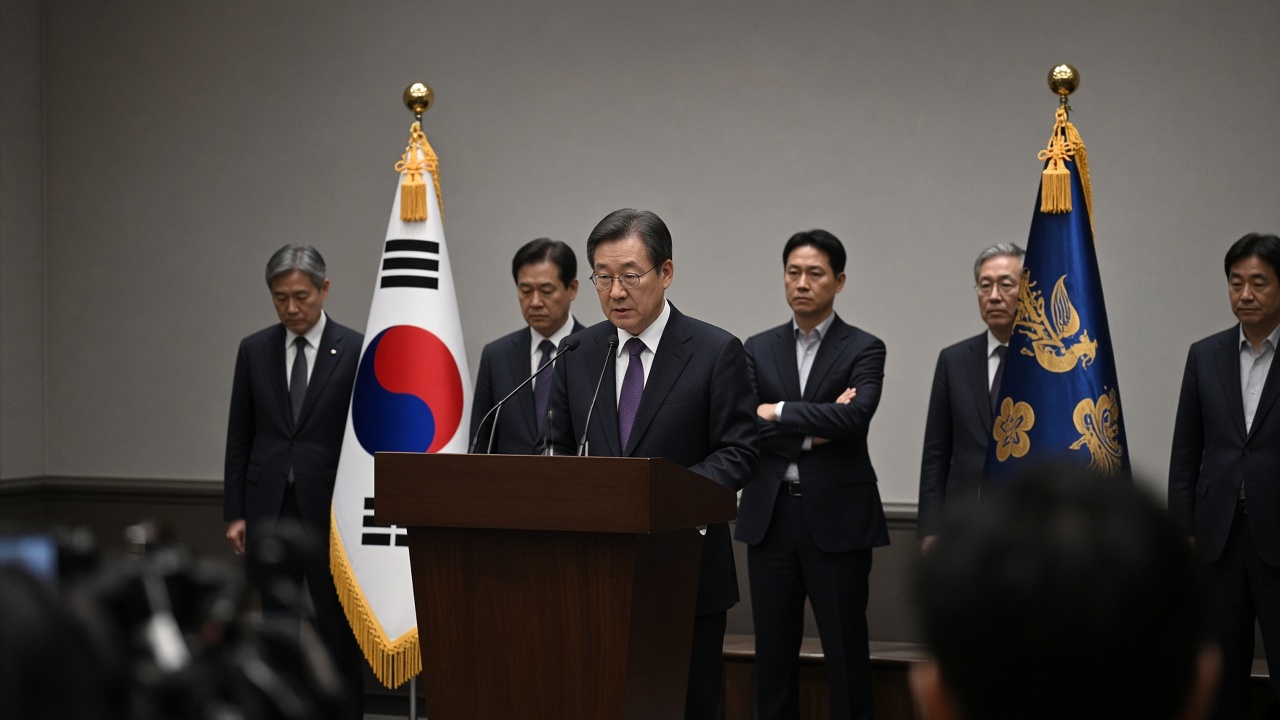
President Lee Jae Myung said Ukraine disclosed the transfer of two North Korean prisoners of war to South Korea in breach of a non-disclosure agreement, a day after Ukrainian President Volodymyr Zelenskyy named the handover at the United Nations in New York.
Lee made the remarks in a post on his X account while he was in Mexico City for a state visit, as reported by Yonhap News Agency. Zelenskyy told the U.N. General Assembly on Wednesday that Ukraine had recently sent the two soldiers to South Korea.
"(Ukraine) disclosed the transfer in breach of a non-disclosure agreement," Lee wrote. "I don't know the reasons (for the disclosure), but I regret it. It was appropriate in every aspect not to disclose, considering many problems it may cause when disclosed, and (we) had agreed to do so."
Lee called the matter very sensitive, saying it could affect diplomacy and national security as well as the security environment on the Korean Peninsula. The two governments had agreed to keep the transfer confidential precisely because of the problems disclosure would bring, he said.
What Kyiv says it disclosed
The Ukrainian presidential office told Yonhap that the transfer was carried out "through direct dialogue with the Republic of Korea" and described it as "a highly sensitive matter." It rejected as "not true" claims that Russia had repeatedly asked for the two prisoners to be handed over. "They are members of the same Korean nation," the office said, adding that South Korea considers them its citizens.
On the disclosure itself, the office said Ukraine had made public only the fact of the transfer, not the long details of the process.
What Seoul knew, and when
A presidential official, speaking on condition of anonymity, said Seoul had known in advance that Zelenskyy would raise the transfer, because Ukraine had informed it of the plan, but that the advance notice was vague and did not say how the handover would be presented. Lee regretted that Kyiv did not stick to its earlier undertaking to keep the process quiet, the official said.
The foreign ministry has declined to confirm how the two men were handled, the timing or the route, citing the safety of the soldiers and of their families still in North Korea. It had previously refused to confirm their arrival on the same grounds, saying it was acting on the principle of respecting the men's free will under international law and humanitarian principles.
The argument in Seoul
Opposition parties have criticised the confidentiality agreement itself. Lee answered that disclosing the transfer would be "cruel and irresponsible" no matter how it affected inter-Korean relations, whether it risked someone's death or whether disclosure served the national interest.
Rep. Yu Yong-weon of the main opposition People Power Party has said the two soldiers entered South Korea three to four days earlier via a third country and that Seoul and Kyiv settled the transfer around June. Those details have not been independently confirmed.
What happens next
Lee and Zelenskyy agreed at their meeting in July, on the sidelines of the NATO summit in Ankara, to handle captured North Korean soldiers on humanitarian grounds while respecting their wishes. The two men were taken prisoner in January 2025 in Russia's Kursk region, where North Korea deployed thousands of troops in support of Moscow's war, and both had said they wanted to come to the South.
If they are in the country, they fall under the protection of the National Intelligence Service under the law on North Korean defectors. The open questions in Seoul are procedural: whether the government will put their status on the record, which agency confirms it, and whether Assembly committees call officials in to explain the terms Seoul agreed to.