LG CNS turned on an EXAONE-powered triage layer for Incheon International Airport’s post-Chuseok customs helpline Wednesday, sorting arrival questions about duty-free limits, food declarations, and transit gates before human officers pick up lines that need document review.
How triage works on the helpline
Callers hear a brief disclosure that an AI assistant may summarize their question. EXAONE maps utterances to Korea Customs Service knowledge-base articles—updated nightly during the holiday—and either reads approved answers or escalates with a ticket number when phrasing hits inspection triggers such as cash declarations above thresholds.
Korea Customs said the pilot is limited to informational queries, not adjudication. Officers retain authority on seizures and visa issues; the model cannot approve exemptions or alter declaration forms. LG CNS hosts inference inside a government-approved cloud enclave with call audio deleted after seven days unless a dispute is opened.
Why Chuseok timing matters
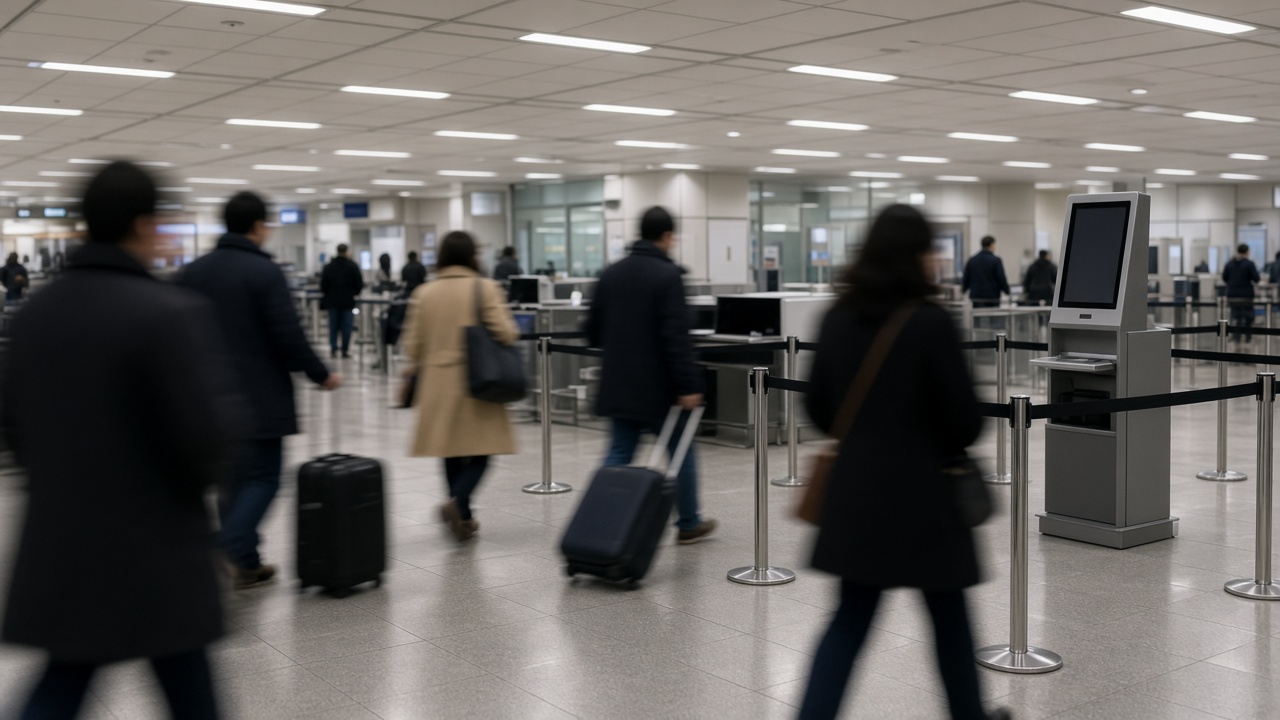
Incheon Airport Corporation reported arrival peaks Tuesday night as overseas Korean families returned ahead of Thursday’s domestic reopen. Hallway queues stretched past baggage claim in Terminal 1; customs staffing was already on holiday overtime. Yuna Seo’s AI lens: the deployment is operational triage, not a product launch—accuracy metrics will be judged against average wait times, not benchmark trivia scores.
Airport officials said simple questions—whether ginseng gift sets need declaration, how much duty-free alcohol can enter—accounted for roughly forty percent of helpline minutes in prior peak weeks. Automating those frees officers for face-to-face interviews when X-ray flags suspicious luggage.
Guardrails and oversight
The science ministry’s AI accountability checklist requires human override on every escalation path; EXAONE cannot end a call without offering a live agent button. Customs published a hotline number that bypasses automation entirely for travelers who decline AI handling.
LG CNS said EXAONE draws only from vetted customs PDFs and airport FAQ pages, not open-web search, to reduce hallucinated duty rates. Weekly audits during the pilot will sample 200 calls for incorrect summaries; failure rates above two percent trigger model rollback.
Traveler experience
Returning passengers told reporters the system works best for stock questions in Korean and English; dialect-heavy family gift descriptions sometimes confuse intent classification and route to humans anyway—a acceptable outcome under the pilot’s safety rules.
If queues shrink measurably, customs may extend the contract past Chuseok recovery week; if not, the helpline reverts to legacy IVR trees without public blame games. For now, EXAONE is a filter in front of tired officers facing the year’s noisiest arrival hall.
Airport staffing and signage
Terminal 2 added bilingual floor decals pointing travelers to the helpline kiosks near baggage claim 6, where EXAONE triage runs on a ruggedized tablet for walk-ups who skip phone queues. Volunteer guides wore badges explaining that AI answers are informational only, a nod to passenger anxiety about automated government services.
Customs overtime budgets for Chuseok week were approved in August; LG CNS integration fees sit in a separate digital transformation line item so auditors can compare contractor costs against measured wait-time reductions.
Model governance
LG CNS said EXAONE weights will not train on passenger voice biometrics during the pilot, and customs lawyers review any new knowledge-base article before it enters the retrieval set. That pipeline slowed same-day content updates but satisfied privacy officers worried about ad-hoc holiday rule changes entering the model unchecked.
Business travelers carrying corporate laptops said the helpline triage shortened phone waits but could not answer employer-specific import licenses—those still route to human desks with faxed paperwork, unchanged by the AI layer.
Airport retailers asked customs to add duty-free pickup hours to the knowledge base after EXAONE correctly answered alcohol limits but initially misstated one boutique’s closing time, a data entry fix rather than a model failure.
LG CNS executives said they would publish a one-page transparency sheet listing data sources and retention rules if the pilot extends beyond September, matching voluntary AI disclosure norms the science ministry floated in spring consultations.
Customs officers told reporters the pilot’s success metric is median queue time, not chatbot novelty, keeping expectations grounded for travelers who still prefer human answers for sensitive declarations.