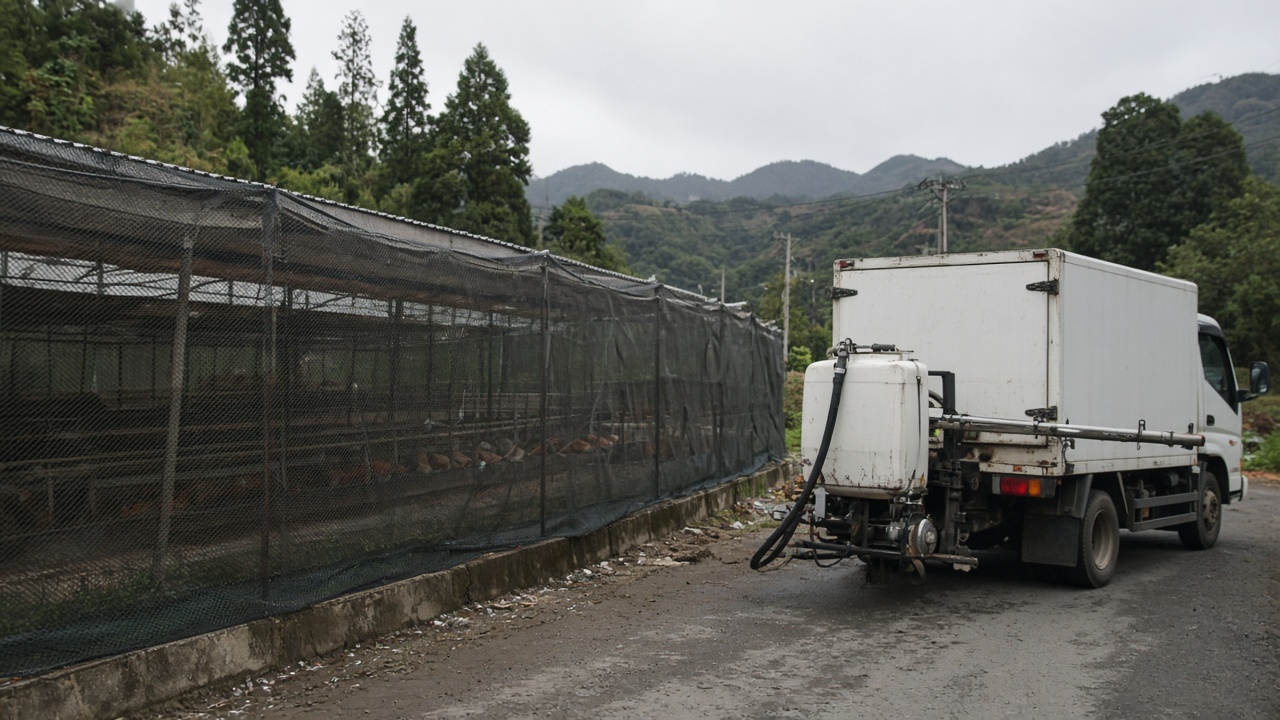
Taiwan’s Council of Agriculture ordered a seven-day ban on poultry transport and a parallel seven-day slaughter halt after highly pathogenic H5N6 avian influenza was confirmed at nine farms spanning five counties, with 3,747 birds culled. Officials carved out an exception for white broilers raised indoors, saying long-term surveillance showed lower risk for the birds that dominate retail chicken supply.
The emergency measures
The transport ban took effect early Thursday morning, while slaughter restrictions began at noon, according to briefings summarized by agricultural trade press and local outlets. The rules aim to slow viral spread during autumn migration season, when wild birds increase exposure risk for commercial flocks. Farmers must halt movements except for approved culling convoys and veterinary visits.
Nine outbreak sites have now been recorded across Hualien, Yilan, Chiayi, Tainan, and Yunlin, the council said. Recent confirmations included ducklings in Tainan’s Guantian district, black-bone chickens in Chiayi’s Puzi area, and native chickens in Yunlin. Each site triggers standard depopulation, disinfection, and three-kilometer monitoring per Taiwan’s avian influenza playbook.
Why white broilers are exempt
Council officials faced immediate questions about market supply. Deputy Minister Huang Jin-cheng told reporters that white broilers—birds raised entirely indoors—were excluded because antibody testing on breeding stock and market birds has remained negative and no white-broiler cases have appeared in the current wave. The exemption lets major slaughterhouses continue processing broilers that meet biosecurity checks, reducing the chance of empty poultry counters during the Mid-Autumn Festival weekend.
Critics on social media accused the government of prioritizing prices over parity. Huang insisted epidemiology drove the decision: indoor housing limits contact with wild droppings, and broiler supply chains are easier to audit than scattered native-chicken yards. Still, inspectors launched 33 slaughterhouse and farm checks nationwide on the first enforcement day, destroying carcasses at an illegal slaughter site in Kaohsiung’s Daliao district, according to the council.
Compensation and reporting
The council said farmers who voluntarily report sick birds can receive enhanced culling compensation—officials cited three voluntary reports in Yunlin on Thursday. The policy is designed to reduce hidden culling that can widen outbreaks. Poultry associations urged members to tighten netting, vehicle disinfection, and visitor logs as temperatures swing between day and night.
Tainan’s animal protection office, meanwhile, reminded producers that autumn is peak migratory season and that even vaccinated flocks need rapid reporting if mortality spikes. The message is localized but mirrors central government tone: compliance beats panic buying.
Retail and festival demand
Supermarket chains contacted by business reporters said broiler supplies remained stable midday Friday, while specialty native-chicken vendors warned of short delays for breeds under the slaughter halt. Hospitality groups monitoring banquet demand for the long weekend will watch whether exempted broiler volume covers menu substitutions.
For environment and agriculture desks, the story is regulatory: a geographically spreading H5N6 cluster forcing nationwide movement controls, with a politically sensitive carve-out for the mass-market bird. The council promised daily updates on case counts and enforcement actions.
What officials watch next
Veterinary labs will sequence samples from new sites to see whether the virus matches earlier Hualien and Yilan isolates. If wild-bird surveillance near wetlands shows rising positives, the council could extend bans beyond seven days or narrow exemptions. Until then, the new fact is procedural—a transport and slaughter pause with a white-broiler exception while nine farms across five counties remain under active response.