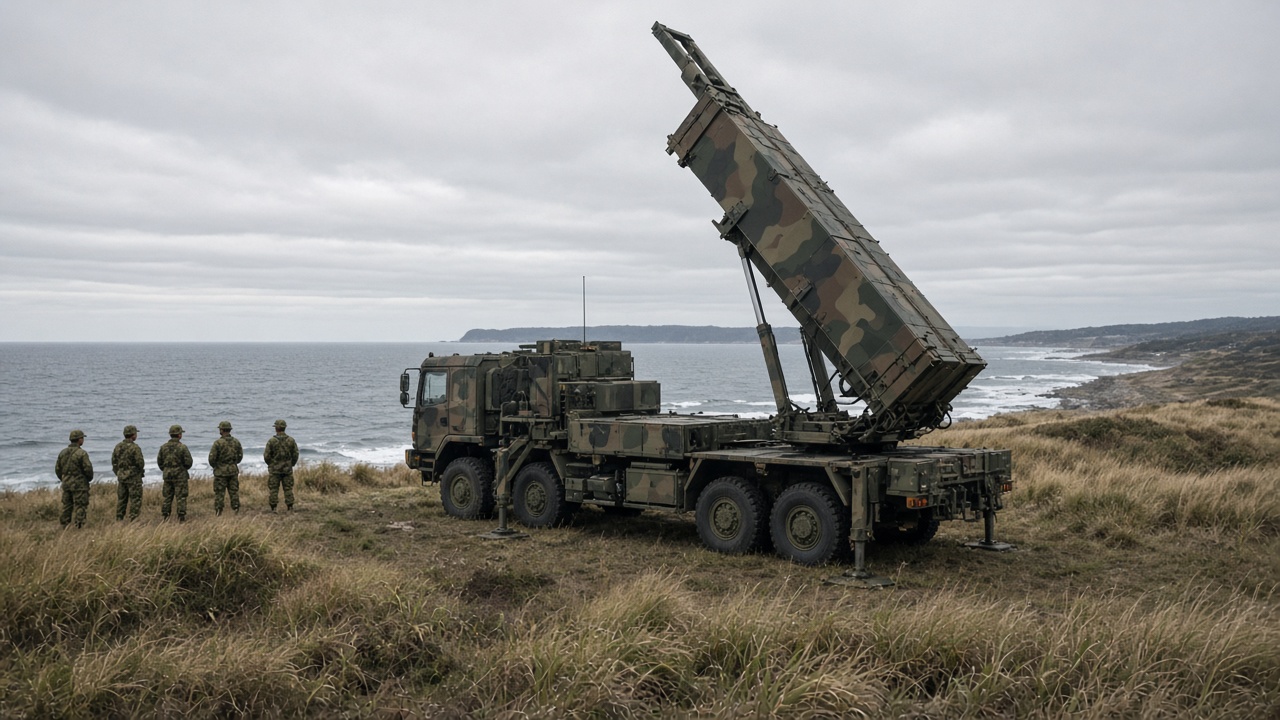
Japan and the United States will hold a joint drill beginning in October that involves Japan's long-range missiles, Kyodo News reported on Sept. 26, placing domestically held standoff weapons inside a bilateral exercise.
The report, attributed to sources familiar with the planning, does not say which missile will be used, where the exercise will take place, or whether the missiles will be fired. Those gaps matter. They separate a deployment and logistics exercise from a live-fire demonstration, and they are the difference between a scheduling notice and a deliberate signal.
What is confirmed
Kyodo's line is narrow. A Japan-U.S. bilateral exercise is set to start in October, and Japan's long-range missiles are part of it. That is the confirmed core, and it is enough to be newsworthy: standoff strike weapons held by the Self-Defense Forces have not previously been reported as an element of a scheduled bilateral drill.
The framing Kyodo gives is alliance signaling. The exercise is meant to show that Japan's own long-range capability is now part of the combined posture rather than a national program bolted on afterward, which is the substance of what extended deterrence is supposed to look like from the outside.
What is still unknown
Specifics are missing. The dates within October, the venue, whether the U.S. side contributes firing units or only planning and support, and whether the drill includes an actual launch have not been confirmed. No unit-level details have been released by the Ministry of Defense. Nothing in the Kyodo report identifies the missile as an operational system rather than a test article.
Japanese reporting has previously tied the upgraded Type 12 surface-to-ship missile to the standoff program. Whether that system is the one in the October drill is not stated in the Kyodo report, and should not be assumed from it.
The agency holding the file
Under Japan's chain of command, the file sits with the Ministry of Defense and the Joint Staff Office, which plan and schedule bilateral training. The National Security Secretariat coordinates the political message. The Cabinet carries responsibility for any decision that goes beyond training.
Legally, a drill is not the exercise of force. Article 9 and the government's long-standing interpretation constrain what the Self-Defense Forces may do, and any actual use of force would have to satisfy the three conditions set for the right of self-defense: an imminent and unjust attack, no other means available, and minimum force. A training event sits far short of that threshold, which is why the weight here comes from messaging rather than legal authorization.
For communities near whatever range is used, the practical questions are safety notices, range closures and accident liability, handled under Self-Defense Forces law and administrative procedure rather than the alliance framework.
Why it matters in October
Extended deterrence depends on the other side believing a capability exists and works. October's drill, if it proceeds as reported, is the first scheduled moment this fall when that claim is put in front of an audience. The details to watch are unglamorous: unit names, announced ranges, and whether the Ministry of Defense confirms a missile type. Until then, the confirmed fact is the schedule, and the rest is still open.