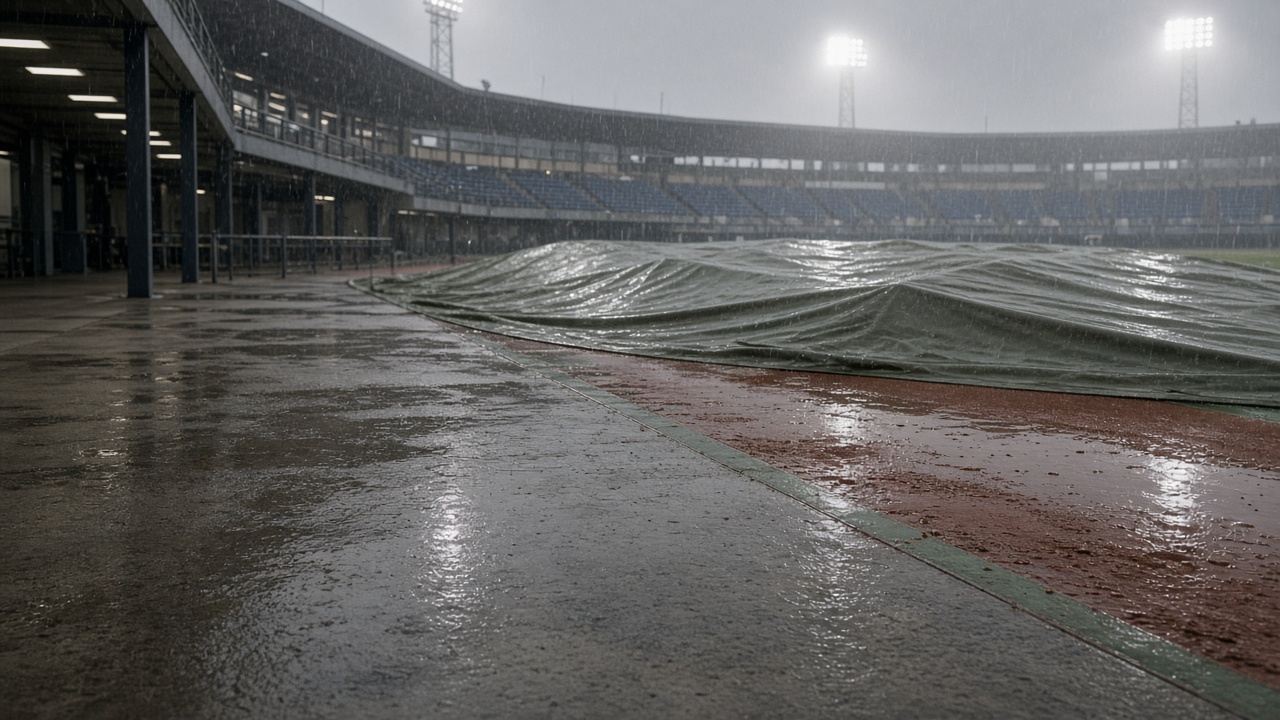
Chuseok rain wiped out two KBO games on Friday, Sept. 25, and the league will not use the day after the holiday to bring them back. Doosan Bears–Lotte Giants and Samsung Lions–SSG Landers were both rained out, and with no Sept. 26 reserve date written into the schedule, both games will be made up in October, as Herald Business and Xportsnews reported.
The two cancellations landed on the busiest day of Korea's holiday calendar. Chuseok fell on Sept. 25 this year, which put the games in direct competition with family travel and the return leg home. When the rain arrived, the league had a narrow set of options: play the next day, push the games to the end of the regular season, or fold them into an already crowded October.
It chose October. That leaves both fixtures without a date for now, and it leaves two clubs, two sets of players and two fan bases waiting for the league office to slot them in.
What actually happened
Both games were called because of rain, not because of field conditions that could be worked around. Once a game is rained out in the KBO, the decision on when it is replayed sits with the league rather than with the home club, and the standard window is after the 144-game regular season ends and before the postseason opens.
The distinction matters. A rainout is not a forfeit or a no-contest that vanishes; it is a deferred game with real consequences for innings, roster usage and the standings. Every pitcher who was lined up to start Friday now has to be reprogrammed, and every bullpen that was braced for a weekend series has to be re-planned.
Why Sept. 26 was never going to work
Sept. 26 sits on the far side of Chuseok, the day when millions of Koreans are on the road or on a train heading back to the cities. The league has treated the holiday window as a scheduling dead zone, and this year it did not attach a reserve date to the day after the holiday.
That call was made before the rain arrived, which is why there was no mechanism to simply flip the games 24 hours. Attendance, transport and stadium staffing all pointed the same way: an empty reserve slot is cheaper than a game played in front of a half-empty park on a national travel day.
What the October makeup means
KBO makeups land in October, between the end of the regular season and the start of the postseason. That calendar already has little slack in it. Adding two games means adding travel, and it usually means asking pitching staffs to absorb innings they had not planned for — either through a spot start, a bullpen game or a doubleheader.
For teams in the playoff race, that is not a neutral cost. A makeup game in October is played under different conditions than the same game in September: different weather, different fatigue, and sometimes different stakes, because the standings have had another two weeks to move.
October makeups also squeeze the postseason schedule. The further the makeup games get pushed, the less room there is between the last regular-season out and the first playoff pitch, and the league has to protect that gap for travel and for the wild-card round.
The labour side
The players carry the visible cost. A rainout does not reduce the number of games a team must play; it concentrates them. Starting pitchers lose a turn and then get it back in a tighter window, relievers who expected a light Friday get used in a doubleheader later, and position players lose an off day that was already written into the calendar.
There is also the travel. October makeups usually mean a trip that was not on the original schedule, often for a single game, which is the least efficient kind of road work in the sport.
What to watch
The league has not yet announced the makeup dates. The next signal will be the KBO's October scheduling notice, which should place both games and confirm whether either is bundled into a doubleheader.
Until then, the rainouts sit as two open items on the season: games that were on the calendar, lost to weather, and owed back in the busiest month of the year.