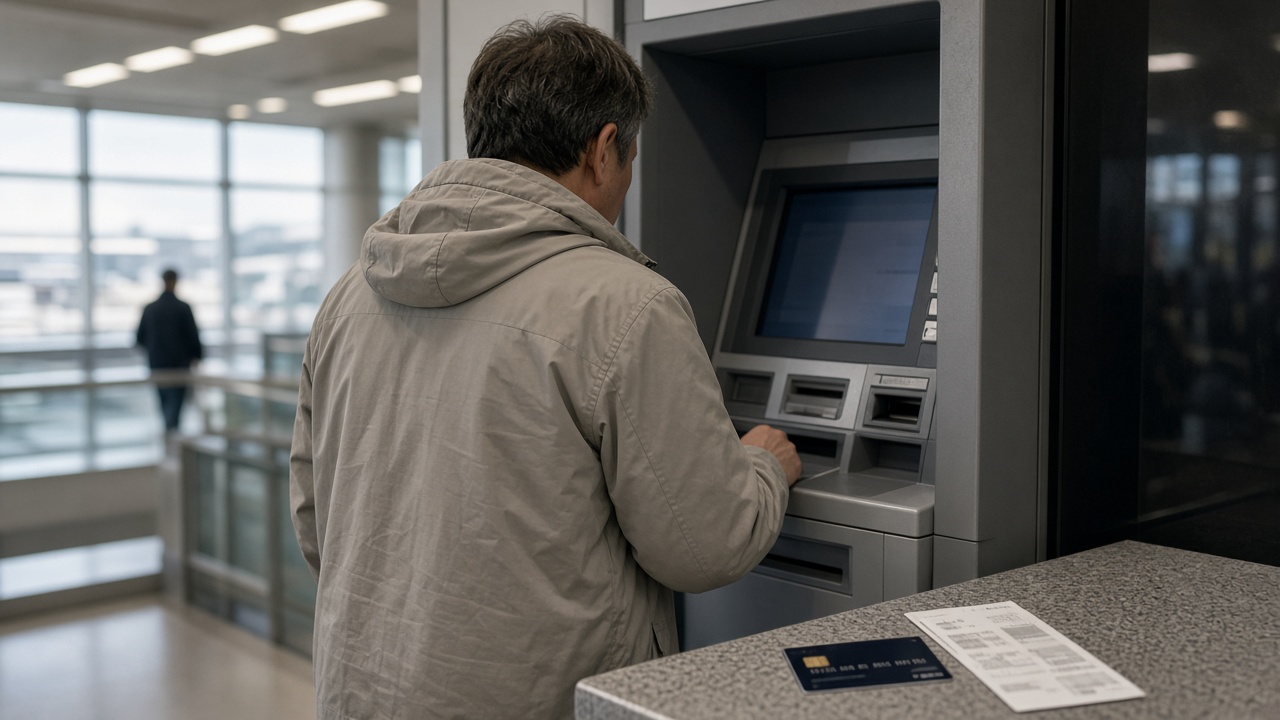
MUFG Card has revised the fee table for overseas ATM cash advances, with the new schedule taking effect in October. The change is small in yen terms — the headline administrative charge is ¥158 per cash-advance transaction — but it lands when the yen is weak enough that every overseas withdrawal already costs more in home currency.
The card issuer is Mitsubishi UFJ NICOS, the MUFG group company known as MUFG Card. The revised table applies to cash advances made at overseas ATMs, not to ordinary card purchases. It also does not change typhoon-related chargeback or dispute rules, a separate area that has drawn attention after recent weather disruptions.
For households, the arithmetic is straightforward. The dollar was at ¥148.76 at the Sep 25 close. At that rate, a $200 ATM withdrawal is about ¥29,752 before fees. A ¥158 administrative fee is about 0.5% of that withdrawal. Withdraw $100, and the same fixed fee is closer to 1.1%. Withdraw $50, and it is over 2%.
The fixed fee is only one part. Overseas ATM operators often add their own surcharge, which may be disclosed on the ATM screen or shown as a separate line on the statement. MUFG Card also charges interest on cash advances from the withdrawal date, so the longer you carry the balance, the more the yen cost rises. The exchange rate used for settlement is not the rate at the ATM screen; it is set through the card network and issuer, so the final yen debit can differ from the day's headline quote.
What changed in October
MUFG Card's revised table is a fee schedule change, not a change to the card's credit limit or shopping-installment terms. The practical effect is at the ATM: cardholders who use their MUFG Card to pull cash abroad will see the administrative fee applied per cash-advance transaction. The fee is charged in yen on the card statement. If the withdrawal is made in a foreign currency, the card network converts the amount to yen, and the issuer adds the fee and any interest.
That distinction matters because card purchases and cash advances are treated differently in Japan. A shopping transaction may qualify for a grace period before payment. A cash advance generally starts accruing interest immediately. The repayment method — lump sum or revolving — depends on the cardholder's agreement. A cardholder who only checks the shopping balance can miss the cash-advance balance until the statement arrives.
Why yen weakness matters
The fee revision comes as Japanese and U.S. officials have been discussing the yen. President Donald Trump raised the yen's weakness at a summit with Prime Minister Sanae Takaichi, according to Reuters. Finance Minister Katsunobu Katayama and U.S. Treasury Secretary Scott Bessent also discussed yen weakness in an online meeting, Nikkei Asia reported. Katayama has said the principles behind Japan-U.S. currency intervention remain in place.
For travelers, those headlines do not change the rate at the ATM. But they explain why the household bill feels larger. A weaker yen means each dollar, euro, or baht costs more yen. If the yen weakens from ¥148 to ¥150 to the dollar, a $200 withdrawal goes from about ¥29,600 to ¥30,000, before fees. Add a fixed ATM fee and possible local operator charge, and the effective cost can climb faster than the headline spread.
The statement you actually pay
MUFG Card's ¥158 fee is not the only number to watch. Interest on a cash advance is calculated daily and added to the balance. The annual rate depends on the card agreement. If the balance is repaid late, the issuer can charge a late-payment fee and send a demand notice. Under Japanese credit rules, persistent non-payment can lead to a credit information registration, card suspension, and collection action. That is a far larger cost than the ATM fee itself.
Cardholders who use overseas ATMs should check three things before travel: the current overseas cash-advance fee table, the interest rate and repayment method on their card, and the payment date for the cash-advance balance. They should also keep the ATM receipt and compare it with the card statement, because local operator fees and currency conversion can appear separately.
Practical takeaway
The revised MUFG Card table is a reminder that travel cash has two prices: the exchange rate and the fee schedule. The exchange rate is set by markets and policy headlines. The fee schedule is set by the issuer, and it is published before you withdraw. For a household trying to control the yen cost of a trip, the fixed fee is the smaller lever, but it is the one you can check in advance.
Before the next overseas withdrawal, compare the per-transaction fee with the amount you plan to take out. A single larger withdrawal can reduce the fee ratio, but it also raises the risk of carrying too much cash. The better move is to know the table, use the local currency when the ATM asks, and repay the cash-advance balance as soon as the statement arrives. The yen rate will do what it does; the fee table is the part you can read before you press confirm.