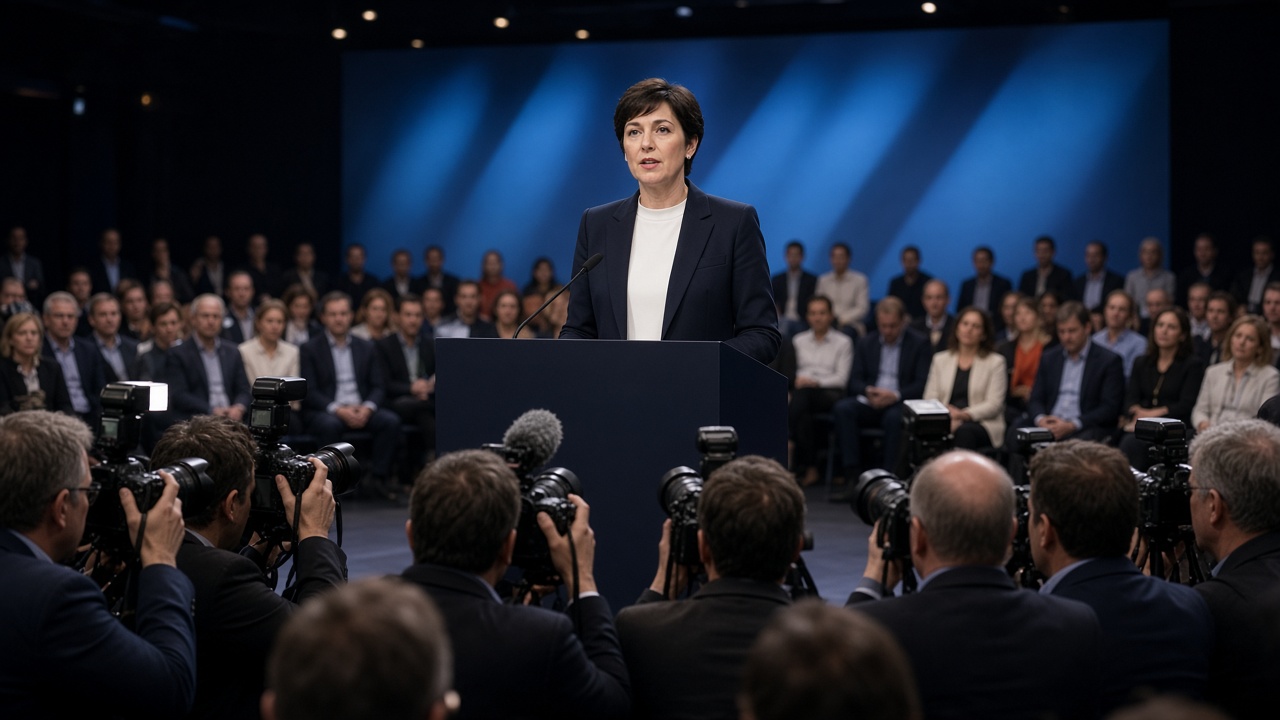
Andy Burnham can dismiss election speculation. The bond market will not be so easily satisfied. At Labour's Liverpool conference, Burnham ruled out an early election and pointed to 2029, according to reports. That is a sensible move for a leader who wants to quiet Westminster's perpetual campaign. It does nothing to answer the question gilt investors are asking: who will take the fiscal decisions that cannot wait until the next manifesto?
This is not about the date of the ballot. It is about the credibility of the path between now and then. The UK's public finances are exposed to three pressures at once: debt interest that resets with market yields, inflation that remains uneven, and spending demands that cannot be deferred indefinitely. In that setting, "not yet" is not a fiscal strategy. It is a bet that markets will stay patient while difficult choices are postponed.
The global backdrop makes that bet riskier. US 10-year Treasury yields were around 5.21% at Friday's close, a level that keeps global term premia elevated. UK gilts are especially sensitive because of the country's duration and index-linked debt. The FTSE 100 can post weekly gains—banks and miners have helped—while the bond market remains nervous. Equity indices are not a verdict on fiscal sustainability. They are a verdict on corporate earnings and commodity prices. Gilt yields are the verdict that matters here.
We take Burnham's point that election timing is not fiscal policy. He can rightly say that a campaign would paralyse decision-making, and that the Budget is the proper moment for tax and spending plans. He can also note that much of the recent yield pressure is global, not a judgment on any one UK politician. Both points are true. But they do not neutralise the risk. If global yields are high, the UK's room for manoeuvre is smaller, not larger. If the Budget is the proper moment, then the run-up to it is exactly when investors need a credible framework, not a vacuum.
There is also a political economy problem. The temptation for any government is to keep the painful choices until after the election. That is rational for the incumbent, but it is costly for the country. Gilt investors anticipate it. They demand a higher term premium for holding UK debt through a period of uncertainty. That premium shows up in mortgage rates, corporate borrowing costs, and the government's own interest bill. By the time the election comes, the fiscal space may have shrunk further.
What would a credible patience look like? It would start with a clear medium-term fiscal rule—one that reduces debt as a share of GDP over a defined horizon and is resilient to slower growth. It would set out departmental spending envelopes before the Budget, so that the trade-offs are visible. It would ring-fence capital investment where it raises productive capacity, while being honest that day-to-day spending cannot be protected everywhere. And it would address energy support in a targeted way, rather than leaving households and businesses exposed to another price spike while ministers wait for a better political moment.
Burnham's Liverpool speech reportedly steered away from detailed commitments on diesel relief and the Budget. That is understandable. Conferences are for direction, not spreadsheets. But markets do not trade direction. They trade probabilities and cash flows. A leader who says the next election is not until 2029 is effectively asking investors to lend for longer on the strength of a plan they have not yet seen. That is a big ask, especially when the US curve is near 5.21% and the UK's own gilt market is already sensitive to any hint of fiscal drift.
The government should not wait for the Budget to signal the shape of consolidation. It should publish the fiscal framework now, even if the numbers are provisional. The Chancellor should use the Budget to lock in a credible path, not to surprise the market with a patchwork of measures. Opposition parties have a role too: they should stop treating every yield move as a political football and start specifying what they would do differently. If the answer is "wait for growth," they should say what happens if growth does not arrive.
None of this means Burnham must call an election. It means he cannot use the absence of an election as a substitute for a fiscal plan. Voters may accept patience. Bond markets will price it. The difference between the two is the cost of waiting.