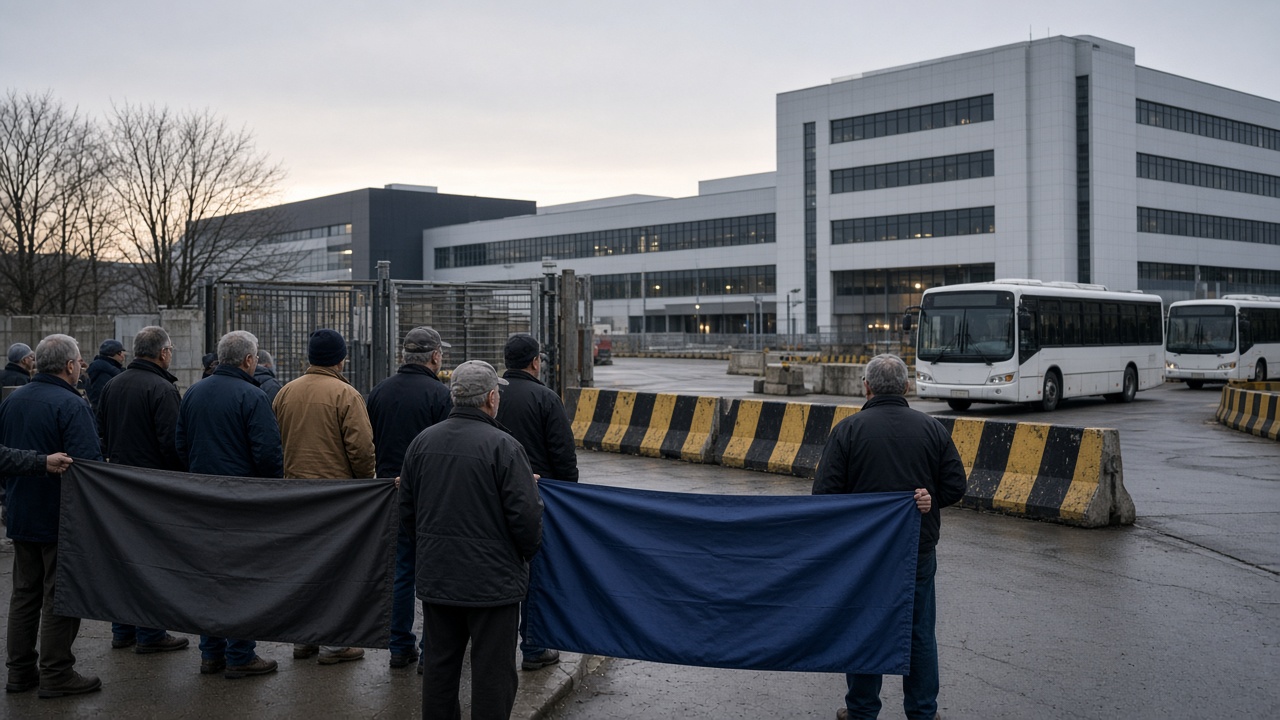
SEOUL — Samsung Electronics' wage talks broke down Friday after post-adjustment mediation by the Central Labor Relations Commission ended without an agreement, the union said, setting up a full-scale strike at the world's largest memory-chip maker. The union said it would move to a lawful walkout. The company said the bonus demands on the table were unacceptable. The failure shifts the dispute from the bargaining table to factory gates and government offices in Seoul.
The mediation was the last formal step before the union could call a strike under Korean labor procedures. It ended with no deal. The union has not framed the walkout as a short warning stoppage. Its public position is a full strike, a move that would test Samsung's production planning and the government's appetite for intervention in a strategic industry.
The commission's post-adjustment mediation is meant to give both sides one more chance before a lawful strike. When it fails, the union can proceed under its internal rules and labor law. The company can still challenge the scope of the strike, seek injunctions and argue that certain roles are essential. That legal fencing is already visible in the safety-crew order.
Bonus and performance pay — and a union of 41,000 to 47,000
The dispute has centered on bonuses and performance-based pay, the part of Samsung's compensation that rises and falls with business results. The company has called the union's bonus demands unacceptable. The union argues that the current system does not fairly share the gains of a semiconductor cycle. Union headcount estimates range from about 41,000 to 47,000, a scale that matters less for any single day of protest than for the credibility of a sustained walkout across memory and foundry operations.
Prime Minister Kim Min-suk convened an emergency ministers' meeting as the mediation collapsed, putting the government's role squarely into the dispute. Emergency adjustment powers are under debate. Those powers could delay or suspend a walkout in sectors deemed essential. The debate is delicate: invoking them against a union at Samsung Electronics would be a significant state intervention, while declining to use them leaves the company to manage the risk.
A court injunction already requires Samsung to keep semiconductor safety crews at normal levels during any industrial action. That order limits how far the company can thin out critical maintenance and safety staffing, but it does not block the walkout itself. The distinction is central to the next phase: the union can still strike, while Samsung must preserve minimum safety coverage at fabs.
The immediate question is timing. A full strike would begin after the union completes its legal procedures and notifies members. The company's next move is likely to be a mix of court challenges, emergency applications and production triage. For now, the mediation room is empty, the union's strike plan is live, and the government is weighing whether a strategic industry can be allowed to stop.