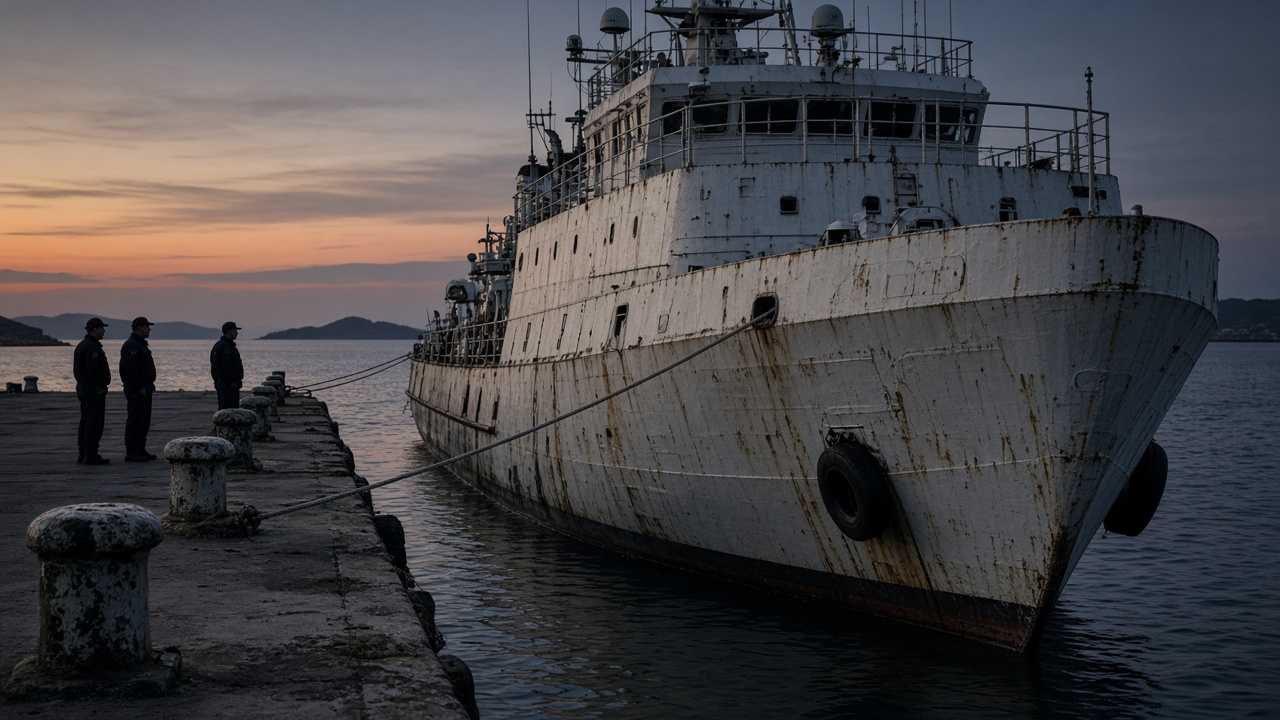
A retired 61-metre Taiwan Coast Guard cutter has reached the Philippines and been handed to the Philippine Coast Guard through a non-governmental channel, a transfer that drew condemnation from Beijing and a second wave of criticism at home over how maritime cooperation is being run without formal state-to-state ties.
The handover took place on Monday, according to reporting by the South China Morning Post, which on Saturday framed the episode as a double outcry — objections from Beijing, and objections from critics in Taiwan who say the government is widening security cooperation through the grey zone between official and unofficial channels.
What is confirmed
The vessel is a retired cutter of roughly 61 metres. It is no longer in Taiwanese coast guard service. It has moved to the Philippines and been passed to the Philippine Coast Guard, with a non-governmental organisation acting as the intermediary rather than a government-to-government agreement.
Those are the load-bearing facts as published. The published accounts do not spell out the ownership chain at the moment of transfer, the terms attached, or which entity paid for the voyage.
Which Taiwan agency holds the file
A decommissioned Coast Guard Administration hull is state property before it is anything else. Disposal normally runs through public-property procedures, which means a paper trail should exist inside the Coast Guard Administration and, above it, the Ocean Affairs Council.
The open question is what kind of document that trail contains. A disposal, a donation, a sale to a private party that later passed the hull onward, and a de facto government transfer dressed as charity are four different things with four different approval requirements. Critics who say the DPP is conducting maritime cooperation without formal ties are effectively asking which of the four this was, and who signed.
Beijing's objection
Beijing's Taiwan Affairs Office condemned the handover, treating it as a political act by Taipei and a step toward security alignment in waters China claims. The office has not been reported as describing any specific countermeasure. A statement of condemnation and an operational response are separate events, and only the first has occurred.
The second outcry
The domestic criticism is not identical to Beijing's. It centres on process: that a retired patrol hull with Taiwanese coast guard history is now in the hands of another coast guard in a disputed maritime theatre, and that the public was told after the fact rather than before.
Fisheries is the backdrop. Taiwanese and Philippine fishing fleets operate in overlapping waters that China also claims, and coast guard hulls are the instruments that turn those overlapping claims into daily encounters at sea. A transfer of one retired cutter does not change the balance. It does change who shows up.
What is still unknown
Which organisation brokered it, and whether it is registered in Taiwan, the Philippines, or elsewhere. Whether Manila formally requested the vessel or accepted it. Whether Taipei's Coast Guard Administration and Ocean Affairs Council approved the route or learned of it alongside the public. Whether the Philippines will arm and crew it as a patrol asset, and whether more retired hulls follow.
Also unresolved: whether the political cost inside Taiwan lands on the agency that owned the vessel or on the ministry that owns the agency. Until the disposal file surfaces, that question has no named answer.
Separately, friction between Washington and Beijing over arms sales to Taipei remains a distinct file from this handover, and the two should not be read as one story.