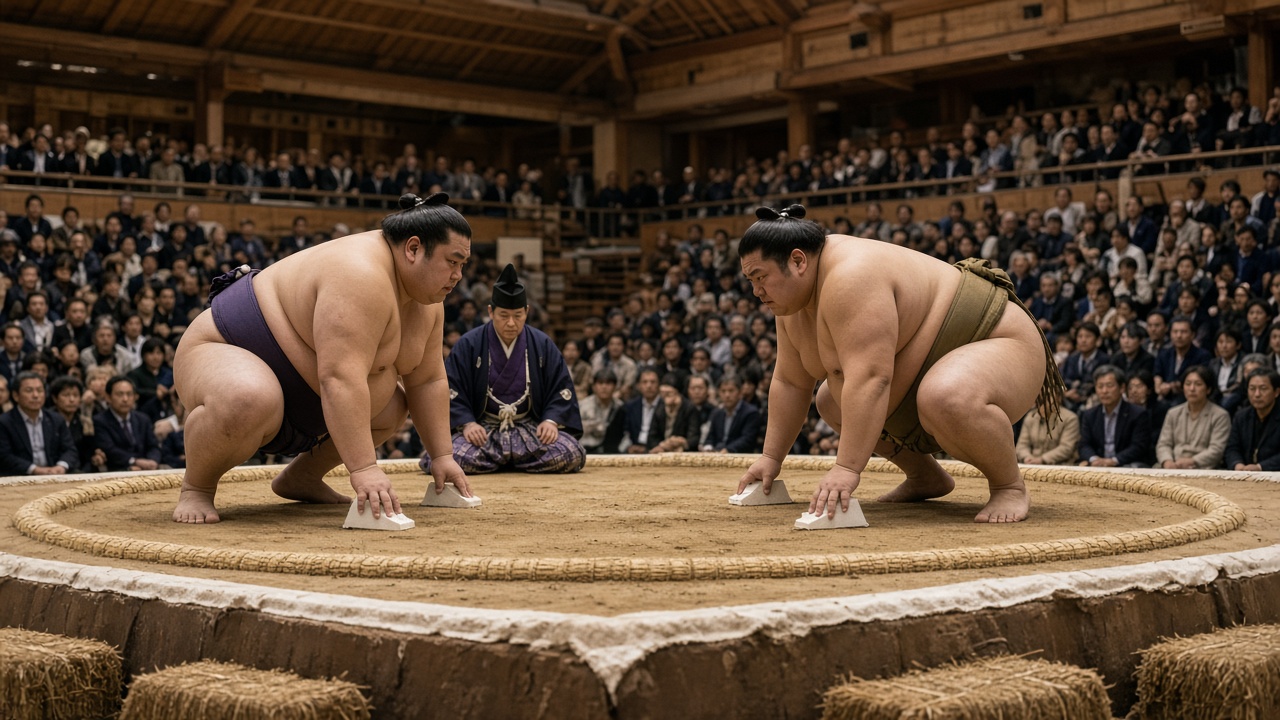
Yokozuna Onosato and Aonishiki walk into Ryōgoku Kokugikan on Sunday tied at 11-3, and the Autumn Grand Sumo Tournament will be settled in the last hour of the fortnight.
The two are scheduled to meet on day 15. Onosato arrives there after losing to Kotozakura on day 14, his second defeat in the closing stretch of a tournament he had led. Aonishiki won his own bout that afternoon, drawing level and turning a race that looked close to settled into a single match.
That is the shape of the Aki Basho now: one yokozuna, one challenger, fifteen days of work compressed into a bout that may not even be the last one on the clay.
What happened on day 14
Onosato's loss to Kotozakura changed the tournament's arithmetic rather than its personnel. The yokozuna had been ahead; by the end of the afternoon he was level with Aonishiki at 11-3, and Sunday's schedule had become a decider rather than a coronation.
Day 14 is traditionally the point where the title race narrows to the men still capable of reaching 12 or 13 wins. This year it narrowed to two — and to a pairing the schedule had already set for the final afternoon.
The rule waiting behind the bout
If Onosato and Aonishiki finish level — or if either wins Sunday and another wrestler pulls even — the championship is not decided by the scoreboard. The Japan Sumo Association's rules provide for a playoff, the kettei-sen, held immediately after the final bout of the day.
With two wrestlers tied, they meet once. With three or more, the format changes: the tied wrestlers enter a knockout, and the first to win two bouts in succession takes the yusho. Sumo's tiebreaker is deliberately short. It is not a second tournament; it is a single evening's resolution, staged in front of the same crowd that watched the fifteen days which made it necessary.
One detail matters more to the men than to the spectators. Playoff results are not added to the official record. A wrestler who loses the kettei-sen still carries his fifteen-day score onto the next banzuke, which is why a playoff defeat sits differently from a loss on day 12.
The body, after fifteen days
By the final day of a September tournament the accumulated cost is visible. Fifteen bouts in fifteen days, at 150 kilograms and up, against men who have spent the same fortnight studying each other's grip, footwork and favoured opening move. Onosato and Aonishiki have shared the same clay for two weeks and will meet when both are at their most depleted.
Onosato's closing defeats will be read in the usual way. A yokozuna cannot be demoted, but the expectations attached to the rank do not pause for the calendar. A second loss in the final days invites questions about whether the top of the banzuke is being held as firmly as the title suggests. A win Sunday — and, if required, a playoff — answers those questions more cleanly than any press conference.
What to watch
The bout itself is likely to turn on the first exchange. Onosato's advantage has been forward pressure and keeping his opponent's hands off his belt; Aonishiki's has been patience, working the edges and waiting for a mistake. Kotozakura showed on day 14 that the yokozuna can be moved off his line.
Then comes the schedule after the bout. If the records hold, the crowd stays in its seats. The yusho presentation, the interview, the bow — all of it waits on a match that may take ten seconds and settle two weeks.