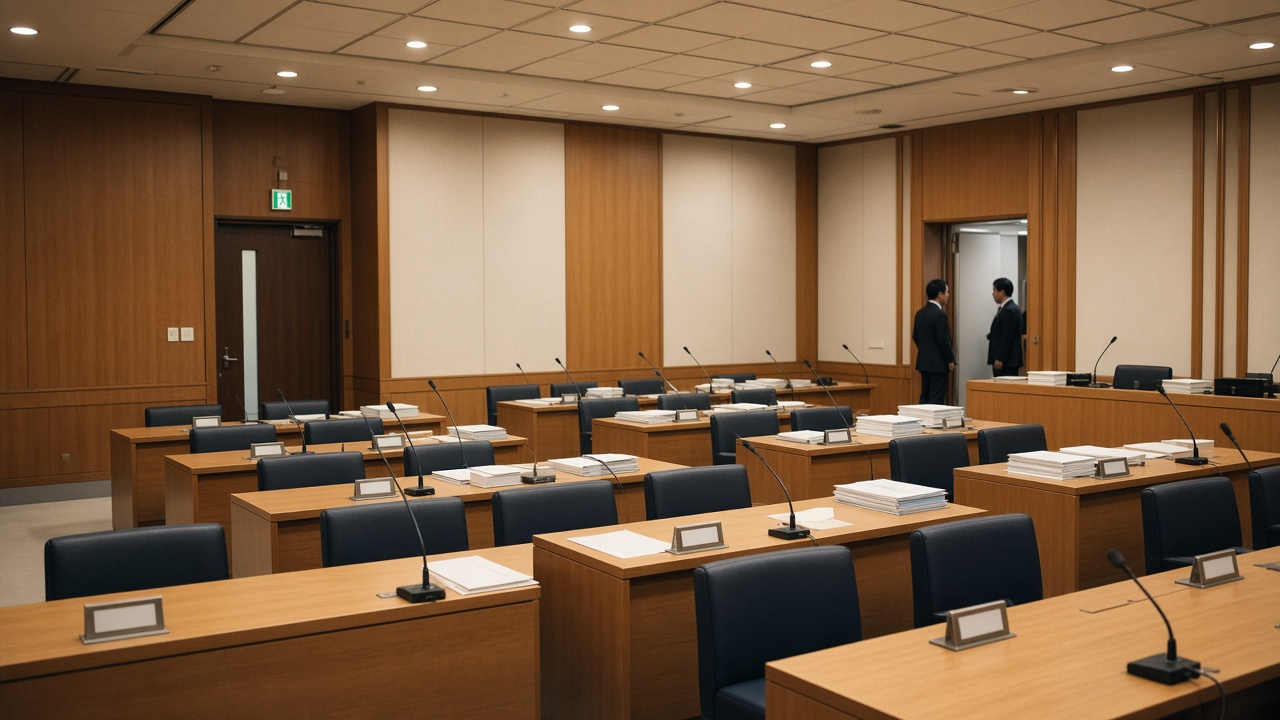
Japan's Extraordinary Diet session opens on October 5 and is scheduled to run 69 days, to December 12 — a window that has to fit two bills the government wants to be able to point to: a temporary cut to the consumption tax on food, and a reduction in the number of lower-house seats.
Neither bill is a surprise. What decides whether they become law is the calendar, the committee roster, and the order in which the two are taken up. That sequence is the thing to watch from the first week.
What is on the order paper
The food measure is the headline item on the tax side. As outlined, it is a temporary one-percentage-point cut applied to food, with the duration and the exact scope of eligible items left to drafting. Those two variables are where committee time goes: how long the cut lasts, which items are inside it, and how the revenue gap is accounted for once it lapses.
The implementation layer matters as much as the statute. A consumption tax cut reaches households only if point-of-sale systems, invoicing and reporting are updated in time, and members on both sides tend to press on the distance between what the law says and what happens at the checkout counter.
The seat-reduction bill is the structural item. It cuts the size of the House of Representatives — how many seats go, and how the cuts fall across prefectures, are the drafting questions — and the harder question is timing: whether the change applies before the next general election or after it. The when is often more contested than the how many.
The opening date also frames the cabinet reshuffle discussion, since a new lineup would be settled before or just as the session begins. That timing matters inside the Diet, because the ministers who answer committee questions are the ones who have to carry the bills through.
The chair fight that shapes the session
Before either bill reaches floor time, the houses have to organize. The unresolved item is the chair of the committee handling political-funds matters — the slush-fund file — where the LDP and CDPJ are in a contest over who holds the gavel.
A committee chair sets the agenda, decides which witnesses appear and how long ministers sit for questioning. Holding the chair on a political-funds committee is not a procedural detail; it decides how much of the file is opened in public and at what pace.
If that fight is not settled in the opening days, the back end of the session gets tight quickly, because both bills still have to clear both chambers.
The calendar arithmetic
Sixty-nine days sounds generous until the known costs are subtracted: opening statements, question time, ministerial availability, and the ordinary business that does not disappear because two marquee bills are waiting.
A tax bill needs a committee stage in each chamber. A seat-reduction bill invites extended debate because it touches the composition of the chamber itself. December 12 is a ceiling, not a target. Anything not passed by then ends with the session unless it is carried over or the session is extended, and the decision on extension is typically taken late, once the backlog is visible.
The order of business matters too. If the tax bill goes first and absorbs the session's early energy, the seat bill inherits a compressed back half. If the seat bill goes first, the food tax cut can run straight into the extension debate — which turns a tax measure into bargaining power over the rest of the calendar.
What to watch
Four markers. Whether the committee chairs are settled in the first week, because a slow start compresses everything else. Whether the food-tax cut keeps its one-point design through drafting or is redrawn in committee. Whether the seat bill moves as a single package or splits so one part can pass. And whether the government reaches for an extension in late November rather than let the calendar run out.
On the current schedule, the session is the vehicle. The votes and the committee rosters decide the rest.