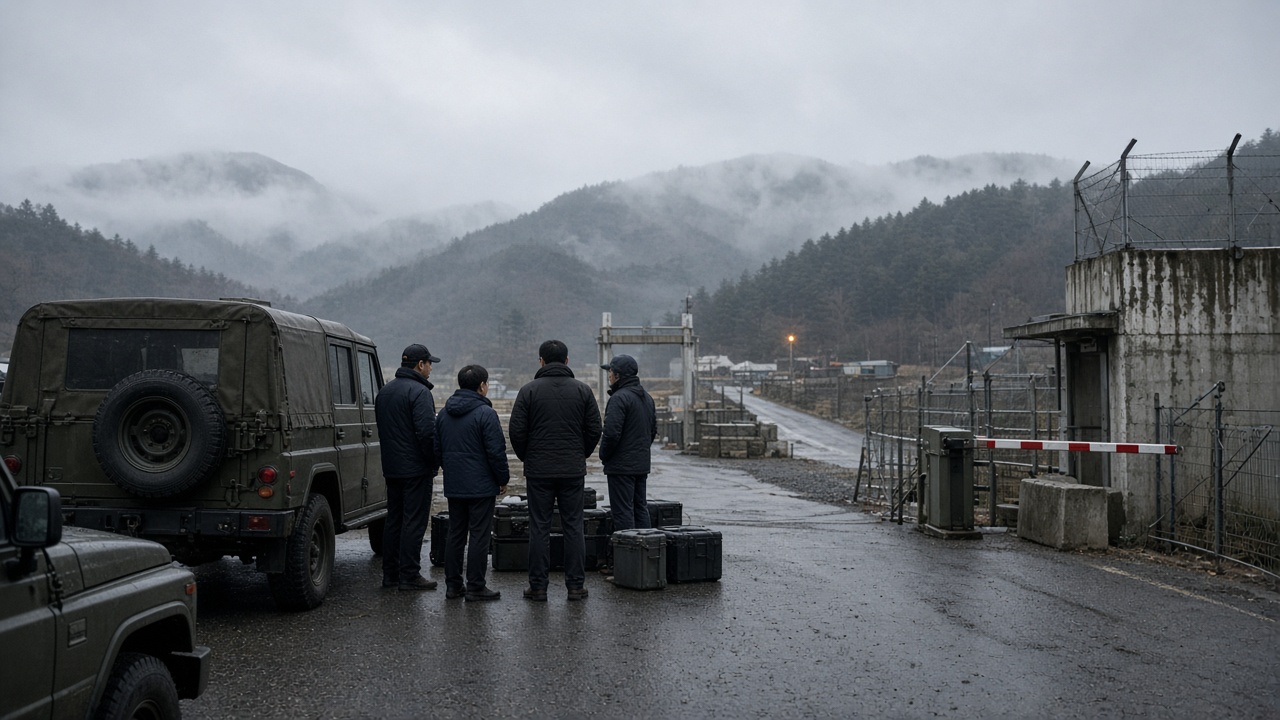
The calendar and the pressure
SEOUL — The joint investigation into the Sept. 21 mine blast inside the Demilitarized Zone is now set to begin Sunday, moved up from Sept. 29 after the United Nations Command pressed for faster access to the site, independent lawmaker Han Dong-hoon said.
Han, a sharp critic of the Lee government’s border security record, framed the two-day acceleration as proof that outside pressure, not Seoul’s own urgency, drove the response. He said the government cannot defend the DMZ after the blast in Paju that injured three people. The schedule change, he argued, was less a sign of competence than a concession to the U.N. Command.
The political argument is not about whether the site should be examined. It is about what the timing says. The U.N. Command, which coordinates on DMZ matters under the armistice, pushed for a prompt probe. South Korean military officials had planned to start the joint investigation on Sept. 29. By Saturday, the Joint Chiefs of Staff had entered the DMZ to prepare the environment for forensic work. That entry was for preparation, not the joint forensic investigation itself. The joint probe was then moved to Sunday.
Han’s independent megaphone
That distinction matters for the political fight. Han’s claim is not merely that the initial response was slow. It is that the government’s border posture failed before the blast and then needed outside prompting to act after it. The Defense Ministry has pushed back on that framing, disputing the idea that the two-day delay amounts to a broader verdict on Seoul’s ability to manage the DMZ. The ministry has instead emphasized that the investigation is moving forward with the U.N. Command.
For Han, the dispute is useful. As an independent lawmaker, he is not bound by a party whip or a committee strategy. He can turn a military accident into a test of the government’s competence without waiting for a formal legislative inquiry. That gives his Sunday statement an outsized place in the political calendar even before the joint investigation produces a finding.
The immediate calendar is narrow. Sunday, the joint forensic work begins. In the days after, the questions will be about what the U.N. Command requested, when the request reached Seoul, and why the original Sept. 29 date was set. Then the investigation will produce facts — or not enough of them — and the political fight will shift to who can frame the result first.
What the Assembly can do
That is where the National Assembly comes in. The defense committee has no independent forensic capacity, but it can call officials, request documents and keep the timeline in public view. If the joint probe moves quickly, the committee may have little room to intervene. If it stalls, Han and other critics will have a ready-made agenda: why the site was delayed, who knew what, and whether the government treated a border incident as a public-relations problem rather than a security one.
The Defense Ministry’s pushback has focused on the political use of the calendar. The ministry has disputed the idea that the accelerated schedule proves dysfunction, while Han’s counter is that cooperation under pressure is not the same as readiness. The two sides are not really arguing about the forensic work. They are arguing about what voters should conclude from the fact that it took a U.N. Command request to move the date.
For now, the only confirmed change is the date: Sept. 27 instead of Sept. 29. The blast injured three people on Sept. 21. The JCS entered the DMZ on Sept. 26 for environmental preparation. The joint investigation is the next step. Everything else is political framing, and both sides know it.
Han’s broader claim — that the Lee government cannot defend the DMZ — will not be settled by the forensic report. A report can identify a cause, trace a device or assign responsibility for the immediate incident. It cannot answer the political question of whether the government was prepared. That question will be answered in committee hearings, in press releases and, eventually, at the ballot box.
That is why the schedule change matters. It gives Han a concrete grievance, not just a general critique. It gives the Defense Ministry a chance to show urgency. And it gives the National Assembly a timeline to scrutinize when the initial emergency response fades and the legislative calendar takes over.
Sunday’s investigation may be the first time the two sides face the same facts. The political fight over what those facts mean has already started.