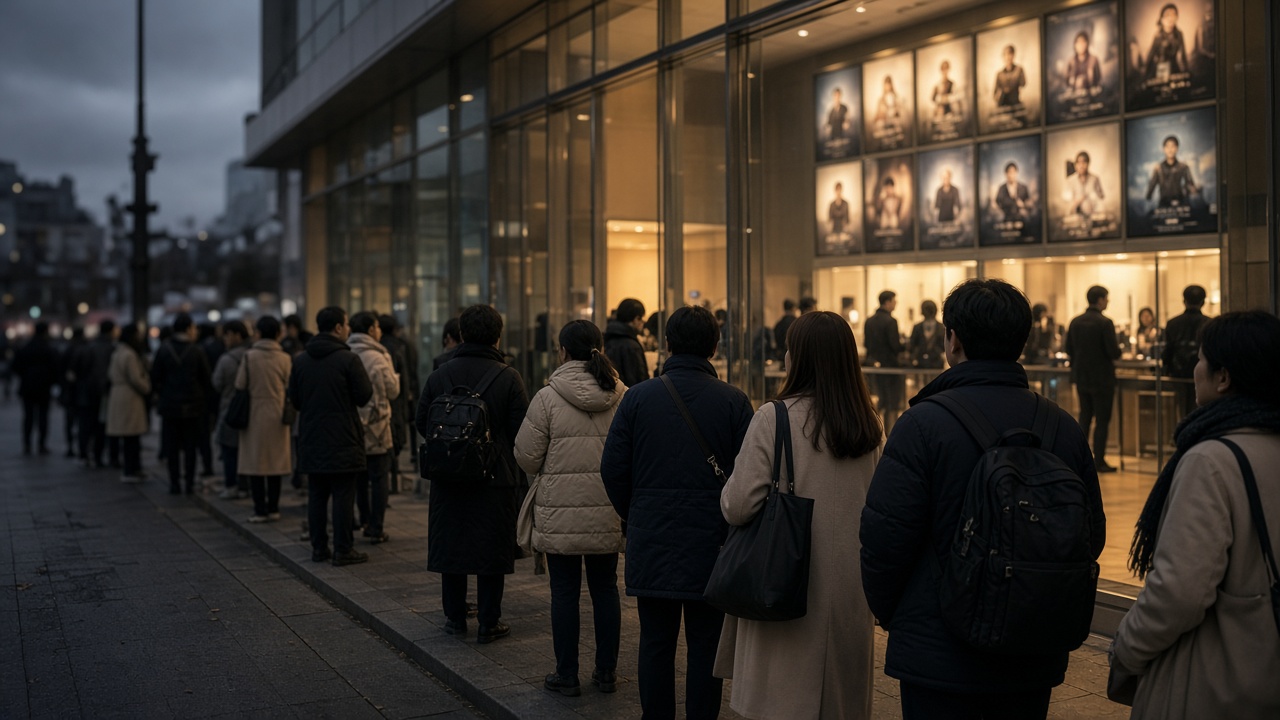
South Korea's all-time box-office record is no longer a comfortable cushion. As of Sept 26, Christopher Nolan's Odyssey had drawn roughly 11.55 million admissions, fewer than 20,000 behind the 11.57 million total of Yeon Sang-ho's Train to Busan, according to the holiday box-office readouts from MT and Herald Business. That gap is not a rounding error. It is a weekend.
For most of the past decade, Train to Busan has sat atop the domestic admissions chart like a monument. Its 2016 run turned a zombie thriller into a global calling card for Korean cinema. Now a Hollywood auteur blockbuster is close enough that a single strong weekday could rewrite the order. The record chase is not just about Nolan. It is about which kind of film South Korean audiences now treat as the biggest event in the market.
A holiday corridor with two stories
The same Chuseok corridor that pushed Odyssey toward the record also gave room to a smaller success. Assassin(s) crossed 1.05 million admissions by the morning of Sept 26, a milestone that would be modest next to a national record but meaningful for a release fighting for screens during a packed holiday week. The Korean market does not have to choose one story. It can hand a record chase to a studio tentpole and still deliver a million-ticket win for a title fighting for screens.
That dual outcome matters to the industry that paid for it. Exhibitors committed screens and premium-format slots during the holiday, when families have time and theaters have their best chance of the year to convert that time into tickets. For audiences, the payoff was a rare alignment: a director-driven Hollywood film with large-format appeal and a domestic title still finding its audience. The window, however, is short. Once the holiday traffic drains and the weekday schedule resets, the same screens will be reallocated.
Admissions are counted in bodies, not revenue, so the record is about how many people chose the film, not how much they spent. That distinction matters in a holiday week when multiplexes push premium screens. A blockbuster can post a huge revenue weekend while its admissions tally moves more slowly. Odyssey's near-record run is an admissions story, which means it has done the harder work: convincing a very large number of individual moviegoers to leave home, not just charging a smaller number more money for a better seat.
What the record would mean
If Odyssey passes Train to Busan, it will not simply be a win for one distributor. It will be a signal that the top of the Korean box office is no longer reserved for homegrown phenomena. The country's admissions record has been a point of pride because it was set by a Korean film that traveled globally without a Hollywood studio behind it. A Nolan film taking the same spot would show how thoroughly the local market has integrated into global release patterns, especially around holidays.
But the record is not yet his. The remaining distance is smaller than the daily admissions of a single large multiplex on a busy Saturday. That is why the next few days matter more than the past month. A strong Sept 27 holiday finish, followed by holdover business into the workweek, could close the gap. A softer Sunday and a sharp Monday drop could leave Odyssey just short, turning 20,000 tickets into the most expensive no in recent Korean box-office history.
The window is also a function of release strategy. Chuseok gave the film a concentrated holiday corridor, but it also stacked competing titles into the same week. Assassin(s) needed its own screens to reach 1.05 million; family films and holdovers needed theirs. When the holiday ends, theaters will not keep the same allocation. Odyssey's record attempt depends on whether exhibitors keep it in premium auditoriums long enough to convert the remaining demand.
The audience is the final arbiter. Korean moviegoers have already paid for Odyssey at a scale that makes the all-time list uncomfortable for the incumbent. They have also paid for Assassin(s) at a scale that keeps non-tentpole filmmaking visible in the same conversation. The record, if it falls, will belong to a Hollywood film. The market that made the race possible remains Korean.
The next official tallies will show whether the holiday gave Odyssey the final push or left it a few thousand admissions short. Either way, the gap is now small enough to change how the industry talks about the ceiling for foreign releases here. For Train to Busan, the monument has a visitor at the gate.