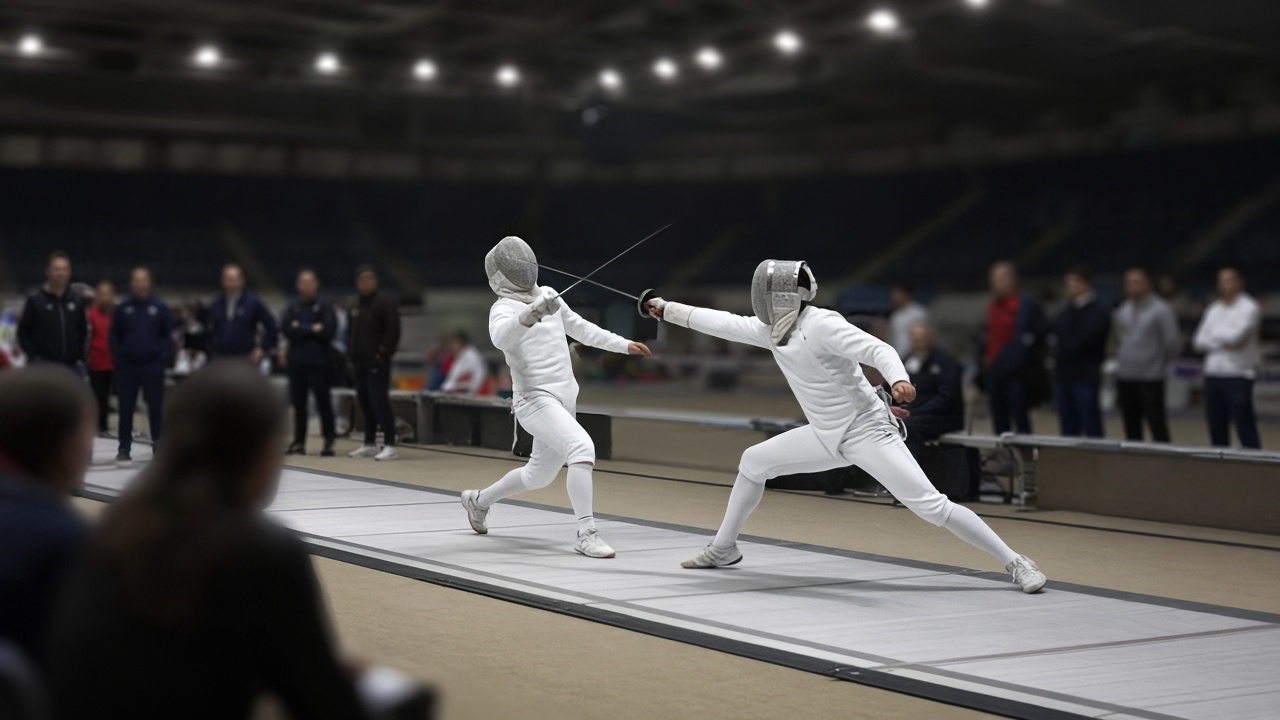
The men’s sabre team final came down to the last touch. Oh Sang-uk and South Korea edged Japan 45-44 at the Asian Games on Sunday, taking a fourth straight gold in the event and denying the host nation a title on its own strip.
Team sabre is a format that rewards depth and nerve in equal measure. Each side fields three fencers. The match runs through nine bouts, with the score carried over from one pairing to the next. The first team to 45 touches wins. A five-touch run can flip a final, and a single defensive error at 44-44 ends the night. Korea’s one-touch margin is the thinnest possible proof that the final was not decided until the last exchange.
Oh, the veteran anchor of Korea’s sabre programme, has been the face of this run. His presence gives the team a closer who has handled Olympic and world-level pressure. Japan, meanwhile, has been building a sabre squad capable of matching Korea’s speed. The host team pushed the final to the limit, and the 45-44 scoreline will sting precisely because the gap was one touch, not one class.
What the format demands
Sabre is the fastest of fencing’s three weapons. Points arrive in bursts, and team bouts are less about a single perfect action than about managing momentum. Coaches can substitute, but the core three usually carry the load. A fencer who loses a bout 5-2 can still help the team if the next teammate answers with a 7-3 run. That is why team sabre often looks like a series of short, violent corrections.
Korea’s fourth straight Asian Games title also points to a pipeline. The country has not treated sabre as a one-athlete project. Oh is the headline, but the team gold requires three fencers who can absorb a bad stretch and still leave the anchor with a chance. Against Japan, that structure held by the smallest margin available.
The Korean team’s preparation follows a familiar pattern: centralized training camps, video review of each opponent’s favourite lines, and simulated score scenarios. In team sabre, coaches often script the order so that a strong starter can hand a lead to the middle leg, or so that the anchor has a manageable deficit. Japan’s run to 44 forced Korea to play the final bout without margin. One touch was the difference between a fourth straight gold and a home celebration.
The body and the calendar
For the athletes, the Asian Games sit inside a crowded autumn. Fencers carry a season that includes Grand Prix events, World Cups, and national team duties. The team event adds three fencers’ workloads into one night: warm-ups, repeated bouts, and the emotional swing of a score that can move by five touches in under two minutes. Recovery is not a footnote. It is part of the result.
Korea’s win also landed while the KBO was dark. The league is working through its Chuseok schedule, with makeup doubleheaders set to squeeze the calendar once play resumes. That left the domestic sports window to the Asian Games and to K League 1, where FC Seoul leads the table. Gangneung and Chuncheon host fixtures in the same window, a reminder that the Korean sports calendar rarely pauses in full.
For the KBO, the post-Chuseok stretch will test pitching depth. Doubleheaders force clubs to use more starters and more bullpen arms, and the standings can move quickly when two games are packed into one day. For K League 1, FC Seoul’s position at the top gives the league a clear target for the fall run-in. Neither competition stopped because the national team was away. They simply shifted the attention.
KBO clubs have been bracing for the post-Chuseok doubleheaders since the rainouts and holiday dates stacked up. The makeup games will not change the fundamental math — every club plays the same 144-game season — but they change the daily labour. Rotations shorten. Travel gets tighter. A bullpen that looked deep in August can look thin by the first week of October.
FC Seoul’s lead at the top of K League 1 gives the football season its own gravity. The club’s advantage is not yet a title, but it sets the chase for the rest of the table. Gangneung and Chuncheon hosting matches on the same weekend means the league is not ceding the holiday window to other sports. For fans moving between the KBO’s return and the K League’s run-in, the autumn schedule is a test of attention as much as endurance.
What it means for the Asian Games
Japan’s near-miss matters for the region. A host nation pushing Korea to 45-44 in sabre suggests the event is no longer a procession. Korea still has the top-end talent and the institutional memory of winning team golds, but the margin is now thin enough that one tactical substitution or one missed parry can change the colour of the medal.
For Oh, the fourth straight title adds another line to a career already built on the biggest stages. For his teammates, it is a team medal that will be remembered for the score as much as the name. The final touch is the only one that matters in a 45-44 match, and Korea got it.
The Asian Games continue with fencing’s remaining events and a broader Korean delegation still chasing medals. At home, the KBO will return with a compressed schedule, and K League 1 will keep playing through the holiday weekend. The sabre team’s gold does not pause any of that. It only raises the standard for the next Korean team that steps onto the strip.