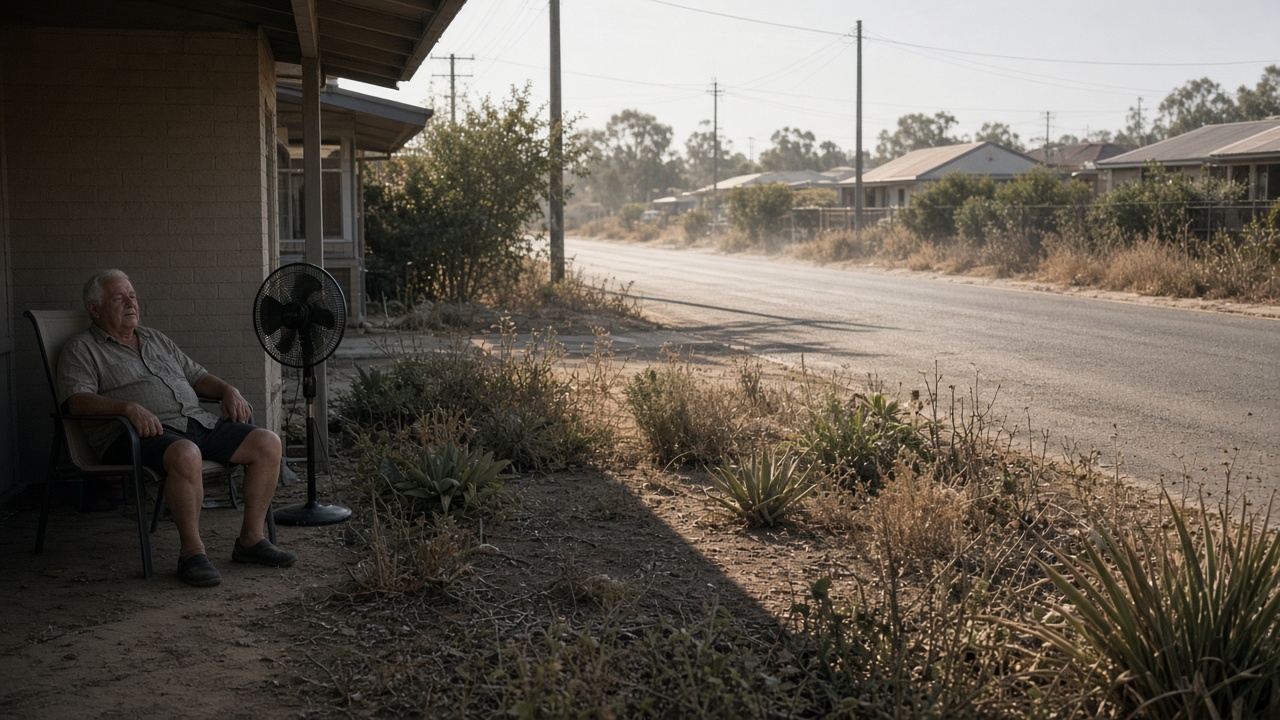
Australian health and climate researchers are facing a summer forecast with a hard number attached. A Climate Impact Lab mortality estimate, cited in ABC News reporting on 27 September, projects that a super El Niño could add about 260 heat-related deaths in Australia by February.
The figure arrives before the season has started, and before the first sustained heatwave has tested the warnings, hospital plans and emergency protocols that would sit behind it. That timing is the point. Seasonal forecasts are supposed to buy time. The question is what kind of time a mortality estimate can actually justify.
What the estimate measured
At its core, a heat-mortality projection is not a count of death certificates. It is a model that combines a climate outlook with a historical relationship between temperature and deaths. Researchers typically build a baseline: what mortality would have looked like without unusual heat. Then they add the projected temperature anomaly, adjusted for how vulnerable populations respond at different thresholds.
That relationship is rarely linear. Moderate heat can raise deaths among people with cardiovascular or respiratory disease, especially older adults. Extreme heat can push emergency services, housing and power systems past the point where individual behaviour can compensate. The 260 figure is best read as an excess-deaths estimate: the difference between a summer with super El Niño conditions and a counterfactual summer without them.
Why the forecast is not a fate
Projections of this kind carry the usual limits of seasonal climate outlooks. El Niño increases the odds of hot, dry conditions in parts of Australia, but it does not determine where heat will concentrate, how long it will last, or whether a single severe event or a sequence of moderate ones does the damage. A “super” El Niño label can be useful shorthand, but it is not a physical constant.
Mortality models also depend on assumptions that can travel poorly between cities and states. Housing stock, tree cover, air-conditioning ownership, work patterns, public health messaging and hospital capacity all shape who survives a hot week. A national estimate can hide that variation. The same temperature rise may produce different outcomes in western Sydney, inland Queensland, Perth and regional Victoria.
That is why the methods matter as much as the headline number. A credible estimate should say which baseline years were used, how age and cause of death were handled, whether the model accounts for adaptation, and how wide the uncertainty range is. Without those details, 260 is not a prediction that can be checked against a single summer. It is a scenario.
What would replicate in Australia
An Australian replication would need local mortality data linked to weather stations or gridded temperature products, not just a national average. It would need to distinguish heat as a contributing factor from heat as an underlying cause. It would need to account for the lag between a hot night and a death recorded days later, and for the way hospitals code heat stress.
CSIRO, the Bureau of Meteorology, state health departments and university groups already hold pieces of that puzzle. A campus lab could test whether the Climate Impact Lab signal holds when Australian summer temperatures are run through local exposure-response curves. A state health team could ask whether the projected deaths fall in the same age groups and postcodes that previous heatwaves hit hardest.
That work would not settle whether the estimate is right. It would show whether it is actionable. If the excess deaths are concentrated among people living alone, in rental housing with poor insulation, or in areas with limited health services, the response is different from a projection that spreads risk evenly across the population.
The planning window
By February, the summer will have produced its own evidence. Until then, the 260 figure is a warning about scale, not a ledger. It suggests that a super El Niño summer could be measured not only in maximum temperatures and fire danger ratings, but in deaths that might have been prevented.
For forecasters, the next step is transparency. For health agencies, it is preparation. For researchers, it is replication with Australian data. The number will be judged less by whether it was alarming than by whether it was clear enough to prompt a response before the heat arrived.