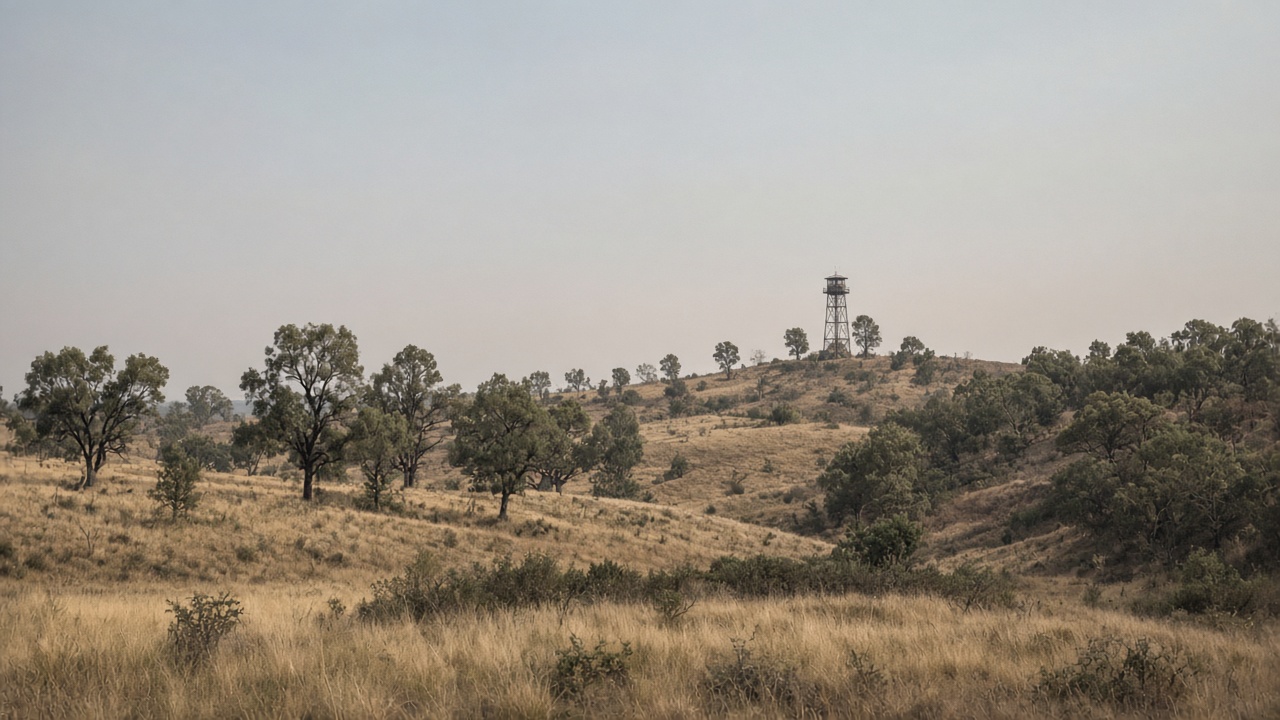
Australasia’s fire authorities warned on Monday that grass fuel loads in the Top End and Gippsland are tracking above normal for late September, elevating bushfire risk even where soil moisture looks healthy after a wet winter in parts of the south-east.
AFAC’s spring outlook, compiled with Bureau of Meteorology fire-weather specialists, names elevated risk bands from north Queensland cattle country through Tasmania’s north-east, where below-average winter rain dried fine fuels faster than large logs. Samira Haddad’s science desk said the mismatch — full dams in some capitals, tinder-dry grass elsewhere — is typical of strong El Niño springs that still deliver western rain.
Regional breakdown
In the Northern Territory, early wet-season storms have not yet arrived, leaving savanna grasses cured and ready to carry fire once dry lightning returns. Western Australia’s wheatbelt shows above-average fuel loads after good growing-season rain, a concern for harvest machinery sparks. Gippsland dairy country faces the opposite problem: pasture growth stalled by frost, leaving cured stalks between green paddocks.
BOM’s long-range outlook for September to November favours warmer nights nationwide and below-average rain in parts of south-eastern Australia, including Tasmania and southern Victoria. That combination lengthens the window when grass fires can run before summer crop harvesting begins.
What communities should do
AFAC chief executive Rob Webb urged households to update bushfire survival plans even if their suburb is not coloured red on the map, noting ember attack can threaten Melbourne fringe estates when grass fires hit freeway verges. Councils in the Blue Mountains and Adelaide Hills have brought forward permit-burn windows to reduce fuel before hot winds return.
Climate scientists caution that El Niño strength does not map one-to-one onto Australian fire seasons; local wind patterns and fuel management matter. Still, Monday’s brief gives emergency services ministers talking points ahead of a national cabinet discussion on aerial firefighting fleet readiness.
Research angle
CSIRO teams publishing post-winter soil moisture maps said deep-rooted eucalypts in Gippsland remain hydrated, which can limit crown fires early in the season but does little to stop fast grass runs that threaten stock and fencing. For insurers, the outlook supports continued hardening in northern Australia while keeping south-eastern premiums stable for now — unless October heat records fall as they did in 2023.
Rural fire services in Queensland’s Darling Downs have already cancelled several private burn permits after wind gusts exceeded thresholds on Sunday. Volunteers in the NT said aircraft water bombing contracts are locked in earlier than usual, reflecting lessons from 2024 fires that jumped containment lines when humidity dropped below 15 per cent.