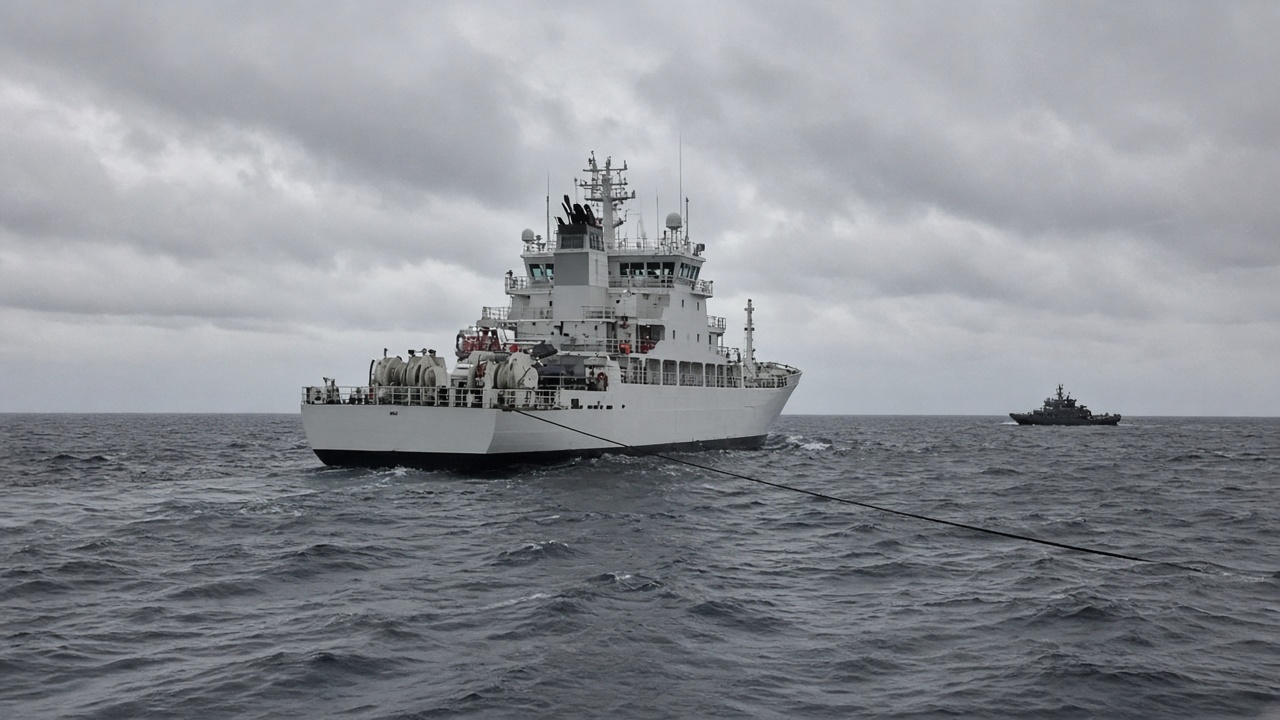
A Chinese marine research vessel dropped what appeared to be survey equipment into the sea inside Japan’s exclusive economic zone off Okinawa on Sunday, prompting the Japan Coast Guard to demand by radio that the work halt, the 11th Regional Coast Guard Headquarters said.
The ship, identified as the research vessel Kexue, was spotted about 72 kilometers north of Ishigaki Island around 12:10 p.m., according to the Naha-based headquarters. Coast guard officials said the vessel lowered a wire into the water in an area where foreign governments must obtain Tokyo’s consent before conducting marine scientific research.
Consent rules and coast guard response
Under the United Nations Convention on the Law of the Sea, coastal states exercise jurisdiction over marine research in their EEZs. Japan routinely protests unauthorized surveys by Chinese government and quasi-government ships, especially near the Senkaku Islands, which Beijing claims as the Diaoyu, and along the Okinawa island chain where fisheries and submarine cables are sensitive.
The coast guard said it radioed the Kexue that oceanographic surveys without Japanese permission are not permitted in the waters. It did not immediately say whether the ship complied or how long the activity continued. Patrol vessels typically shadow such ships while recording positions for diplomatic filings through the foreign ministry.
Pattern near the Nansei chain
Sunday’s sighting comes as Okinawa prefecture and national agencies are already managing typhoon preparations for islands in the Nansei chain. Incursions by research and survey platforms are a parallel security concern for local fishermen, who report sonar and cable operations that can disrupt catches and damage gear.
Defense and coast guard officials in Tokyo have linked repeated Chinese survey activity to mapping of seabed terrain that could support submarine operations or future resource claims. Beijing has argued that much of the activity occurs in waters it considers part of its jurisdiction or in international waters, a position Tokyo rejects when operations fall inside the EEZ drawn from Japanese baselines.
Diplomatic and enforcement options
The foreign ministry is expected to lodge a protest through diplomatic channels if the coast guard confirms unauthorized research, a step Japan has taken in similar incidents involving the Kexue and other vessels operated by Chinese state academies. Unlike territorial incursions that can trigger swifter escorts, EEZ survey cases often end with recorded protests and continued monitoring rather than boarding, unless safety or fisheries laws are clearly violated.
For residents of Ishigaki and nearby islands, the practical impact is recurring tension between routine coast guard patrols and the appearance of large research fleets on horizon radars. Sunday’s radio warning signals that Tokyo is watching the Kexue in real time, but the longer-term test is whether China adjusts routes and notification practices or continues unilateral surveys that keep Okinawa on a near-weekly incident log.
What comes next
Analysts in Tokyo will compare Sunday’s coordinates with past tracks of the Kexue to see whether the ship is retracing known cable corridors or exploring new pockets of the EEZ north of Ishigaki. If the vessel moves toward the Senkaku contiguous zone, Japan may pair coast guard ships with Self-Defense Force intelligence aircraft, as it has in previous standoffs.
Unless Beijing requests formal consent retroactively — which Tokyo has rarely granted after the fact — the incident is likely to join a growing file of EEZ survey disputes that shape Japan-China security talks without resolving underlying sovereignty disagreements.