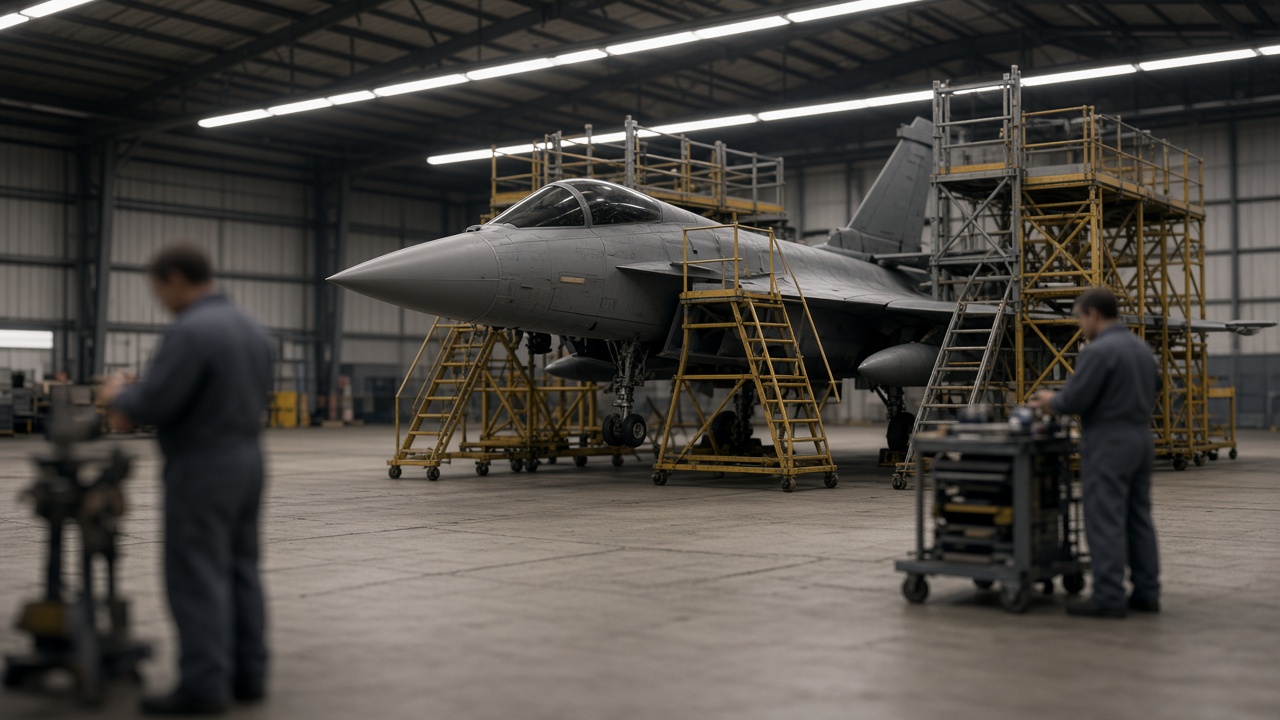
Hanwha Aerospace Co. told investors Monday it held exploratory talks with Mexican defense officials about KF-21 Boramae maintenance concepts after President Lee Jae Myung’s summit memorandums covered aerospace cooperation, filing the update on Korea’s electronic disclosure system without claiming a signed export contract. The notice positions Mexico as a potential long-term sustainment partner rather than an immediate buyer, a distinction analysts said keeps expectations aligned with KF-21’s still-maturing production line.
What the filing actually says
Hanwha described “concept-level discussions” on training simulators, ground-support equipment, and depot layouts that could host Korean technicians if Mexico modernizes its air force logistics chain. No aircraft count, price, or delivery window appeared; the company cited export-control reviews and U.S. component licenses as gating items. Defense Acquisition Program Administration staff told Yonhap that any foreign KF-21 role would require formal government-to-government approval beyond corporate filings.
The Mexico mention sits beside Hanwha’s U.S. shipyard investments and Poland supply lines, showing how Korean defense champions bundle summit diplomacy with investor transparency. Shares traded flat on the disclosure, suggesting the market treats it as optionality.
Why Mexico surfaced now
Lee’s Mexico visit produced MOUs spanning AI, energy, and defense industrial ties; Hanwha’s note is the first defense contractor statement tying those documents to a named platform. Mexico operates aging fighters and has historically bought U.S. and European jets; Korean officials pitch KF-21 as a politically palatable Asian alternative if Washington approves avionics flows.
Korea Times defense desk sources said Mexican delegations toured Hanwha’s Changwon campus virtually during the summit week, focusing on digital maintenance manuals rather than flight performance—a sign talks are about sustainment economics, not dogfight marketing.
Industrial base implications
KF-21 production remains concentrated in South Gyeongsang, where second-phase factories are ramping. Export maintenance hubs abroad could smooth foreign currency earnings but risk angering domestic unions if high-skill jobs migrate. Hanwha pledged that core wing and avionics work stays in Korea, with overseas depots limited to line-replaceable units and trainer devices.
Suppliers of composite materials asked whether Mexico talks imply spare-parts stocking near U.S. border bases; Hanwha did not answer in the filing, promising updates only when talks mature.
Compliance and allies
Because KF-21 engines and sensors include U.S. content, Hanwha must notify Washington of maintenance discussions that could expose controlled technology. A DAPA official said trilateral briefings with the U.S. embassy in Seoul are routine after summit MOUs touch defense. Opposition lawmakers demanded a public hearing on whether Mexico talks distract from KF-21 schedule slips domestic media reported last month.
For technology investors, the takeaway is procedural: summit defense MOUs are now showing up in DART text, not just in presidential press releases. A sale remains distant, but sustainment chatter gives Hanwha a storyline when pitching other Latin American air forces watching Mexico’s next budget cycle.
Program timeline
Air force leaders maintain initial operational capability targets despite weather delays on test sorties; Hanwha’s filing reiterated that export marketing follows domestic squadron acceptance. Mexico’s fiscal calendar means any budget line would likely appear in 2027 discussions at earliest, giving Korean negotiators time to align U.S. export licenses with whatever maintenance model they sketched in Monday’s disclosure.
Supply chain and subcontractors
Tier-two avionics vendors in Busan asked whether Mexico depot talk implies stocking spares near Laredo crossings; Hanwha’s investor relations team deferred answers to future filings. Maintenance exports could help smooth revenue between domestic production lulls, but unions want guarantees that software patches for mission computers stay staffed in Changwon. U.S. partners supplying radar components will likely insist on end-use monitoring clauses typical in Middle East sustainment deals Korea already manages.
Capital markets treated the disclosure as long-dated option value rather than near-term earnings; bond spreads on Hanwha Aerospace paper barely moved. Defense analysts said the filing’s value is diplomatic signaling—showing Mexico MOUs reach DART readers—even if squadrons years away from Latin American tarmacs.