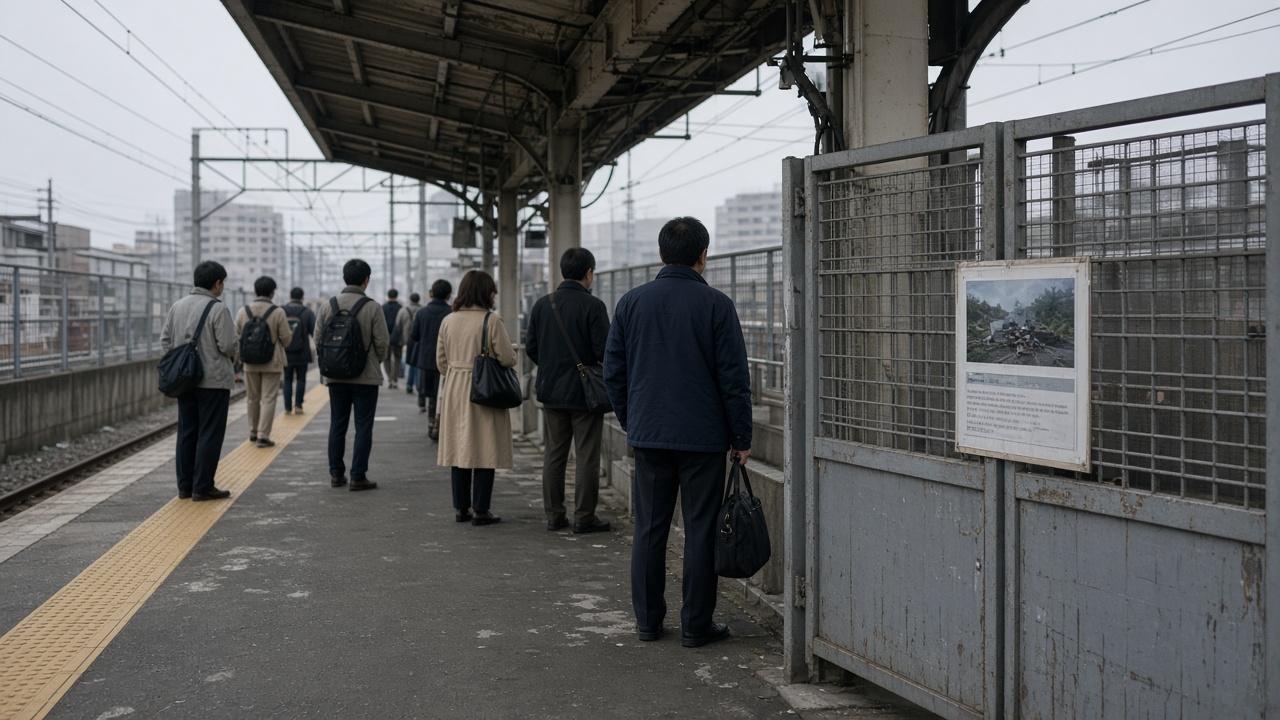
East Japan Railway’s Chiba branch scrapped a substitute coach service that was supposed to start Monday on the crippled Uchibō Line, telling riders hours before the first run that it could not charter enough buses to cover the Kisarazu–Anegasaki gap.
The Uchibō segment between Anegasaki and Kisarazu has been severed since Typhoon No. 25 washed out track and embankments on the Chiba coast. JR East said on 26 September that restoring the line would take at least three months, and it had planned to bridge the 20-kilometer break with highway coaches from 28 September.
Why Monday’s buses never left
According to reports citing the Chiba business headquarters, the railway could secure only enough vehicles to run one or two buses an hour—far below what a commuter corridor serving Kisarazu’s port industries requires. Rather than run a token schedule, officials canceled the rollout entirely until they can line up more coaches.
That decision landed on a morning when many employers expected staff back after the long weekend. Kisarazu city government said it would press JR East for a revised timetable and urge employers to allow remote work where possible.
Typhoon 25 damage still defines the commute
Typhoon No. 25 killed 13 people in the greater Tokyo area, including a woman found in a landslide-hit apartment complex in Miura, Kanagawa, on Sunday. Chiba Prefecture alone reported hundreds of flooded homes and dozens of destroyed buildings. Power outages persisted in several municipalities as repair crews struggled to reach slopes blocked by debris.
While JR East reopened limited Uchibō service south of Kisarazu toward Awa-Kamogawa on 26 September, the northern Kisarazu link remains the bottleneck. Without buses or trains, drivers are crowding Route 127, and local ferry operators said they lacked capacity to absorb rush-hour demand.
Other lines recover on different clocks
Not every typhoon-damaged branch faces the same delay. JR East began replacement buses on sections of the Sōbu Main Line and the Narita line as scheduled Monday, and partial taxi shuttles are running on the Kururi Line between Kisarazu and Kazusa-Kameyama.
Meteorologists warned that Typhoon No. 26, a very strong system tracking near Okinawa, could send more rain into the Kanto plain by midweek. Landslide risks remain elevated on slopes saturated by Typhoon No. 25, and Chiba Prefecture asked hillside residents to prepare evacuation kits before the next band of showers arrives.
For Kisarazu commuters, the immediate problem is simpler: a three-month rail repair with no interim ride at all. Shipyards and chemical plants in the city rely on shift workers who normally reach the waterfront by train; human-resources offices said they are logging higher absenteeism as staff burn leave or carpool on congested highways.