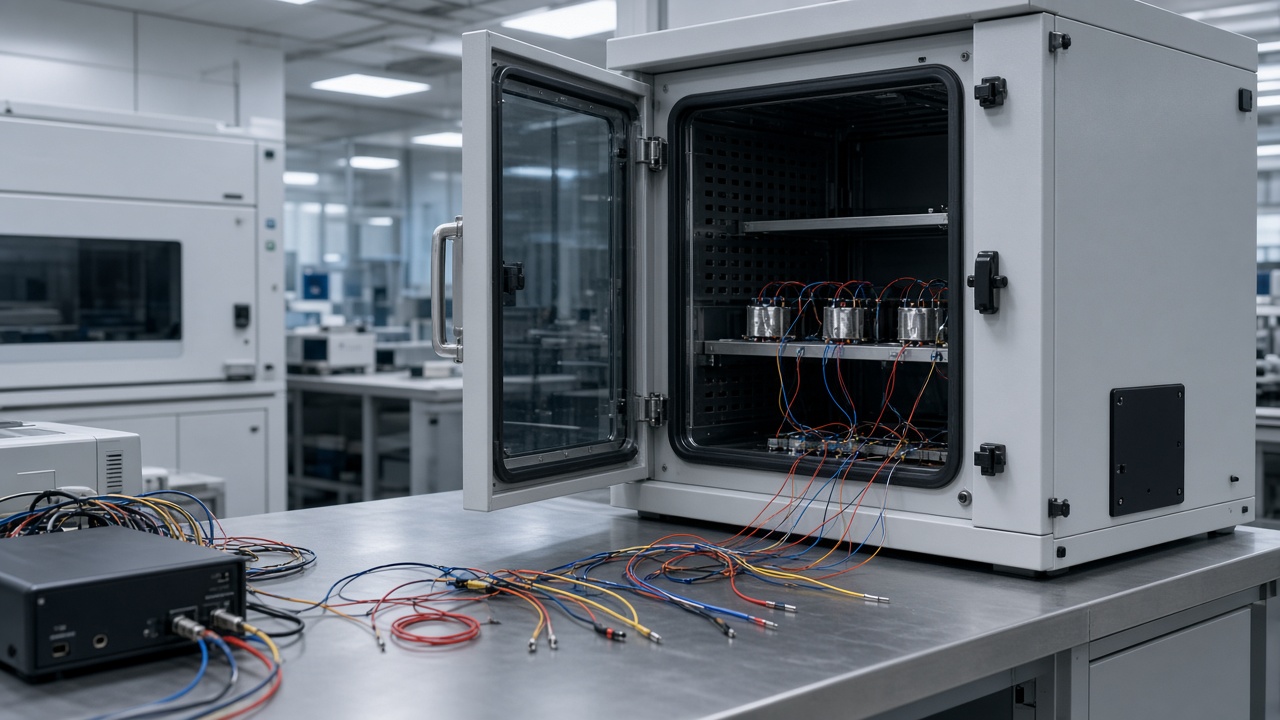
KAIST’s Department of Mechanical Engineering released peer-reviewed thermal runaway thresholds for nickel-rich electric-vehicle packs Monday after replicating heat patterns from a domestic garage fire that reignited twice last month, giving firefighters numeric tripwires for when to switch from suppression to evacuation perimeters. The work does not name the vehicle brand, but cell formats match packs common in Korean mass-market EVs.
Findings
Lab teams cycled cells through puncture and overcharge scenarios, measuring vent-gas spikes above 400 degrees Celsius within ninety seconds of internal short events. They found that garage sprinklers often cooled exteriors while internal modules still cascaded, explaining delayed reignition seen in field footage reviewed with the National Fire Agency.
Published charts give incident commanders a suggested “no-entry” band when exterior pack temperatures exceed 120 degrees Celsius while venting is audible—a simpler cue than asking volunteers to interpret state-of-charge displays amid smoke.
Policy uptake
The National Fire Agency said it will append the thresholds to EV drill manuals distributed before winter, when heated garages trap gases. Automakers received briefings under nondisclosure but were not co-authors, avoiding marketing spin in the paper.
Apartment complexes asked whether parking-basement sensors could use the same numbers; KAIST cautioned that consumer-grade thermometers lack vent-gas detection and should not replace smoke alarms.
Limits
Researchers tested fresh cells, not decade-old modules with degraded seals. They urged battery-rental fleets to share anonymized field data to refine models. Funding came from the science ministry’s public safety grant, not automaker R&D pools.
For drivers, the practical lesson is dull but vital: if an EV pack hisses and smells sweet, leave before filming—temperature numbers now back that instinct with lab evidence.
Industry reaction
Automaker associations asked for closed-door workshops to map thresholds onto specific model lines without alarming owners; KAIST agreed to technical sessions but refused marketing co-branding. Insurers want premium credits for garages that install thermal cameras pointed at parking bays, a proposal the fire agency said it will study after winter drill data arrive.
Second-life battery recyclers noted the study focuses on new cells; they urged follow-on grants for modules pulled from taxis with unknown crash histories, a growing pile as Seoul mandates more electric fleets.
Training rollout
Provincial fire academies will embed the temperature cues into VR scenarios starting October, letting recruits practice venting packs without live burns. KAIST posted datasets under open licenses so municipal researchers can simulate parking-garage airflow, though personal vehicle identifiers remain stripped.
Automakers must still issue their own owner manuals; the study does not replace manufacturer guidance on immersion cooling or fast-charge limits after collisions. Drivers should continue calling emergency numbers when packs hiss, even if exterior shells feel cool to the touch.