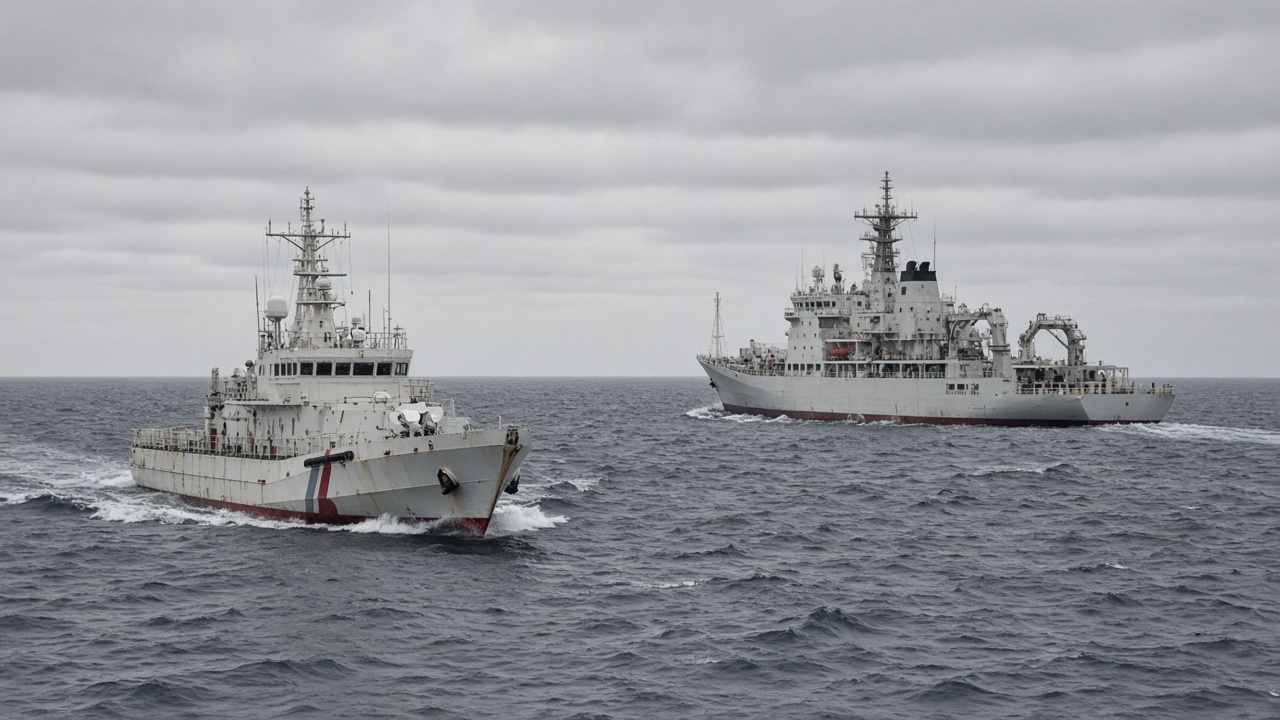
A Chinese government research vessel lowered equipment into the sea inside Japan’s exclusive economic zone north of Ishigaki Island on Sunday without Tokyo’s permission, the Japan Coast Guard said, escalating a familiar but sensitive pattern of maritime surveys near the southwestern frontier.
What crews observed
The 11th Regional Coast Guard Headquarters in Naha said the ship Kexue was spotted around 12:10 p.m. dropping what appeared to be a wire into the water roughly 72 kilometers north of Ishigaki, well inside the EEZ claimed by Japan. Patrol boats monitored the vessel by radio and ordered it to stop the activity, citing domestic law and United Nations Convention on the Law of the Sea rules that require coastal-state consent for marine scientific research in those waters.
Officials did not say whether Kexue complied immediately or how long the equipment remained deployed. No injuries or collisions were reported, and the coast guard did not announce additional enforcement steps beyond the radio warnings issued at the scene.
Why Okinawa watches these transits
Chinese survey ships routinely transit the Miyako Strait and operate east of Taiwan, but each unauthorized cast draws scrutiny in Tokyo because data collected in the EEZ can inform submarine routes, seabed mapping, and future resource claims. Ishigaki sits near the Senkaku Islands, which Japan administers and China calls the Diaoyu, making any nearby survey a political signal as well as a technical one.
Defense officials in Naha have paired coast guard imagery with Self-Defense Force radar tracks in recent months to build a shared picture of research fleets that linger outside territorial waters but still gather bathymetry Japan considers proprietary. Sunday’s incident did not occur within the 12-nautical-mile territorial sea, according to the coast guard statement, but still triggered consultations with the foreign ministry’s maritime affairs bureau.
Government response so far
Foreign ministry officials typically follow coast guard sightings with written protests when unauthorized research is confirmed, though Tokyo did not announce a new demarche by Sunday night. Past cases have begun with technical notices through embassy maritime channels before any public statement from cabinet secretaries.
Opposition lawmakers have pressed for more aerial surveillance when weather allows, arguing that single-ship intercepts leave gaps when research fleets split operations across wide areas of the EEZ. The coast guard said it would maintain patrols near Ishigaki but did not disclose asset numbers for the coming week.
Broader context for readers in Japan
The encounter came the same weekend a large Japanese trade delegation led by former Foreign Minister Takeshi Iwaya arrived in Beijing seeking to stabilize economic ties strained since Prime Minister Sanae Takaichi’s Taiwan-related remarks last year. Security incidents near Okinawa rarely derail those business missions outright, but they supply ammunition for hawks in both capitals who argue that scientific fleets double as strategic scouts.
For island communities that depend on fishing grounds north of Ishigaki, unauthorized wire drops also raise practical worries about entangled gear and unexplained closures. Local fisheries cooperatives said they would request a briefing from Okinawa prefectural officials once the coast guard completes its initial chronology of Kexue’s track.