South Korea's Joint Chiefs of Staff said Sunday that a combined patrol with the United Nations Command approached but did not enter the exact point inside the Demilitarized Zone where two suspected landmine detonations seriously wounded officers last Monday, citing uncharted explosives and crew fatigue.
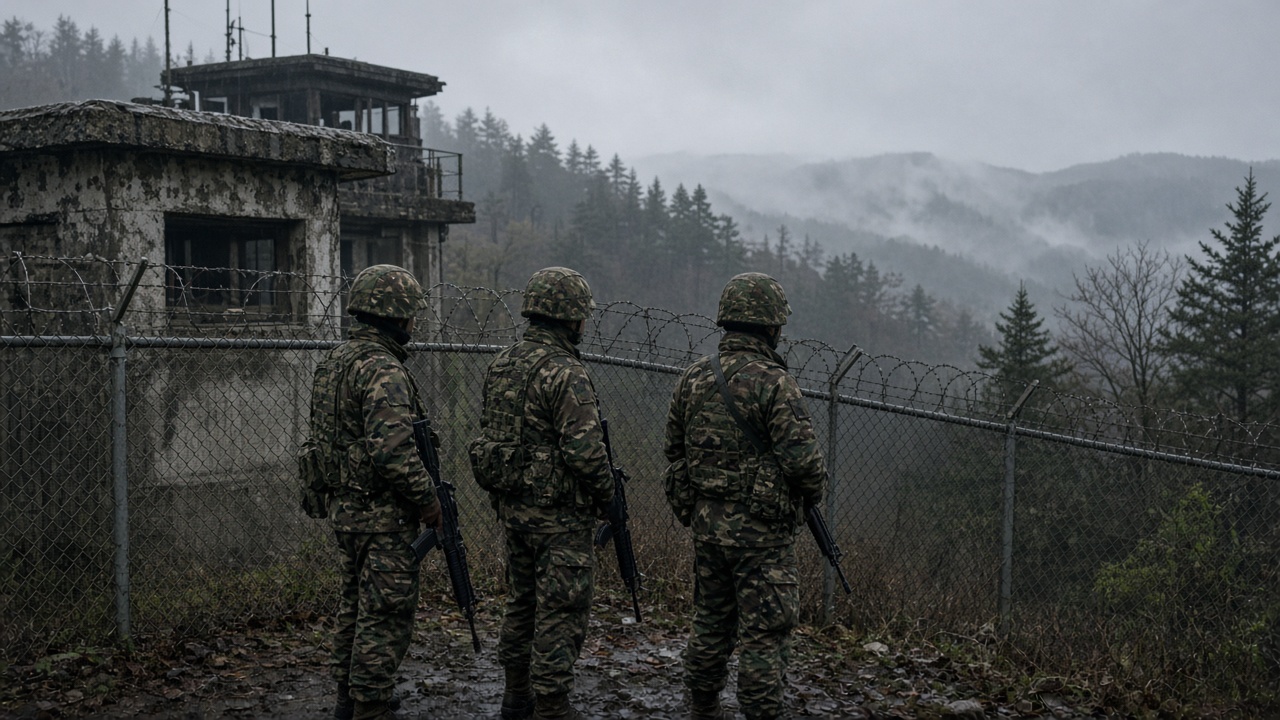
The sortie involved roughly 40 personnel, including troops from the Army's 25th Infantry Division, UNC monitors, and investigators. They secured part of an access route that engineers had been clearing when the blasts hit a battalion commander and a staff sergeant during a path-opening mission north of Paju, Gyeonggi Province. Officials said the team halted before reaching the crater because the surrounding belt is treated as a high-risk area where additional mines may remain unmapped.
Six days without debris
The explosion occurred on September 21 as a dozen soldiers returned from route clearance meant to support a UNC inspection of suspected North Korean mine placements south of the Military Demarcation Line. Two consecutive blasts left two men with grave injuries and a third with minor wounds. Because Sunday's team stopped short, fragments that could identify the device type have not yet been collected, prolonging a forensic question opposition lawmakers have pressed in Seoul all week.
Rep. Han Dong-hoon, who staged a solo protest outside the Ministry of National Defense, alleged the military initially delayed a UNC request to inspect on the day of the incident. The JCS denied dragging its feet, saying cooperation continued through a preliminary survey on Saturday and the joint approach on Sunday. Han's office has demanded body-camera footage and interview records; the command said safety protocols govern what can be released while the probe is open.
UNC role and political pressure
The UNC oversees armistice compliance along the border and had scheduled its own mine survey before the accident. Sunday's operation was billed as the first on-site joint step since the blast, yet it ended with a promise of follow-up visits once engineers certify a safer path. Military Armistice Commission officials who joined the patrol will help determine whether the devices match patterns linked to North Korean intrusions or older ordnance.
President Lee Jae Myung's government faces criticism that front-line units are being asked to clear routes faster than maps and robots can verify. The JCS pledged an "objective and transparent" account after additional inspections, but offered no date for the next attempt. With inter-Korean hotlines still limited, any finding that traces explosives to the North would likely be announced in coordination with UNC public affairs rather than solely by Seoul.
What families and units are watching
Hospital updates on the wounded commander and sergeant remain closely held. Unit commanders in the western corridor have paused nonessential patrols beyond the cleared lanes until engineers finish robotic scans. Veterans' groups say the delay feeds mistrust built during prior border incidents where evidence recovery took weeks.
Defense officials note that DMZ belts mix Korean War-era mines with newer hazards, making haste dangerous. Still, the decision to stop short on Sunday ensures the political fight in Seoul will continue at least until a second patrol reaches the blast point and bags whatever metal and casing remains.