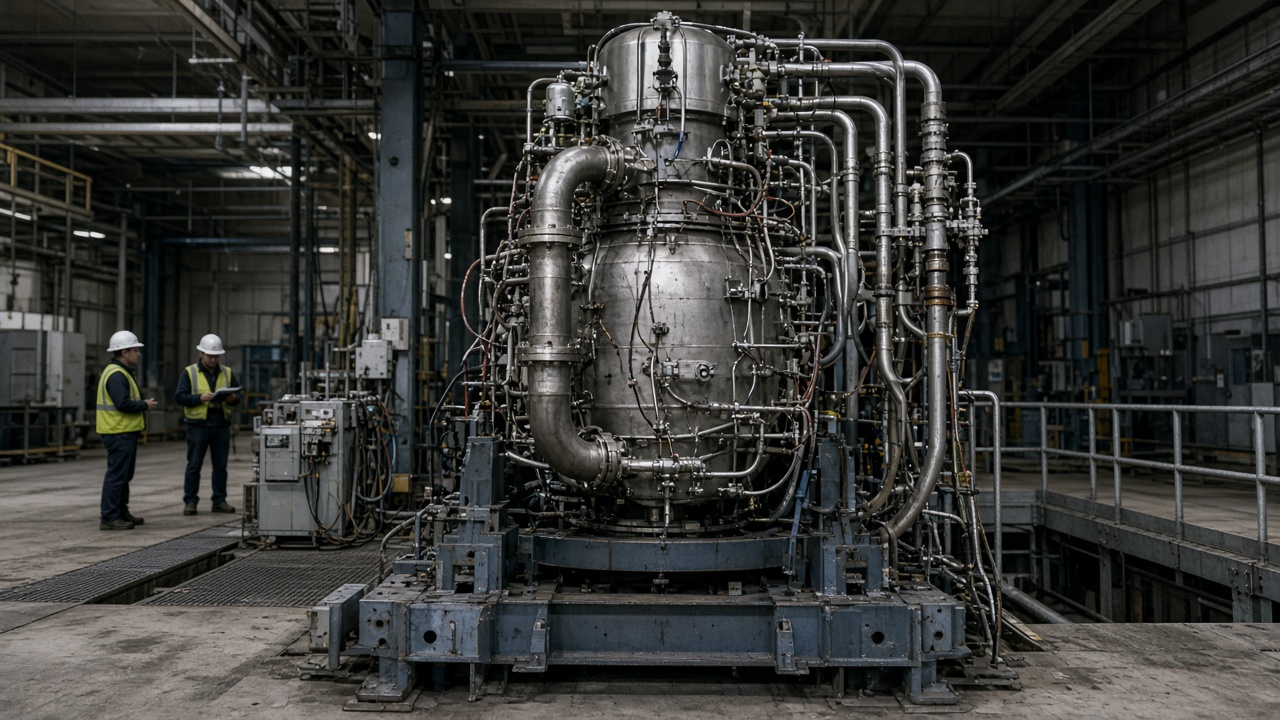
Pulsar Fusion confirmed it is preparing an orbital flight demo of its Sunbird fusion propulsion system for 2027 after reporting successful ground firings at its Bletchley site, joining a small cluster of UK firms pitching fusion rockets for deep-space missions.
What Sunbird claims
Chief executive Richard Dinan told researchers the engine produced fusion-relevant plasma conditions during 2026 bench tests, a step toward proving thrust in vacuum. Unlike chemical rockets, fusion propulsion could shorten Mars transit times if net energy gains scale—still unproven in orbit. Pulsar has cited support from the European Space Agency and relationships with the UK Atomic Energy Authority as credibility markers.
Why the UK angle matters
September's Global Fusion Policy Summit in London spotlighted cross-Atlantic supercomputing links, but propulsion startups argue Britain's regulatory openness to spaceports in Scotland and Cornwall gives test paths US firms envy. Defence-focused events during UK Fusion Week in Sandhurst discussed dual-use engines for rapid orbit transfers, sensitive given export controls.
Competition and scepticism
US rivals Helicity Space and Princeton teams pursue pulsed plasma designs with different physics. Academics caution that ground success rarely survives vibration and thermal cycles of launch. Investors nonetheless funded Pulsar through early demos, betting fusion propulsion could leapfrog incremental electric thrusters for certain military payloads.
Timeline to 2027
Pulsar must secure a launch partner and nuclear safety reviews before fuel loads leave the ground test stand. The Civil Aviation Authority and UK Space Agency typically coordinate payload reviews months ahead of manifesting. Failure would push demos to suborbital hops; success would mark the first British fusion hardware in orbit regardless of commercial viability.
What scientists watch next
Independent verification of thrust measurements and neutron shielding plans will matter more than press briefings. Culham-based fusion researchers say propulsion startups should publish peer-reviewed data to avoid repeating cold-fusion hype. For now, Bletchley ground tests keep the UK in the conversation about engines that could, if they work, reshape interplanetary logistics.
Export and safety reviews
Orbital demos involving nuclear-related hardware trigger UK Space Agency payload reviews and potentially U.S. ITAR conversations if American components fly. Pulsar has not named a launch site; SaxaVord in Scotland and Cornwall Spaceport remain candidates with different inclination options. Local councils near Bletchley monitor noise and traffic from test firings as the company scales staff.
Funding environment
Venture capital for space propulsion tightened after 2025's satellite bankruptcies, but defence ministries dangle grants for rapid orbit transfer. Pulsar must show reproducible thrust curves to unlock Series C discussions rumoured in City circles. Failure would not end the firm—ground-based fusion research contracts could subsidise lab work—but would delay the 2027 orbital headline. Regulators on both sides of the Atlantic will treat any flight demo as a precedent for future fusion cargo rules.