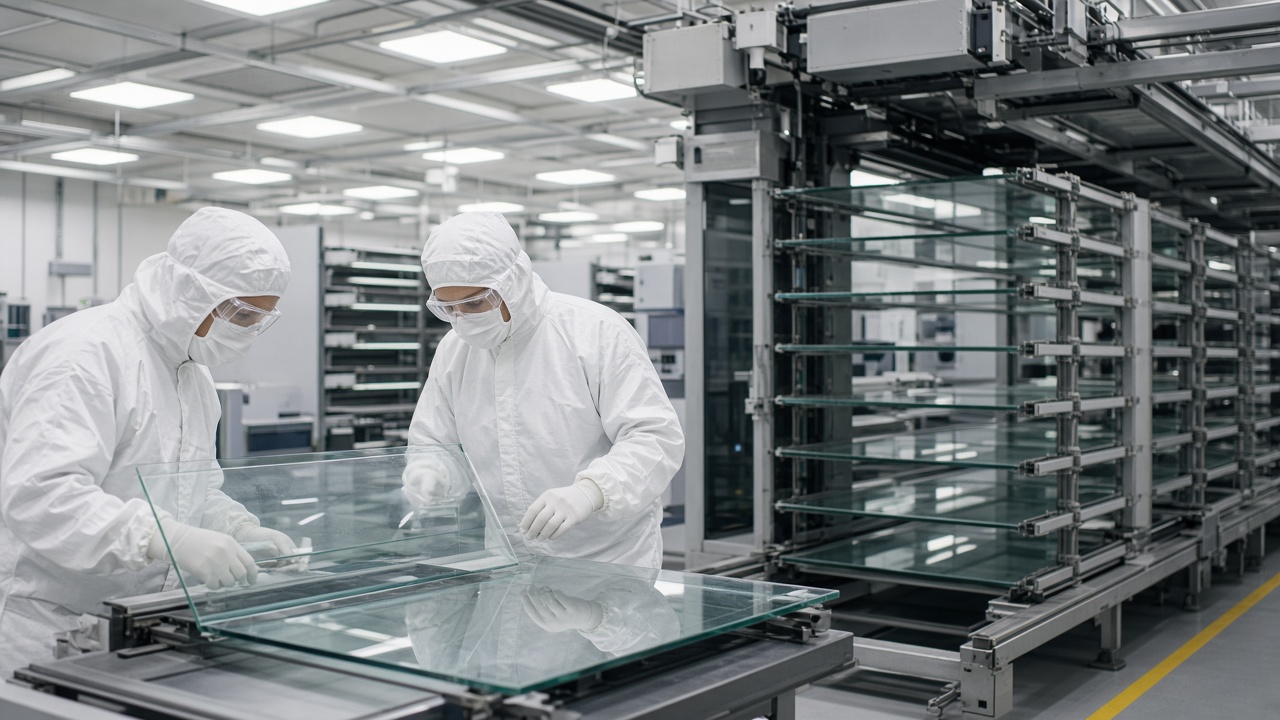
Broadcom and Japan’s Toppan Holdings opened an advanced chip substrate plant in Singapore on Tuesday, months ahead of schedule, in a bet that Southeast Asia can relieve one of the tightest choke points in the artificial-intelligence hardware supply chain.
Deputy Prime Minister Gan Kim Yong toured the facility with Broadcom semiconductor solutions president Charlie Kawwas, Nikkei Asia reported, highlighting government efforts to anchor high-value manufacturing as global firms race to secure packaging capacity for power-hungry AI accelerators.
Why substrates matter
Advanced substrates—the layered materials that connect processors to motherboards—have become as strategically important as fabs themselves. Shortages can delay entire server racks even when logic chips are available. Broadcom and Toppan describe the Singapore site as the city-state’s first plant capable of producing these high-density packages at scale, aimed at data-center customers building next-generation clusters.
The opening arrives as Singapore courts both U.S. and Japanese investors wary of concentrating packaging solely in North Asia. For local policymakers, the plant supports long-running plans to deepen precision engineering employment and to keep the port city inside the AI infrastructure map alongside wafer fabs and memory assembly lines elsewhere in the region.
Commercial and geopolitical context
Broadcom supplies networking and custom silicon widely used in cloud data centers, while Toppan brings materials expertise from Japan’s packaging industry. Their partnership reflects how AI demand is forcing cross-border production alliances even as Washington tightens export controls on the most advanced chips.
Singapore has pitched itself as a neutral hub with reliable power, logistics and talent pipelines. Tuesday’s inauguration gives officials a tangible example ahead of other semiconductor investments, including financial incentives the Monetary Authority of Singapore unveiled separately this week to deepen equity markets funding tech manufacturers.
What operators will watch
Customers will track yield rates, delivery timelines and how quickly the plant qualifies substrates for leading accelerator cards. Any slip would ripple through server builders already juggling long lead times for power supplies and cooling systems.
For residents, the project is less about consumer gadgets than about sustaining high-skilled jobs and export revenue as global tech supply chains reconfigure. If the plant hits volume targets, Singapore strengthens its pitch to other chip giants weighing ASEAN packaging sites—proof that the city can host front-end-adjacent work, not just logistics and headquarters functions.
Local workforce and supply chains
Precision-engineering employers in Jurong and the north-east corridor have long supplied petrochemical and disk-drive factories; substrate work raises the skill bar but also draws on existing cleanroom training pipelines. Trade associations say subcontractors for gases, specialty chemicals and test equipment are already bidding for maintenance contracts tied to the new line.
That ecosystem matters because substrates travel under tight humidity controls and short shelf lives. A Singapore base reduces the need to fly fragile panels through multiple hubs, a cost and breakage risk that data-center builders have cited in earnings calls when explaining delayed server deployments.