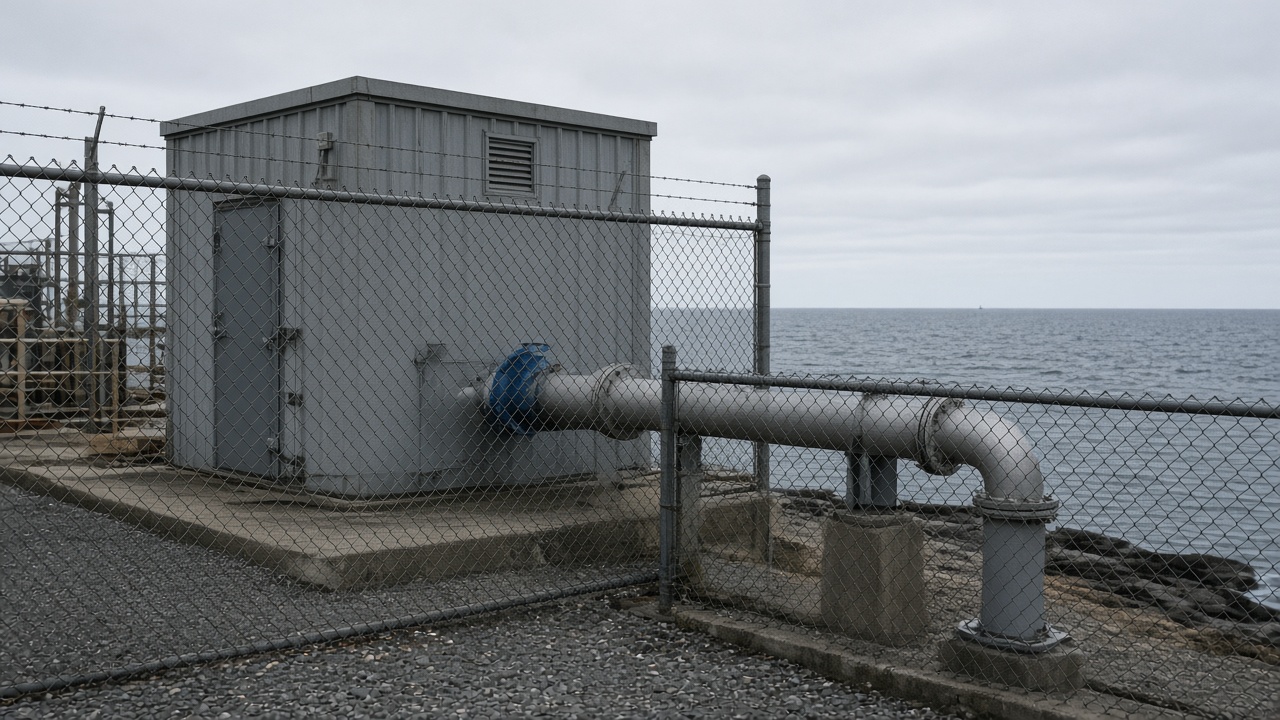
The National Assembly’s environment panel began auditing fire-suppression water intake permits at the Yeongil Bay methane terminal Monday after Pohang fishermen petitioned over draw rates during low-tide windows near spawning grounds.
Permit history
The terminal received a coastal use permit in 2019 allowing emergency seawater pumping at 12,000 cubic meters per hour for tank-cooling and fire drills. POSCO International, which operates the jetty, renewed auxiliary permits last spring without a public hearing because the volume cap unchanged.
Fisheries cooperatives argued that repeated drill pumping during August coincided with squid larvae concentrations. They want real-time turbidity monitoring published online, not just annual compliance PDFs.
What the audit will examine
Lawmakers asked the Ministry of Environment for pump logs, salinity readings, and correspondence with the operator about a valve replacement project underway on the jetty. The audit is separate from that mechanical work but shares the same coastline.
POSCO International said firewater systems must stay tested to satisfy gas safety rules. It offered to shift drills to neap tides if marine biologists confirm vulnerability windows. Environmental NGOs want third-party observers on site, not voluntary schedule swaps.
Political stakes
The ruling party faces a tight October budget vote on chip subsidies; coastal audits are easy rally points for opposition members representing east-coast districts. Still, the petition signatures came from local crews, not national campaign offices.
Ministry officials said permits remain valid but disclosure could expand to hourly pump telemetry starting in November if the committee recommends it.
Link to energy security
Yeongil Bay feeds city gas for industrial users who cannot easily switch fuels in winter. Lawmakers signaled they will not revoke permits outright, focusing instead on monitoring and compensation funds for fisheries if larvae counts drop.
The hearing continues Wednesday with public comment. For now, the audit puts methane infrastructure and marine livelihoods in the same room—a familiar tension on Korea’s industrial coastline.
Scientific review
Marine researchers from Pohang University of Science and Technology will testify on larvae sampling methods to separate drill impacts from broader warming trends. Their preliminary poster session data show mixed results by species.
Committee staff may visit the intake structure next month if weather allows safe dock access.
Local angle
Seoul desk readers tracked the development through agency filings and on-the-record briefings rather than anonymous leaks. Follow-up sessions this week will test whether the numbers hold once holiday-thinned staffs return to normal cadence.
Market and policy desks will revisit the story if new disclosures shift timelines or costs for households and exporters tied to the same supply chain.