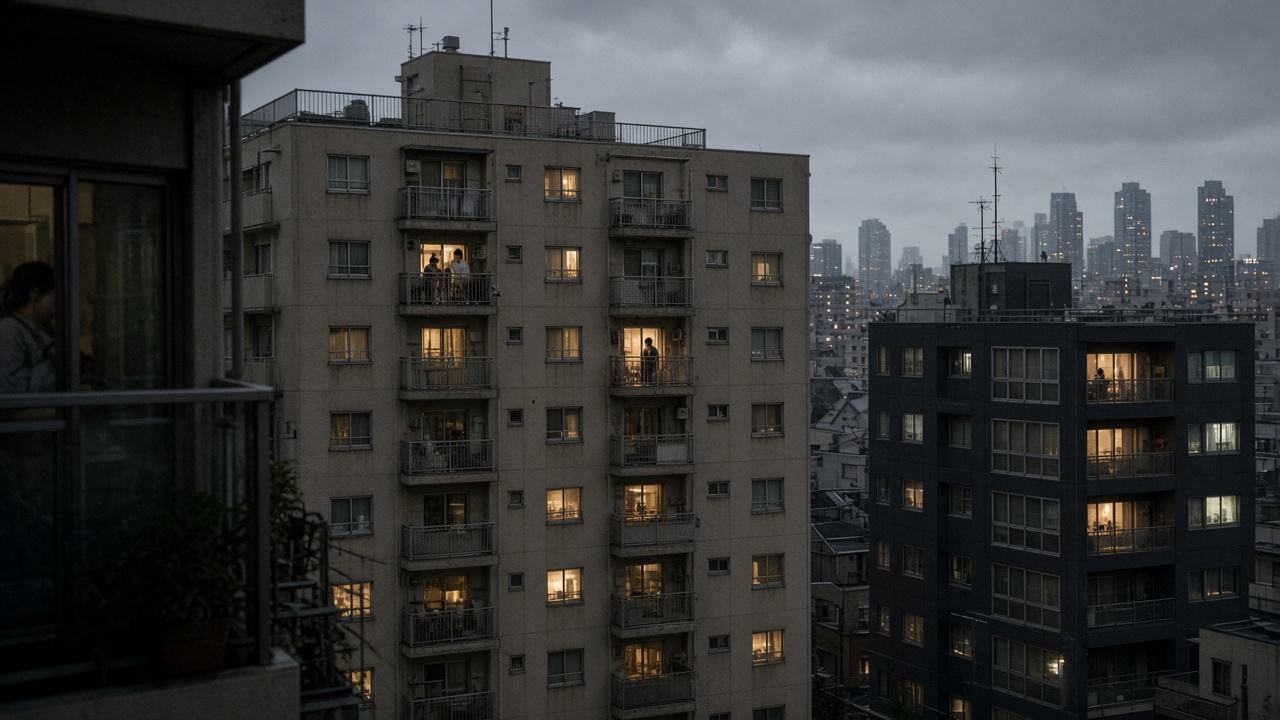
An earthquake with a preliminary magnitude of 4.9 struck southern Ibaraki Prefecture at about 4:45 a.m. Tuesday, rattling homes and high-rises across the Tokyo metropolitan area on a workday morning. The Japan Meteorological Agency said the quake registered upper 4 on Japan’s shindo intensity scale in parts of Ibaraki and Saitama, strong enough to knock items from shelves but below the threshold that typically causes widespread structural damage.
Shaking across the Kanto plain
The agency located the hypocenter roughly 50 kilometers deep beneath southern Ibaraki. Intensities between 1 and 3 were reported across a broad swath of Honshu, including Tokyo, Chiba, Kanagawa and prefectures as far north as Miyagi and Fukushima. Commuter trains continued operating after brief safety checks, and there were no immediate reports of major injuries or fires from prefectural disaster offices.
Because the epicenter was inland and moderate in size, officials issued no tsunami advisory. Coastal monitoring networks recorded no abnormal sea-level changes. The timing—before the first rush-hour crush—reduced the number of people on elevated walkways and construction sites, though early-shift factory workers in Ibaraki reported automatic shutdowns on sensitive lines.
Nuclear and industrial checks
Japan Atomic Power Co. said it detected no abnormalities at the Tokai No. 2 nuclear power plant in Ibaraki, northeast of Tokyo. Operators followed post-quake inspection protocols and reported stable readings at on-site monitoring posts. Other utilities in the region said they were completing walk-downs at substations and gas facilities as a precaution.
Japan’s nuclear regulators have required heightened seismic reviews since the 2011 Fukushima disaster, and even mid-magnitude events trigger mandatory reports when plants sit within the felt radius. Tuesday’s quake did not approach the stress levels that would force an automatic scram at Tokai No. 2, but local governments asked residents to check gas lines and secure furniture ahead of possible aftershocks.
What scientists watch next
The Meteorological Agency said there was no immediate evidence that Tuesday’s event was a foreshock to a larger rupture, but it urged the public to stay alert for tremors over the next several days. Southern Ibaraki sits in a complex zone where the Pacific plate subducts beneath eastern Japan, producing both deep intraplate quakes and shallower crustal events.
University seismology labs in Tsukuba and Tokyo said they would incorporate the waveform into ongoing models of stress transfer along faults branching off the main subduction boundary. For most residents, the practical lesson was familiar: keep emergency kits accessible, know evacuation routes, and expect smartphone alerts if magnitudes climb.
Morning routines resume
By sunrise, traffic cameras showed normal volumes on expressways into Tokyo, and airlines reported no runway closures. Schools in Ibaraki opened on schedule after principals verified building integrity. Imperial Household Agency officials separately postponed an imperial couple visit to Kumamoto earthquake-affected areas because of weather, unrelated to Tuesday’s tremor but a reminder of how seismically active the archipelago remains this season.
Unless aftershocks intensify, the event is likely to register as a sharp jolt in the capital’s memory rather than a prolonged emergency. Still, for a region that measures earthquakes by how they feel in daily life, a 4.9 at commuting hour was enough to dominate breakfast television and reset calibrations on millions of mobile alert apps.