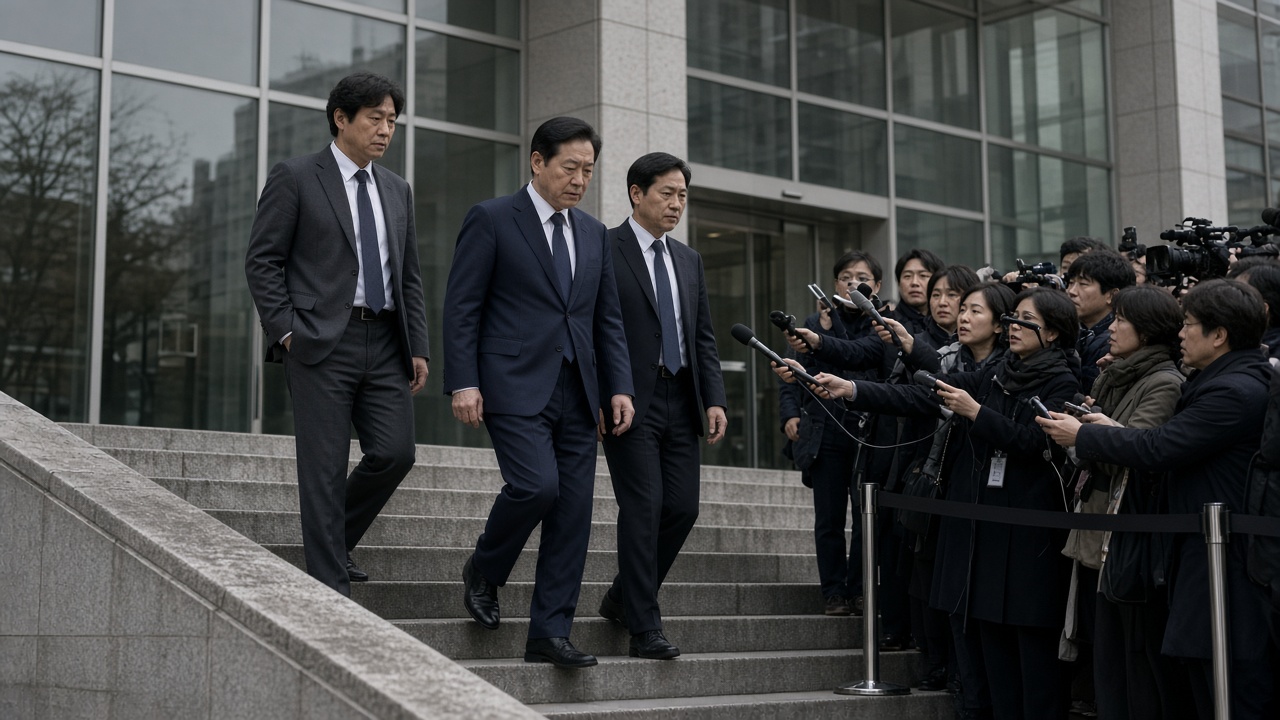
Prosecutors appointed by South Korea’s martial-law special counsel used their final arguments Wednesday to demand punishment for Daegu Mayor Choo Kyung-ho, saying his decisions on the night of Dec. 3, 2024, helped keep People Power Party lawmakers away from a National Assembly vote to lift emergency rule. The closing hearing at the Seoul Central District Court sets up a first-instance verdict as early as October and puts Choo’s mayoral seat at risk if a prison term is later finalized.
Charges and the Dec. 3 timeline
Choo, who was the PPP floor leader when then-President Yoon Suk-yeol declared emergency martial law, is accused of repeatedly changing the venue of a party caucus meeting so that ruling-party legislators would not join the unanimous Assembly vote that overturned the decree. The special counsel alleges Choo took a call from Yoon after the declaration and steered lawmakers toward meetings outside the main chamber even after Speaker Woo Won-shik urged PPP members to gather inside for the roll call.
When the lift-martial-law resolution passed, 190 lawmakers present voted in favor; only 18 of them were from the PPP, a gap the prosecution treats as evidence of deliberate obstruction. Choo’s defense team says he did not know martial law was coming, denies cooperating with Yoon, and argues that police cordons around the Assembly—not caucus logistics—prevented party members at headquarters from reaching the chamber.
What prosecutors told the court
At the final hearing before Senior Judge Han Sung-jin, special counsel prosecutors described Choo’s conduct as an attack on constitutional order and basic rights, according to courtroom reporting by YTN and other outlets. They compared his alleged role to that of senior insurrection figures who sealed off the Assembly perimeter and deployed armed troops, saying he bore equivalent moral guilt even without wearing a uniform.
The prosecution’s closing statement is expected to be followed by a formal sentencing request later Wednesday, after which Choo’s lawyers will deliver their final arguments and the mayor may make a closing statement. Choo arrived at the courthouse without answering reporters’ questions about whether he still denied the charges, YTN footage showed.
Stakes for Daegu and the PPP
Choo was indicted without detention and has continued to serve as Daegu’s mayor while the case moved through nine months of hearings. South Korean law strips mayors of office if a conviction for a crime such as insurrection-related charges results in a prison sentence or heavier penalty that is upheld through the Supreme Court. That makes the eventual sentence length as important as the guilty-or-not verdict for city hall.
Several PPP lawmakers, including Ahn Cheol-soo and Joo Jin-woo, testified during the trial, giving the proceedings a party-splitting edge as the opposition Democratic Party uses martial-law accountability as a 2026 campaign theme. For Daegu, a conservative stronghold, the case tests whether voters will separate local administration from a floor leader’s choices on the night troops surrounded the legislature.
What happens after closing arguments
Court staff told reporters a first-instance ruling typically follows about a month after the final hearing, pointing to an October decision unless schedules slip. The special counsel has pursued parallel cases against military commanders, police leaders, and former presidential aides, meaning Choo’s outcome will be read as a benchmark for how mid-level politicians are treated compared with uniformed defendants.
Separately on Wednesday, an appeals court was scheduled to sentence Lee Eun-woo, the former head of state broadcaster KTV, in a related case over deleted on-air captions critical of martial law. That proceeding underscores how media and party leadership cases are converging in the same judicial season.
Choo’s team maintains that the prosecution lacks direct evidence tying him to Yoon’s inner circle and that venue changes were ordinary party management under chaotic conditions. If Judge Han accepts that view, Choo could be acquitted and remain in office without further jeopardy. If prosecutors secure a prison term, Daegu will face a byelection debate long before the Supreme Court speaks, because the mere prospect of disqualification can paralyze major contracts and appointments. Wednesday’s sentencing request will signal how aggressively the special counsel wants that future to look.