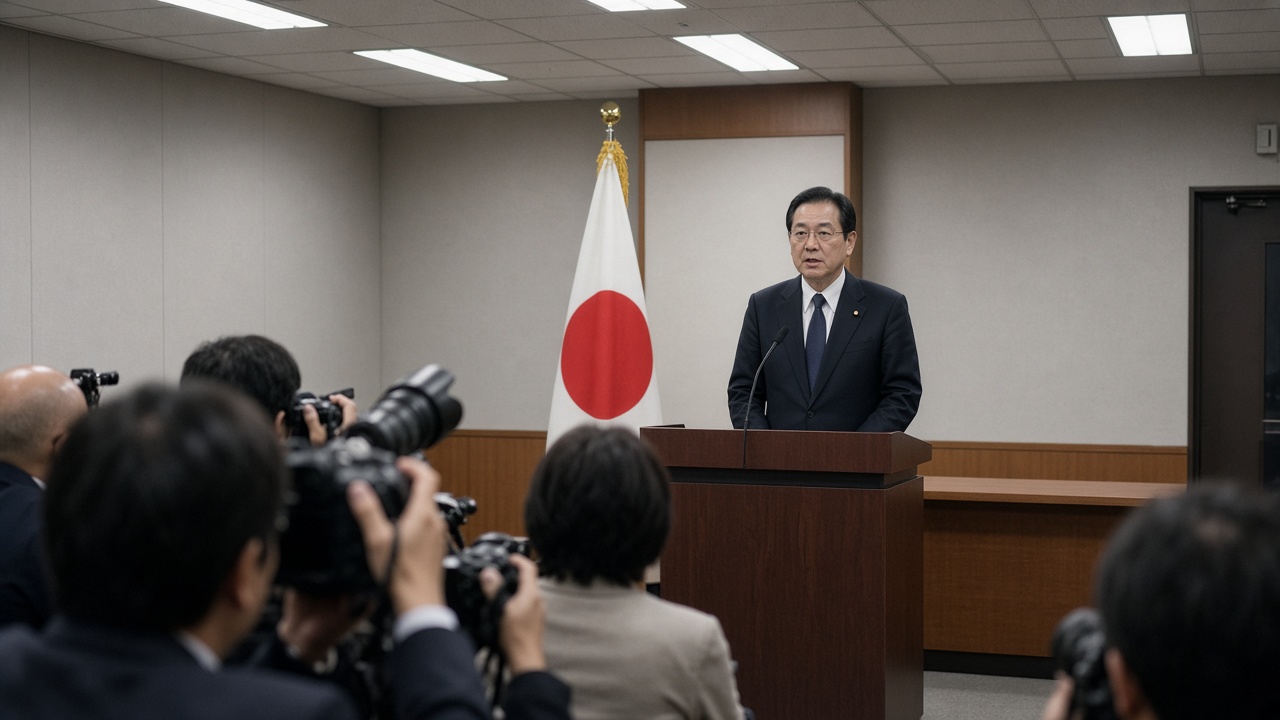
Japan’s defence minister, Shinjiro Koizumi, said the government must discuss national security “without taboos,” including whether Tokyo’s long-standing renunciation of nuclear weapons still fits a region where China, Russia and North Korea are expanding their arsenals.
Speaking ahead of a planned rewrite of three key strategy papers by the end of 2026, Koizumi argued that refusing to talk about difficult options would not keep the country safe. His comments stop short of a policy decision, but they move once-fringe debate closer to the cabinet table at a moment when Japan is also weighing nuclear-powered submarines with American backing.
What Koizumi argued
Koizumi pointed to North Korea’s missile tests, China’s growing stockpile and Russia’s nuclear threats since the invasion of Ukraine. He asked whether Japan could guarantee its security simply by avoiding discussion of topics that remain politically sensitive after the atomic bombings of Hiroshima and Nagasaki.
The minister has used similar language before, but the timing matters: bureaucrats are drafting updated national security, defence and military-buildup strategies that will guide spending and alliance plans for years. U.S. officials have encouraged Japan to shoulder more conventional deterrence, while some conservative lawmakers want explicit consideration of nuclear sharing or indigenous weapons — ideas still opposed by most of the public.
The three non-nuclear principles
Since the 1960s Japan has pledged not to possess, produce or permit the introduction of nuclear weapons on its territory. The third principle — barring transit or stationing — has faced renewed scrutiny as Tokyo hosts tens of thousands of U.S. troops and debates how far it will go to support American operations in a Taiwan contingency.
Prime Minister Takaichi told reporters during August commemorations that Japan upholds the principles and seeks a world without nuclear arms. When asked this week whether the forthcoming documents would explicitly restate those commitments, she declined to answer, saying only that the government would explain its stance when the texts are final.
Submarines and alliance politics
Koizumi said earlier in September that Tokyo was not ruling out nuclear-powered attack submarines, after a U.S. navy official publicly welcomed the idea. Such boats would extend patrol range in the East China Sea and around Taiwan without the refuelling limits of Japan’s current diesel-electric fleet.
Acquiring them would test export controls, domestic law and budget ceilings that the military-buildup strategy is supposed to clarify. It would not, by itself, give Japan nuclear weapons, but critics say normalising nuclear technology in the Self-Defense Forces could blur the symbolic line the principles were meant to draw.
What comes next
The security document package is due before parliament’s year-end session ends. Opposition parties and survivors’ groups are likely to demand an explicit recommitment to non-nuclear policies, while the Liberal Democratic Party’s hawkish wing will press for language that keeps future options open.
For now, Koizumi’s remarks serve as a trial balloon: they signal to Washington that Tokyo is willing to talk frankly about deterrence gaps, while telling domestic audiences that no decision has been made. Whether the final text mentions nuclear weapons at all — and how Takaichi phrases the principles — will be read across Beijing, Pyongyang and Seoul as a measure of how far Japan is willing to shift its post-war constraints.