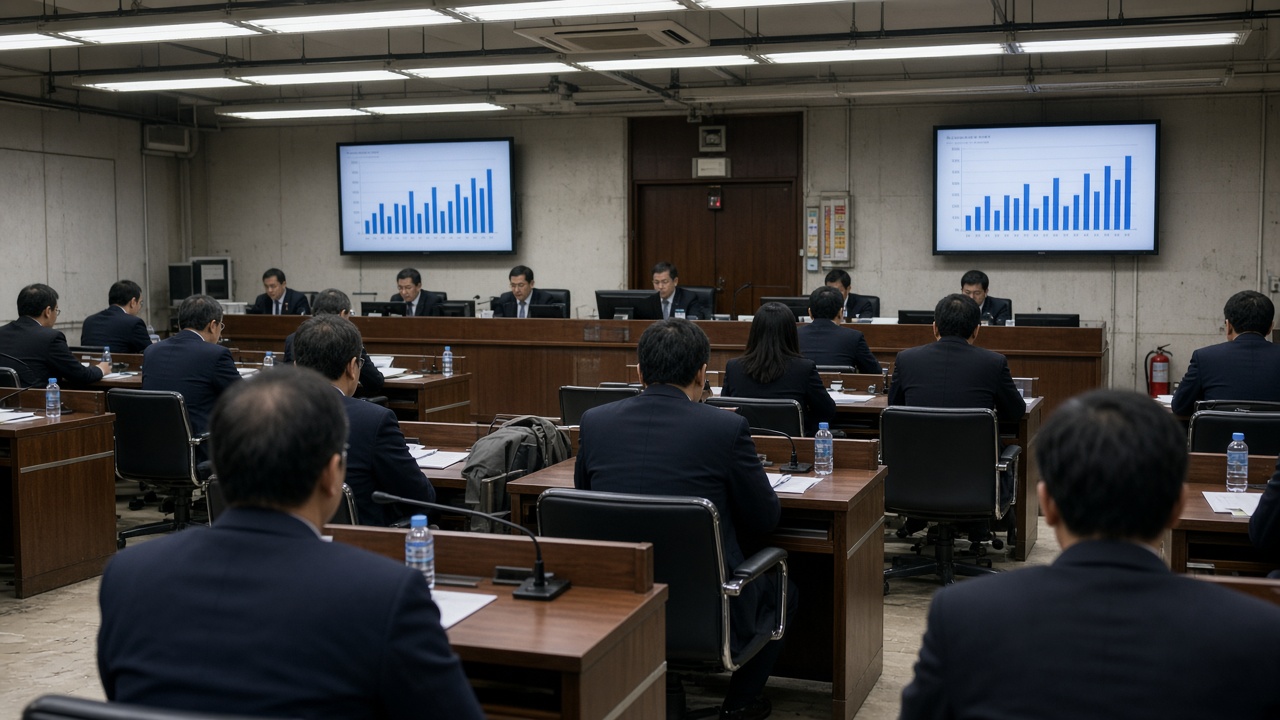
The Legislative Yuan's Economics Committee sent a government-backed micro-enterprise transformation bill to cross-party negotiation on Tuesday after a first reading, even as opposition caucuses kept the chamber focused on a rival NT$20,000 universal cash draft and a stalled NT$10,000 supplementary payout that the Executive Yuan wants tied to formal budget law.
What the upgrade bill would change
The draft "Act for the Development and Transformation of Small and Micro Enterprises" would let firms with fewer than five employees access subsidized digital invoicing, export documentation clinics, and short-term interest relief when they adopt approved accounting software. Economic Affairs Minister Kuo Chih-hsiao told committee members the measure is meant to complement—not replace—the broader NT$235.7 billion supplementary budget that includes the administration's NT$10,000 cash plan for qualifying households.
Committee staff said roughly 1.42 million registered micro firms could enroll if the bill clears the current session. Vendors must certify data-security standards before their platforms qualify for grants, a guardrail added after pilot programs in Taichung and Kaohsiung reported uneven vendor quality last spring.
Cash politics on a parallel track
Kuomintang caucus leaders reiterated that their NT$20,000 "shared economic outcomes" special act remains the priority, arguing tax surpluses should return to households without waiting for executive-branch procurement rules. Executive Yuan spokespersons countered with three fiscal principles: no new net borrowing, no crowding out of defense or social spending, and constitutional procedure. Finance Ministry officials told lawmakers the cabinet would tap second-reserve funds only after the supplementary budget clears, a timeline that could slip past the Lunar New Year if committee reviews drag.
Civic groups that marched outside the Legislative Yuan on Monday night want the supplementary package passed by October 31. Their petition does not endorse either cash amount but warns that delayed appropriations will freeze SME loan guarantees bundled in the same bill.
Business groups watch implementation
The Chinese National Federation of Industries said digital transformation vouchers matter more to exporters facing new documentation rules in Southeast Asian markets. The General Chamber of Commerce asked for a single application portal rather than separate Ministry of Economic Affairs and Ministry of Labor forms. Start-up advocates want carve-outs for one-person limited companies that currently fall between employment and business registration codes.
Bankers briefing the committee noted that micro-loan delinquencies ticked up 0.2 percentage points in August, a modest move they attributed to holiday inventory builds rather than policy uncertainty. Still, lenders want clarity before fourth-quarter credit reviews.
Committee calendar pressure
With the Control Yuan confirmation vote consuming Tuesday morning, SME bill sponsors pushed afternoon hearings to avoid losing quorum. Democratic Progressive Party members backed the transformation act as a jobs measure; Taiwan People's Party legislators asked for sunset clauses on subsidies after three years. No final timeline was set for a floor vote, but clerks listed the bill among "must-pass" economic items before budget freeze deadlines in November.
What comes next for owners
Accountants advising night-market vendors and family workshops urged clients to separate personal and business ledgers now, before grant auditors require two years of digital receipts. Export-oriented craft sellers in Hsinchu and Chiayi counties said customs brokers already demand electronic invoices for small parcels; the bill's subsidies could offset software costs if enacted. Until lawmakers reconcile the cash fight with the supplementary budget, however, many owners are holding capital spending steady and watching whether the NT$10,000 payout arrives as a budget line or a special law—a distinction that determines when banks treat the money as predictable household income.
Fiscal scoring disputes
Budget Office analysts told the committee that scoring the transformation grants separately from the cash payout avoids double-counting stimulus effects in GDP forecasts. Opposition staff argued the grants are too small to move quarterly growth and accused the cabinet of using SME rhetoric to distract from defense supplemental lines also bundled in the broader package. Neutral researchers at the Taiwan Institute of Economic Research said both measures could lift fourth-quarter consumption if disbursed before the year-end travel season, but only if payment systems synchronize with tax IDs already on file from the 2024 energy voucher rollout.