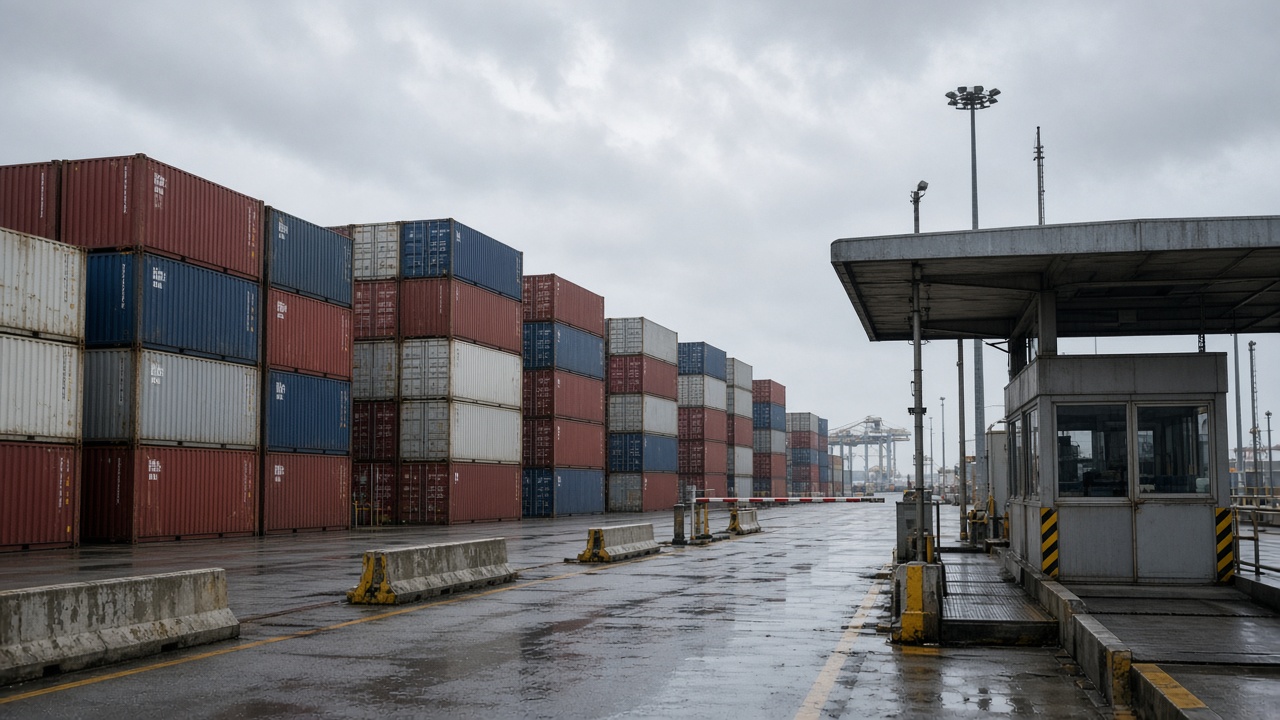
Korea Customs released its preliminary September trade tally on Oct. 1, putting outbound shipments at $65.95 billion, up 12.7 percent from a year earlier and the highest monthly export figure the agency has recorded for September. Semiconductors accounted for $16.61 billion of the total, while finished vehicles contributed $6.4 billion, anchoring a print that arrived hours before Seoul investors reopened a market still digesting Tuesday’s foreign-led selloff.
The release matters because it is the first hard read on how Korean factories performed after the Chuseok break, when fewer working days usually drag on headline growth. Trade officials said chip demand for high-bandwidth memory and advanced logic remained the primary engine, while auto exports benefited from stronger shipments of both combustion models and battery electric lines into Europe and Southeast Asia.
What moved inside the basket
Semiconductor exports rose 22 percent year on year to $16.61 billion, according to the customs breakdown cited in ministry briefings. That figure extends a run of record monthly chip prints and keeps memory and system LSI lines at the center of Korea’s external accounts even as U.S. tariff rhetoric continues to cloud some industrial categories.
Automobile exports climbed 16.8 percent to $6.4 billion. Shipbuilders and machinery makers also posted gains in the briefing materials, but the month belonged to chips and cars—the two categories foreign funds trade when they want a quick read on Korea’s cyclical pulse.
Regional mix and the U.S. drag
By destination, shipments rose in eight of Korea’s nine major markets in the September data set described by officials. The exception was the United States, where exports slipped 1.4 percent to $10.27 billion as tariff uncertainty weighed on some industrial lines. China, still Korea’s largest single market, edged up 0.5 percent to $11.68 billion, ending a four-month decline that had worried exporters with heavy exposure to mainland smartphone and appliance supply chains.
Shipments to the Association of Southeast Asian Nations jumped 17.8 percent to $11 billion, a record for any September, while exports to the European Union reached $7.16 billion, also an all-time high for the month. The breadth of gains gave trade minister Kim Jung-kwan room to argue that Korean firms are diversifying portfolios even as Washington keeps pressure on bilateral balances.
Imports and the surplus
Imports increased 8.2 percent to $56.4 billion on the same release, leaving a trade surplus of $9.56 billion. Korea has posted a surplus in nearly every month since June 2023, with January’s brief deficit the main interruption in that streak.
Higher import values partly reflected energy prices that stayed elevated through late September, a reminder that Korea’s export strength does not automatically translate into cheaper input bills for domestic manufacturers.
What Seoul traders watch next
Equity desks treat the customs print as a bridge between holiday-thin September activity and fourth-quarter order books. A double-digit export gain supports the narrative that chip majors can offset macro scares, but it does not guarantee foreign funds will return after a 1.4 trillion won net sale day on the main board.
Officials cautioned that global trade risks remain, asking exporters to keep hedging and market diversification plans active. For households, the more immediate takeaway is simpler: Korea’s external engine is still firing on semiconductors and cars, even as politicians debate defense spending and housing rules at home.