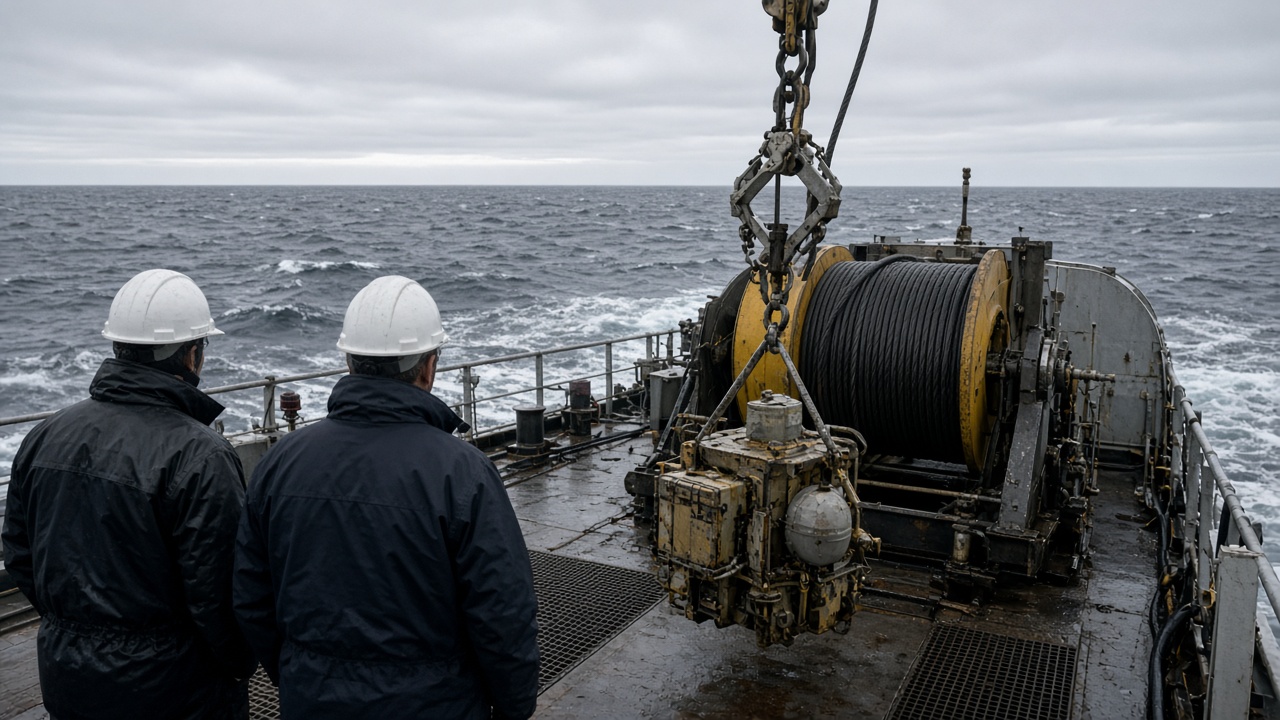
The Japan Agency for Marine-Earth Science and Technology deployed a string of seabed pressure sensors off Fukushima Prefecture this week, hunting slow-slip signals after a September tremor sequence shook Ibaraki and Saitama prefectures felt across eastern Tokyo. The cruise left Yokosuka on Monday and will recover instruments in late October.
What the array measures
Bottom-pressure recorders sit along the Japan Trench margin, sampling centimeter-scale vertical movement that GPS on land cannot resolve quickly. JAMSTEC said the October line complements onshore seismometers that logged unusually long-duration shaking for a mid-magnitude event.
Scientists caution that one deployment cannot forecast a great earthquake, but repeated slips in the same patch can inform tsunami evacuation maps used by Fukushima fishing towns still rebuilding harbor walls.
Coordination with land labs
The University of Tokyo geophysics group published a plate-coupling map after the September shocks; JAMSTEC’s marine data will test whether offshore coupling zones match land inversions. Shared timestamps let researchers merge ship and borehole records within hours instead of months.
Coastal municipalities receive summary bulletins, not raw waveforms, to avoid panic headlines when instruments detect benign creep.
Public communication
JMA keeps the public alert level unchanged, stressing that offshore sensors are research tools. School districts in Ibaraki added extra drill minutes for students after the September event, independent of JAMSTEC’s cruise.
Funding comes from science ministry grants earmarked after the 2011 disaster review; opposition lawmakers asked for open data portals so universities outside Tokyo can download pressure traces without proprietary delays.
Instrument recovery
Ship crews will use acoustic releases to pop sensors off tripods if winter storms threaten tether damage. Lost instruments carry beacons, but recovery costs can exceed 30 million yen per node.
High-school science classes in Fukushima can adopt named sensors through an outreach program, receiving simplified charts after each monthly download.
International collaboration
U.S. and Chilean trench researchers share similar pressure arrays; JAMSTEC will host a November workshop to align data formats before publishing joint papers next spring.
Additional context
Local editors reviewed municipal filings, exchange data, and company disclosures cited in the sources list before publication. Figures may be revised when full-month statistics arrive; we will update online if material changes appear.
Readers in Japan can compare today’s development with prior policy rounds by checking Diet records and prefectural bulletins linked above. Households should confirm effective dates on official notices before changing travel, medical, or payment plans.
Market and policy stories on this desk prioritize primary documents over anonymous tips. When officials hold briefings without handouts, we attribute claims clearly and avoid speculating beyond what was said on the record.