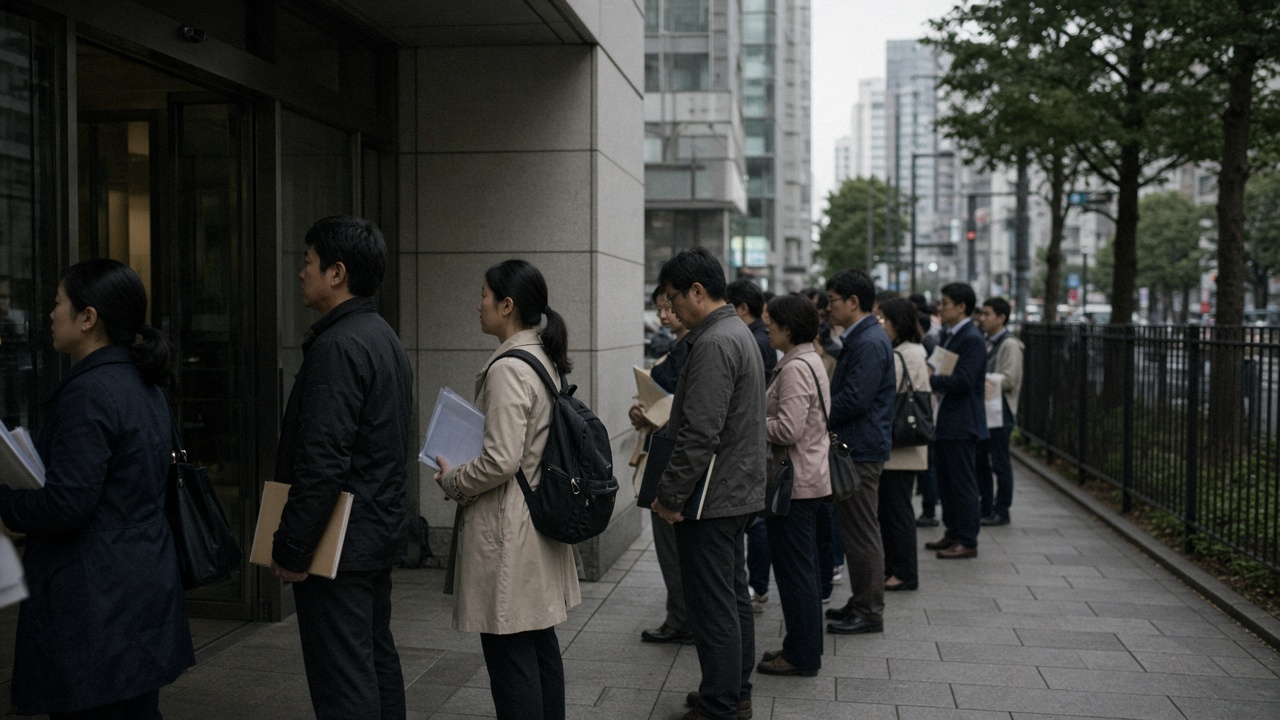
Japan raised the fee for a permanent-residency application twentyfold on Thursday, lifting the charge to 200,000 yen (about $1,270) as Prime Minister Sanae Takaichi’s government tightened the financial and administrative hurdles facing long-term foreign residents.
The increase took effect alongside a wider visa-fee schedule that scales charges by length of stay, from 10,000 yen for visits of three months or less to 75,000 yen for permits of five years or more. Officials said the adjustments reflect inflation and exchange-rate shifts after Japan’s first general visa-fee hike in roughly half a century in July.
Queues before the price jump
Immigration offices in central Tokyo saw long lines this week as applicants rushed to file before the higher permanent-residency tariff applied. Reporters at one downtown office described hundreds of people waiting to complete paperwork, a visible sign of how many foreign workers and family members treat permanent status as a stabilising step in a country that still grants it sparingly.
Permanent residency removes the need to renew shorter-term visas and is often a precursor to naturalisation. It does not confer voting rights, but it signals that an applicant has met stability, tax and legal-history requirements that immigration examiners scrutinise closely.
Income and language tests on the horizon
Thursday’s fee change is only the first layer of Takaichi’s immigration agenda. From April 2027, applicants will need to demonstrate conversational Japanese and show household income at or above the national average, which stood at 5.75 million yen in the latest government survey. Pension contributions and financial assets can be counted toward the income test when projected retirement benefits fall short.
Takaichi has cast the package as “orderly coexistence” in a society where foreign residents surpassed 4.12 million at the end of 2025, a record 9.5 percent annual increase. She acknowledged on social media that some citizens feel anxiety about rapid demographic change even as employers rely on overseas labour in construction, care work and technology.
Political pressure and economic reality
Anti-immigration sentiment has spread online, amplified by false claims about welfare use and street safety. Opposition lawmakers and business groups warn that blunt restrictions could worsen labour shortages in an economy with one of the world’s oldest populations. The Nikkei newspaper argued in a recent editorial that Japan should treat foreign workers as long-term contributors rather than temporary fillers.
The fee hike does not alter eligibility rules immediately, but it raises the cash cost of mis-timed applications and signals that the immigration agency will scrutinise future filings more aggressively. Language schools and test centres report surging enrolments as residents try to clear the proficiency bar before the 2027 rules bite.
What applicants should expect
Immigration lawyers advise clients to document employment contracts, tax payments and family registrations meticulously, because examiners can request years of records. The Ministry of Justice has not published detailed guidance on how conversational Japanese will be assessed, leaving applicants to prepare for standardised tests widely used by employers.
For Takaichi, the October adjustments are a down payment on a harder line she campaigned on after taking office in late 2025. Whether the policy calms public anxiety without choking the foreign workforce Japan says it needs will become clear as renewal statistics and corporate hiring plans update through the winter.