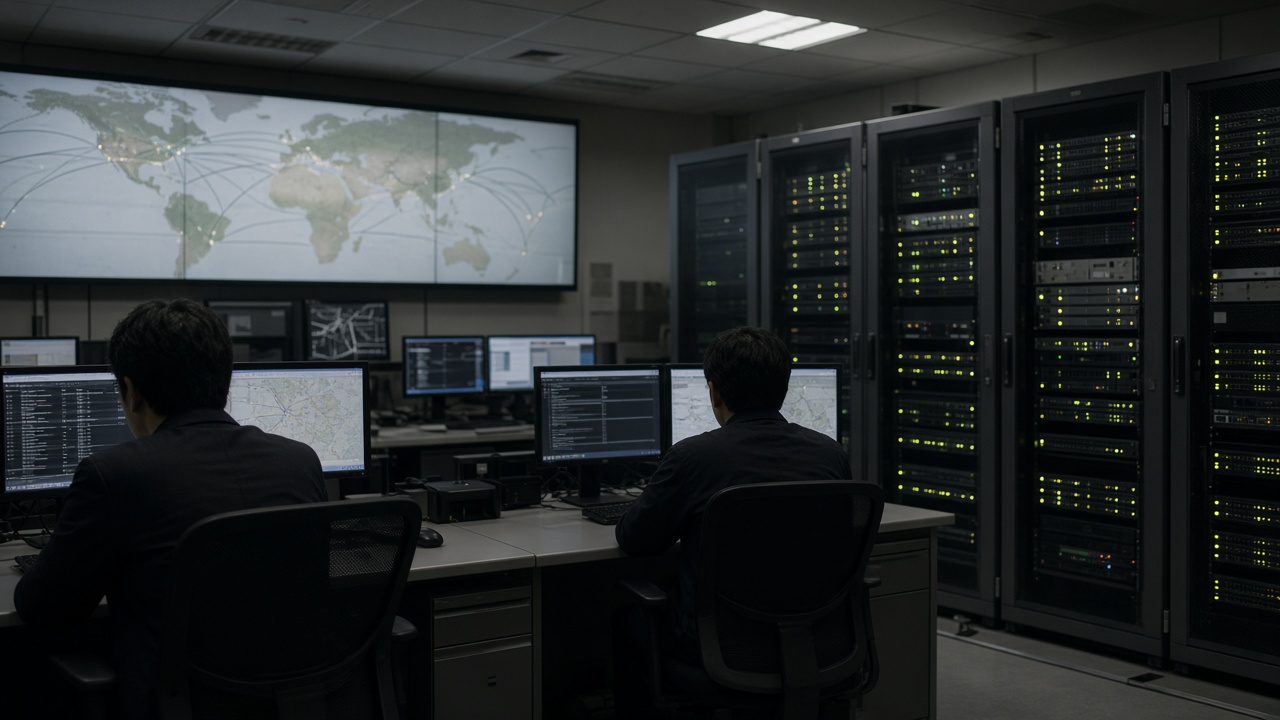
Laws enabling Japan to neutralize hostile servers before they damage power grids, railways, and other critical infrastructure entered force on Thursday, completing a legislative package Prime Minister Sanae Takaichi's government framed as overdue parity with peer democracies facing faster cyberattacks.
The measures, passed in May 2025, authorize police and Self-Defense Forces personnel to access and disable servers overseas when officials judge an intrusion is imminent. Operators of designated infrastructure must report cyber incidents to the government, and a new public-private consultative body will share threat data under tighter coordination rules.
How approval would work
When Tokyo receives intelligence about an attack or a credible warning from a core operator, the National Security Council can convene to weigh neutralization. The Japan Active Cyber Defense Oversight Commission—an independent panel led by former Sapporo High Court chief Hiroko Kondo—must grant final permission before preemptive steps proceed, a safeguard lawmakers inserted after privacy debates over communications monitoring.
Chief Cabinet Secretary Minoru Kihara told reporters on the eve of enforcement that the addition of neutralization powers lets Japan "respond practically" to strikes that outpace conventional incident response. Takaichi wrote on social media Wednesday that the country could no longer rely on passive shields alone.
Reporting duties and industry scope
Electric utilities, rail networks, telecommunications carriers, and other operators on the government's critical list face mandatory breach notifications. Failure to report could expose executives to administrative orders and reputational scrutiny in a market where ransomware against manufacturers and municipal systems has climbed steadily.
The consultative body launched alongside the statutes is meant to funnel vendor telemetry and agency warnings into a single channel, reducing the lag that plagued earlier responses when ministries siloed their own alerts.
What is still coming
Officials emphasize that full-scale monitoring of communications traffic remains scheduled for 2027, when additional facilities and staffing are due online. Until then, neutralization remains a narrow tool tied to specific server targets rather than a standing dragnet.
Opposition lawmakers and privacy advocates had argued during debate that even targeted access overseas could blur civilian-military lines. The oversight commission's sign-off requirement was the compromise that cleared the Diet.
Regional context
Japan's move follows North Korean and criminal campaigns against Japanese ports, aerospace subcontractors, and cryptocurrency exchanges, and coincides with broader U.S.-aligned pressure on supply-chain security in the Indo-Pacific. Allies watching Tokyo's implementation will look for whether the first neutralization order—when it comes—is disclosed in enough detail to reassure the public without tipping operational methods.
For corporate security chiefs, Thursday's start date means fresh compliance checklists: incident playbooks must now include a government notification path, and boards will want clarity on how quickly the oversight commission can convene during a holiday or election period. The laws do not replace private-sector patching and segmentation, but they do give Tokyo a legal basis to act before a worm spreads from a foreign hop into a domestic control network.