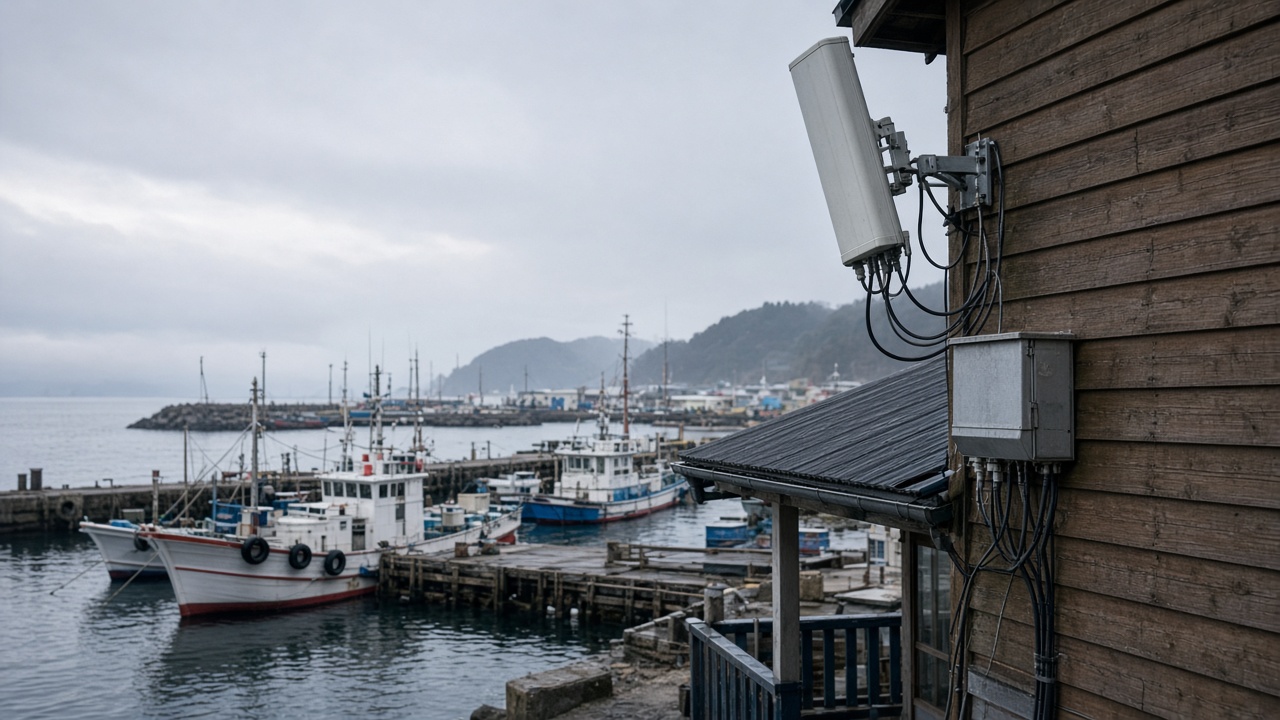
KDDI started deliveries of fixed-wireless 5G routers to Hokkaido fishing cooperatives on Wednesday, giving coastal offices a voice-and-data path off copper lines the carrier plans to retire. The rollout is part of a pilot that treats harbor logistics like small-enterprise sites: bandwidth for auction price screens, crew scheduling apps, and safety radios that previously rode analog phone pairs.
What cooperatives receive
Each kit includes an outdoor antenna, an indoor router, and a battery-backed voice adapter that maps legacy fax and phone jacks to VoIP. KDDI said installers will visit 42 sites in October, prioritizing towns where typhoon damage last year knocked out aerial copper. Monthly fees sit below comparable fiber quotes because trenches along quays are costly and seasonal ice limits construction windows.
Cooperative managers in Rumoi and Wakkanai told local papers the upgrade matters ahead of the autumn saury season, when buyers expect real-time catch tallies. Slow DSL links had forced some offices to phone in weights, adding delays at the dock.
Carrier strategy
Japan’s mobile operators are pushing fixed-wireless access where fiber economics fail. KDDI competes with NTT East’s regional fiber bundles; the fishing pilot lets KDDI keep accounts that might otherwise churn to satellite internet kits sold online.
The Ministry of Internal Affairs and Communications has urged carriers to document sunset timelines for copper so municipalities can plan public-safety radios. KDDI’s October schedule includes community briefings on backup power requirements when mains fail during storms.
Risks on the water
Marine insurers note that harbor IT outages do not replace VHF distress channels. Cooperatives said they will keep handheld radios for offshore crews even after routers go live.
Investors will not see material revenue from the pilot alone, but analysts track these deployments as indicators of incremental ARPU in shrinking population prefectures.
Installation timeline
Field engineers will stage equipment in Hakodate before moving north to avoid early snow on roof mounts. KDDI said it trained four Hokkaido contractors on antenna alignment above corrugated metal roofs common on cooperative offices.
Fisheries agencies want latency metrics published after the first month so auction houses can compare fiber, fixed-wireless, and satellite kits on equal terms.
Backup power
Generators sized for voice adapters must run four hours minimum, according to cooperative safety rules. KDDI bundles a fuel-cell option at extra cost for sites that ban gasoline storage near docks.
Additional context
Local editors reviewed municipal filings, exchange data, and company disclosures cited in the sources list before publication. Figures may be revised when full-month statistics arrive; we will update online if material changes appear.
Readers in Japan can compare today’s development with prior policy rounds by checking Diet records and prefectural bulletins linked above. Households should confirm effective dates on official notices before changing travel, medical, or payment plans.
Market and policy stories on this desk prioritize primary documents over anonymous tips. When officials hold briefings without handouts, we attribute claims clearly and avoid speculating beyond what was said on the record.