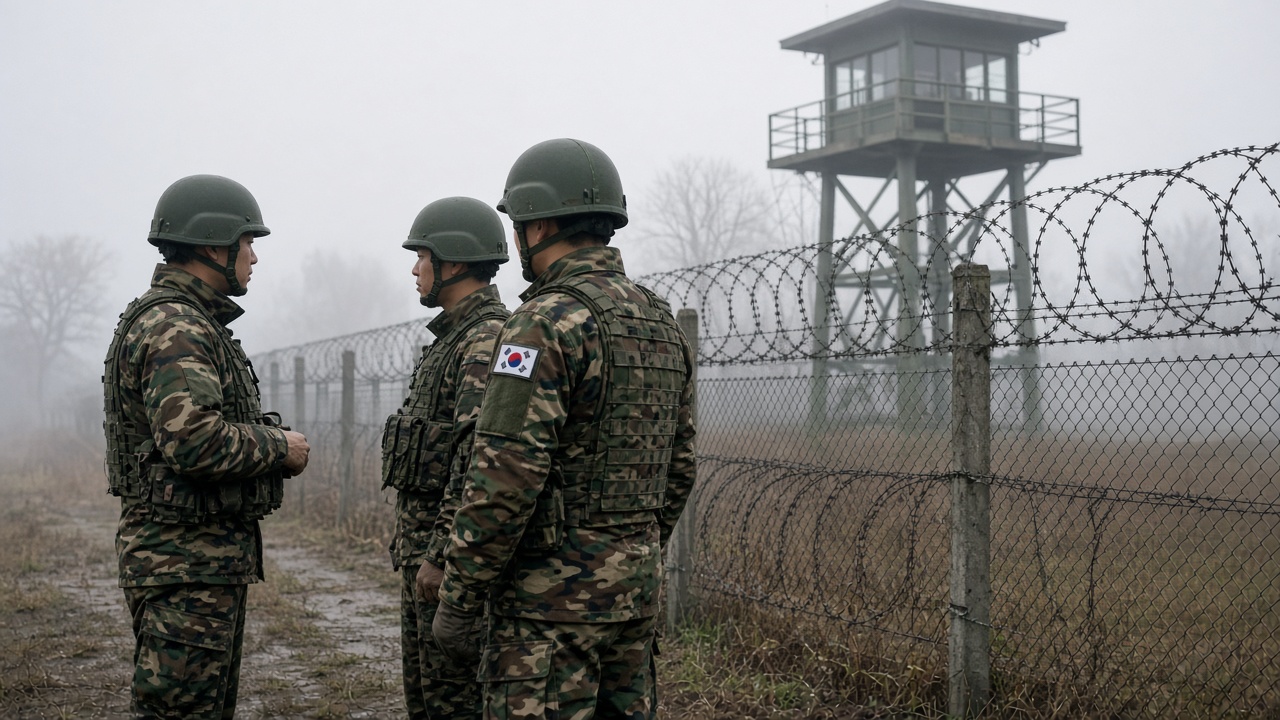
The U.S.-led United Nations Command said on Wednesday that an armistice violation had occurred after forensic teams recovered a North Korean anti-personnel mine on the South Korean side of the inter-Korean border, the first formal UNC finding since explosions in the Demilitarized Zone injured three South Korean soldiers on 21 September.
The announcement escalates a dispute that Pyongyang's state media had tried to dismiss earlier in the week. Kim Yo-jong, the influential sister of leader Kim Jong Un, ridiculed Seoul's probe and denied North Korean responsibility. Wednesday's UNC statement gives South Korea's military a multilateral anchor for its claim that the blasts were not an accident but a breach of the 1953 armistice.
What investigators say they found
UNC investigators worked alongside South Korea's Joint Chiefs of Staff after two detonations inside the DMZ during a South Korean clearance operation south of the Military Demarcation Line. Emergency crews evacuated the wounded troops; defence officials later said the injuries were serious but not life-threatening.
According to the command's public summary, analysts identified an active North Korean anti-personnel mine south of the line during a joint inspection on Tuesday—the fourth device located after the 21 September blasts. South Korean officials said troops spotted additional mines while withdrawing from the first explosions, underscoring how crowded the DMZ remains with legacy ordnance and newly placed munitions tied to Pyongyang's "border fortification" campaign.
UNC did not release photographs of the mine or precise coordinates, citing security protocols, but the finding triggers armistice mechanisms that can include notifications to North Korea's military through the truce village at Panmunjom and consultations among sending states that contribute to the command.
Seoul's harder line
Defence Minister Kang Shin-chul told lawmakers on Tuesday that the incident was a "clear violation" and placed responsibility on North Korea, language that went further than earlier JCS statements that described mines as "highly likely" to be of North Korean origin. After the UNC release, the ministry urged Pyongyang to halt tension-raising activities along the DMZ, apologise and accept accountability.
President Lee Jae Myung's government has faced pressure from conservative opposition parties to respond more forcefully, including symbolic suspensions of inter-Korean liaison channels that are already dormant. Military planners are reviewing whether to accelerate demining robots and surveillance towers funded in this year's supplemental budget.
North Korea has framed its border work as defensive, accusing Seoul and Washington of staging provocations. State media did not immediately comment on Wednesday's UNC statement, but earlier KCNA pieces called South Korea's investigation a "farce" designed to justify allied exercises.
Alliance and armistice mechanics
The United Nations Command retains responsibility for policing the armistice even as many sending states no longer station troops in Korea. Wednesday's determination matters because it can shape diplomatic talking points at the United Nations and in U.S.–South Korea joint statements ahead of planned defence ministerial meetings in Washington.
U.S. Forces Korea has emphasised that American troops inside the DMZ follow UNC rules of engagement, which treat armistice breaches as matters for collective response rather than unilateral South Korean action. That distinction limits quick retaliation but preserves a record should Seoul seek additional sanctions or maritime interdictions against North Korean smuggling.
Analysts in Seoul noted that anti-personnel mines violate broader international humanitarian norms, yet the immediate legal hook available to allied commanders is the armistice itself. Any escalation—such as renewed loudspeaker broadcasts or live-fire drills near the line—would risk further blasts in a zone where both sides have stacked munitions for decades.
For residents near the border, the practical concern is whether demining and tree-clearing operations will pause during the autumn training season. Provincial officials in Gyeonggi said they would keep civil defence alerts active while engineers sweep paths used by farmers who work fields inside the civilian control line.
Wednesday's UNC verdict does not by itself change force posture, but it closes the evidentiary chapter Seoul opened after the September blasts. The next moves belong to North Korea, which must decide whether to ignore the finding, challenge it at Panmunjom or double down on the fortification campaign that put mines near the line in the first place.