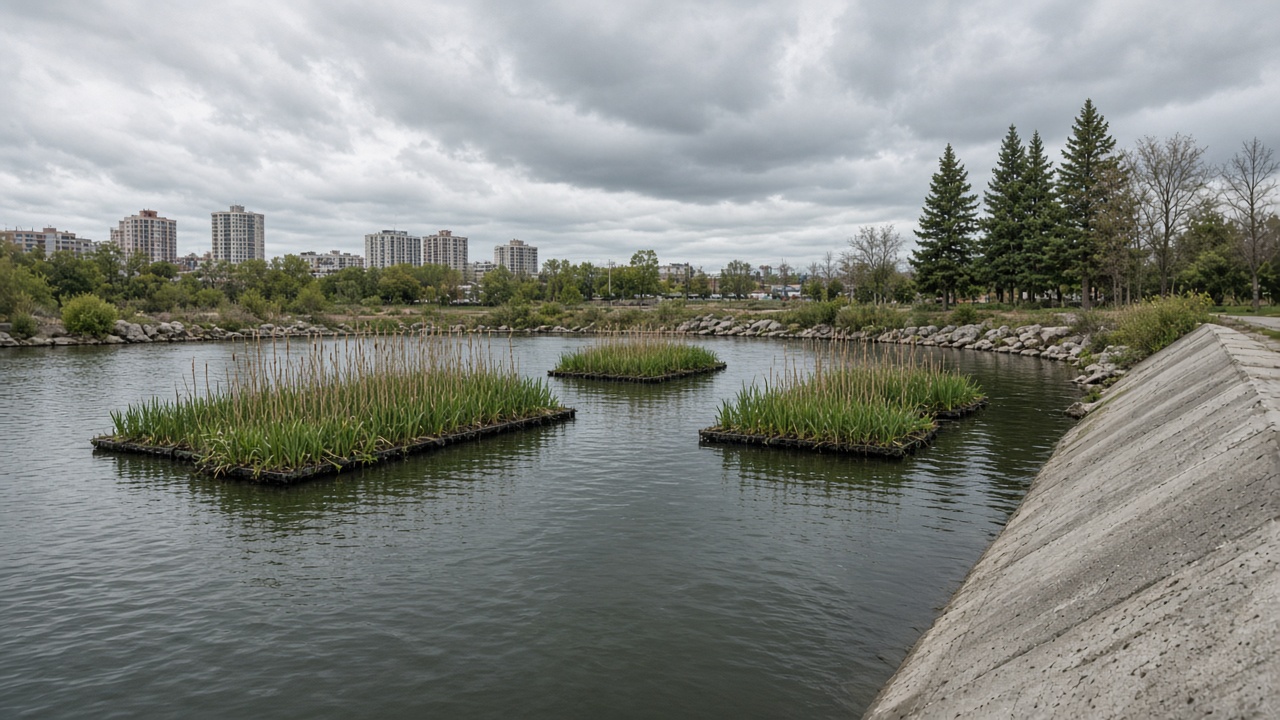
Constructed floating wetlands can remove nitrogen from polluted stormwater at a fraction of the cost of some conventional treatment plants, according to a CSIRO-led international review published this week in ACS ES&T Water.
\n\nWhat the researchers measured
\nScientists from CSIRO and the University of South Australia analysed 11 floating wetland projects across Australia, Pakistan, Canada and the United States, cataloguing capital spending from $22 to more than $3,800 per square metre depending on anchoring, plant species and access requirements. Operating costs ranged from 76 cents to $274 per square metre annually.
\nLead author John Awad, a CSIRO research engineer, said councils and water utilities can now benchmark proposals against real deployments rather than vendor brochures. Nitrogen removal averaged $15 to $183 per kilogram in Australian sites, consistently cheaper than phosphorus removal, which spanned $23 to nearly $5,000 per kilogram because phosphorus binds differently in sediments.
\nWhere councils are trying them
\nLocal governments in South East Queensland and western Sydney have trialled floating mats on detention basins that otherwise algae-bloom after summer storms. Plants uptake nutrients while biofilms on roots process organic matter; harvested biomass must be managed to avoid re-releasing pollutants.
\nDevelopers like the aesthetics compared with concrete culverts, though maintenance crews need safe access for mowing-equivalent harvesting. In developing-country case studies, labour costs were lower, but Australian projects benefited from predictable engineering standards and monitoring probes.
\nLimits and trade-offs
\nFloating wetlands are not a silver bullet for heavy metals or microplastics unless paired with pretreatment. Cold snaps can slow biological activity; bushfire ash loads overwhelmed some pilots until sediments were dredged. Regulatory officers still ask for discharge data comparable to mechanical plants before issuing environmental licences.
\nPolicy implications
\nWith urban stormwater increasingly blamed for reef sediment plumes and closed harbour beaches, nature-based options that publish transparent cost curves give treasurers an alternative to billion-dollar pipe upgrades. The study’s authors urge standardized reporting so Brisbane, Perth and Melbourne can share templates.
\nFor residents walking past a reed mat pond, the visible greenery signals action even when the water still looks brown after rain. The numbers in this paper explain when that signal is also good economics—and when engineers should keep the concrete mixers on standby.
Monitoring and maintenance
Pilots that succeeded long term budgeted for quarterly biomass harvesting and water-quality probes tied to council dashboards. Sites that treated mats as install-and-forget saw nutrient removal taper within two seasons as root zones clogged. CSIRO authors recommend contracts that spell out who owns harvested plant material and how disposal avoids methane releases.
Insurance underwriters are beginning to ask whether floating wetlands reduce flood liability by slowing peak flows; the paper does not settle that question, but it gives risk modellers cost inputs they previously guessed.