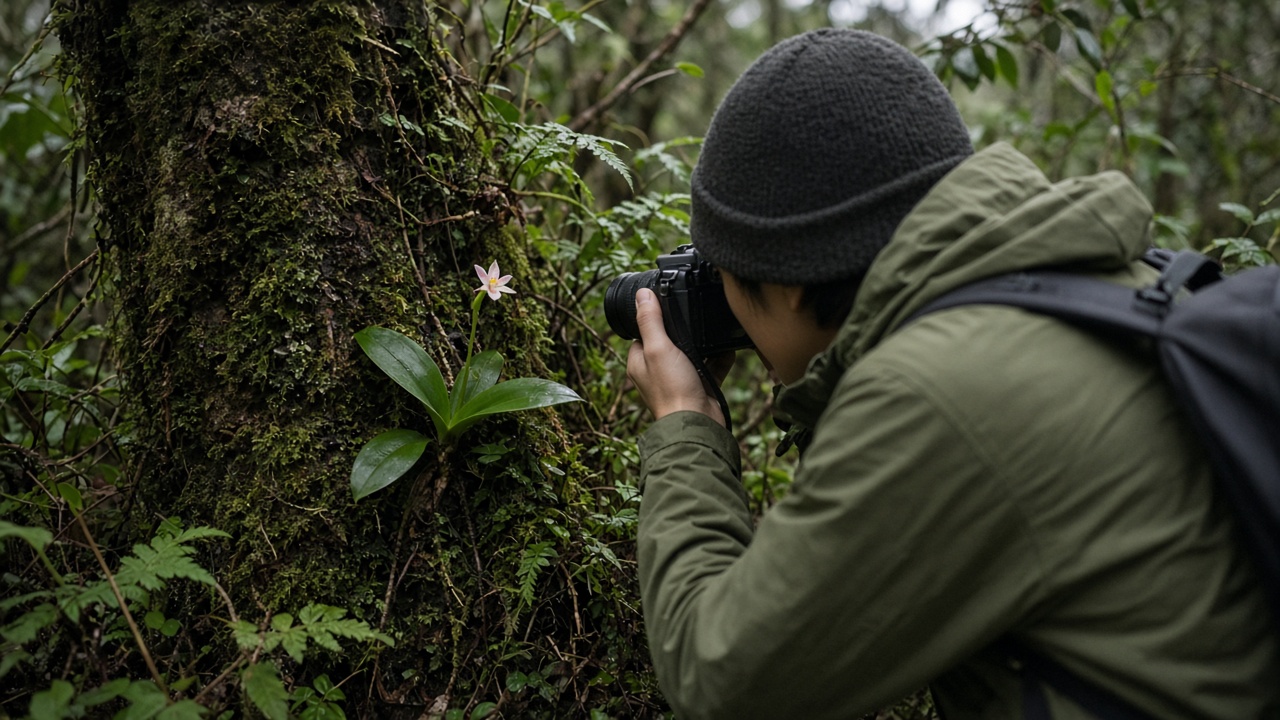
Botanists at Sikkim University catalogued a previously unrecorded epiphytic orchid in the Khangchendzonga National Park buffer during a monsoon-window survey, adding to a genus already stressed by landslides and tourism footfall. The team logged the find at 2,400 metres near Yuksom, where cloud cover shortened daily field hours but kept specimens hydrated for lab work.
Field methods
Researchers paired handheld DNA barcoding kits with traditional morphological sketches because monsoon mudslides blocked vehicle access to higher ridges. They documented 18 orchid taxa in a 4-kilometre transect, one of which did not match existing Botanical Survey of India keys. A preprint posted Wednesday night names the species provisionally after a local Lepcha word for mist.
Conservation stakes
Buffer-zone communities depend on ecotourism and cardamom plots that compete with fragile cliff habitats. Park authorities limit group sizes on the Goecha La trek; the new orchid sits near a rerouted trail opened after the 2023 glacial lake outburst flood. Scientists urged the state forest department to geofence the site without publishing exact coordinates, a standard practice to deter poachers.
Broader science context
The find arrives as India’s northeast monsoon onset nears the Tamil Nadu coast, reminding policymakers that Himalayan biodiversity surveys remain seasonally constrained. Federal grants under the National Mission on Biodiversity and Human Well-being may fund follow-up phenology studies if the preprint survives peer review.
Lab work
Back at Gangtok campus, researchers mounted flower segments on slides while generators hummed through overnight power cuts. Pollinator DNA scraped from petals may reveal whether moths or bees spread the species across ridges.
Tourism balance
Homestay owners near Yuksom hope the discovery draws botanists rather than Instagram crowds; the university plans guided science walks with capped registrations to limit trampling.
Climate link
Warming temperatures are pushing orchid habitats uphill; the team modelled future range loss under moderate emissions scenarios, data park managers may cite when reviewing new lodge permits.
Collaboration
Botanical Survey of India officers will join a spring expedition to confirm flowering cycles, sharing herbarium sheets with Sikkim University graduate students drafting thesis chapters on climate refugia.