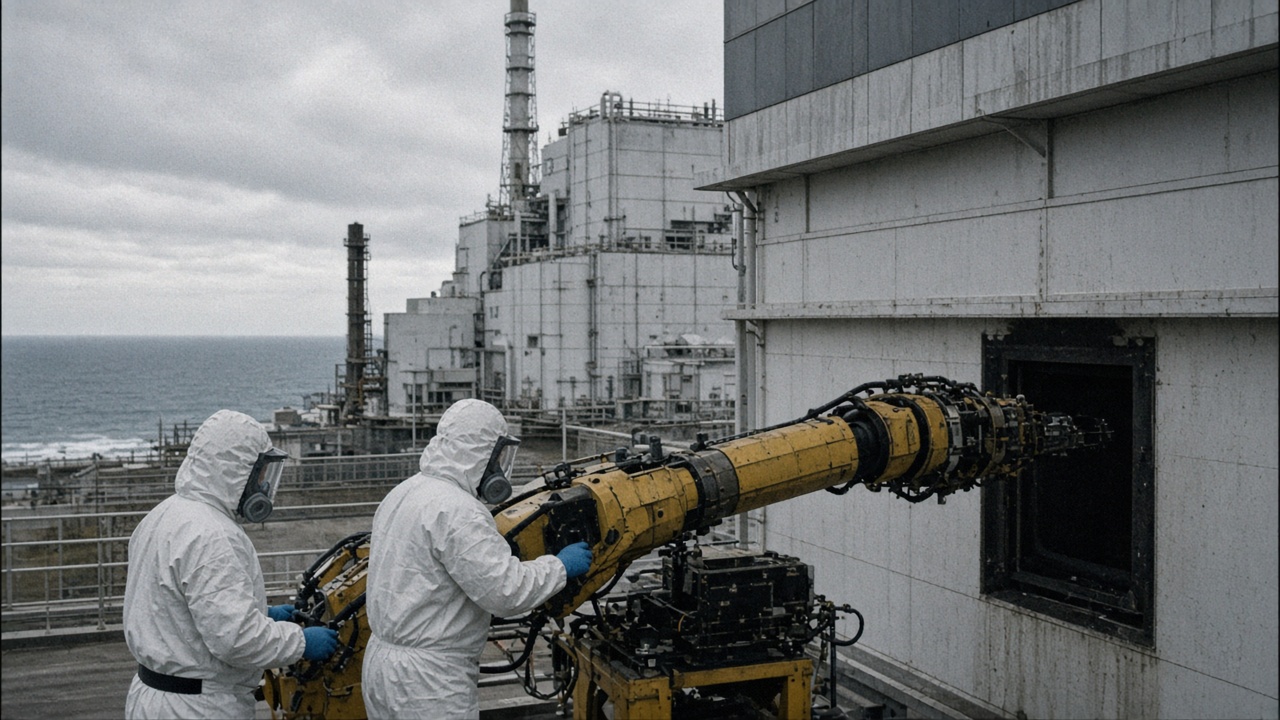
Tokyo Electric Power Company Holdings on Friday began inspecting the interior of the Fukushima Daiichi Unit 2 reactor containment vessel, inserting a robotic arm through a prepared access point to map conditions ahead of a trial removal of nuclear fuel debris. The work marks the first structured look inside Unit 2’s containment since the March 2011 tsunami and meltdown and is scheduled to run about six months.
Why the arm sat idle
Tepco had planned to start the Unit 2 probe around mid-2025, but a malfunction in the robotic arm delayed the program while engineers replaced components and re-tested controls. President Akira Ono of the Fukushima Daiichi Decontamination and Decommissioning Engineering unit told reporters Thursday that he felt relieved the project had “finally reached this point,” acknowledging the slip in a process that already spans more than a decade.
Unit 2 is one of three reactors that melted down in 2011. Unlike Unit 1, where cameras have mapped some debris piles, Unit 2’s interior remained less characterized, complicating estimates of radiation fields and the tools needed for even a small retrieval test.
What operators hope to learn
The immediate goal is not bulk removal but a detailed survey: wall conditions, sediment layers, and the geometry of fuel debris that escaped the reactor pressure vessel. Data from the arm’s cameras and sensors will feed into shielding plans, ventilation routes, and the timing of a trial extraction that Tepco wants to conduct after the survey closes.
Japan’s Nuclear Regulation Authority has insisted that any debris-handling step proceed in increments, with dose assessments published before workers enter controlled areas. Local municipalities in Fukushima Prefecture — still weighing industrial restart and fishing reputations — watch each milestone for signs that timelines are credible rather than ceremonial.
Nearby fishing cooperatives asked Tepco on Friday to publish real-time radiation readings from the arm’s cameras so harbor leaders can reassure buyers ahead of autumn auctions. Environment Ministry officials said they would review any dose data before authorizing the trial debris lift, reiterating that no spent fuel will move until the survey closes.
Broader decommissioning clock
Removing even a token amount of debris would be a symbolic breakthrough for a site where spent fuel pools, contaminated water treatment, and reactor dismantling run on parallel tracks. Tepco’s roadmap still targets full decommissioning over decades, and Unit 3 debris trials on a different pathway remain on their own schedule.
For Japan’s energy policy, progress at Unit 2 is less about near-term generation — restarts elsewhere dominate that debate — than about proving that the hardest post-accident engineering problems can be measured, not just fenced off. The next six months will show whether the robotic arm can survive the heat and radiation long enough to give planners a map they trust.