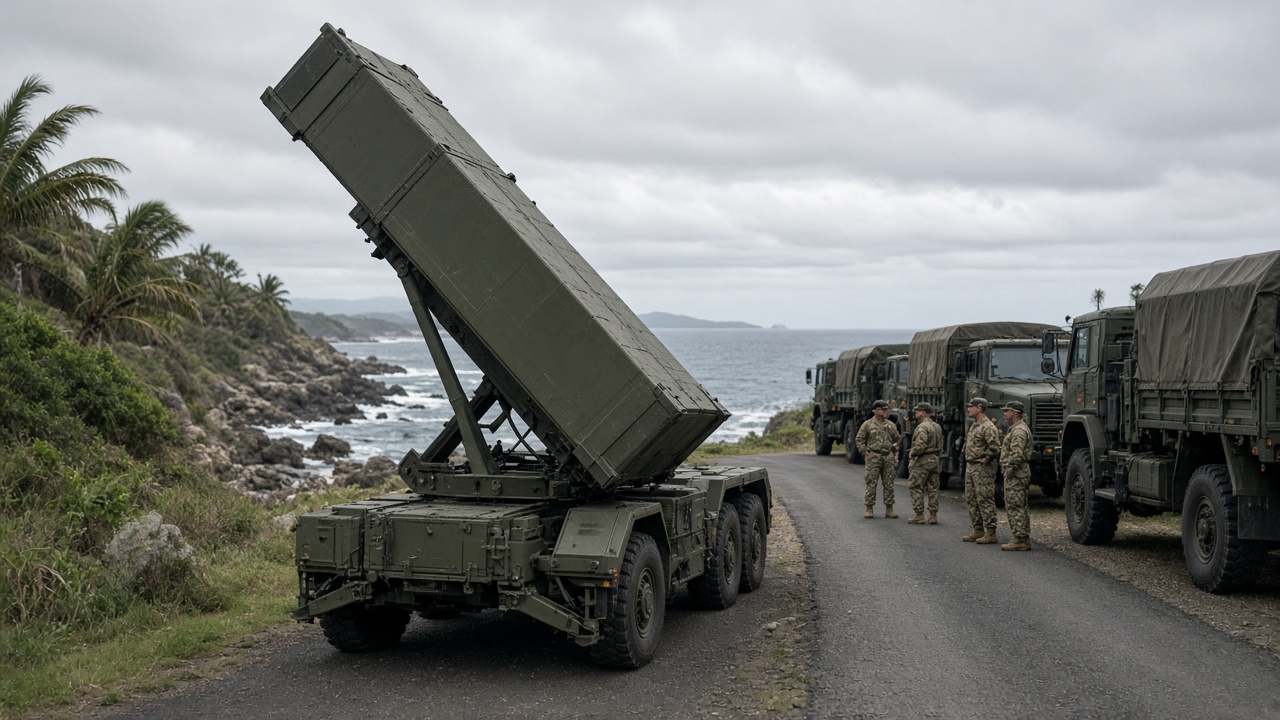
The U.S. military is planning to deploy the Navy-Marine Expeditionary Ship Interdiction System to Japan’s westernmost inhabited island during the bilateral Keen Sword exercise later this month, according to a person familiar with the schedule and an outline published Friday on Yonaguni’s municipal website. NMESIS pairs a ground launcher with the Naval Strike Missile and is designed to hit ships from ashore—capabilities Tokyo and Washington have rehearsed farther from Taiwan, but not on the island that sits about 110 kilometres east of the self-ruled island Beijing claims.
What Keen Sword will test
Keen Sword, held every two years, is among the largest U.S.-Japan drills and this year runs from 19 to 29 October across Japan’s southwestern island chain. The municipal posting indicates Japan’s Self-Defense Forces may also bring anti-ship and surface-to-air missile systems to Yonaguni for the same window, though Japan’s Defense Ministry has not issued a detailed equipment list. For residents who already host a small SDF radar site, the exercise marks a step up in both the range of weapons on the island and the visibility of U.S. Marine units operating beside Japanese coastal units.
NMESIS entered U.S. service after years of experiments meant to give Marines an answer to adversary fleets without tying them to big-deck ships. The system was previously sent to the Philippines for training, drawing criticism from Chinese state media that portrayed the move as destabilising. A similar reaction is likely if launchers appear on Yonaguni, where Chinese Foreign Ministry spokespeople have already warned that permanent Japanese missile plans for the 2030s would raise regional tensions.
Why the geography matters
Yonaguni lies closer to Taiwan than to Okinawa’s main bases, putting it on the map whenever planners game out a crisis in the Taiwan Strait. Japan’s government does not describe Taiwan contingencies in public orders, but joint statements with the United States increasingly refer to “severe security environments” in the southwest islands. Prime Minister Sanae Takaichi has faced pressure from Beijing to walk back remarks last year that suggested Tokyo could mobilise forces if Taiwan were attacked—a debate that any high-profile U.S. missile deployment will feed, even when officials insist exercises are routine.
For the Japan Coast Guard and local fishermen, Keen Sword also means more air and sea traffic, tighter cordons and occasional navigation warnings. Town officials have historically asked for advance notice when live-fire components move nearby; Friday’s published outline appears aimed at meeting that expectation before convoys arrive.
What Tokyo has said publicly
Japan’s Defense Ministry typically withholds unit-level locations until drills begin, citing operational security. Still, the combination of U.S. NMESIS and Japanese coastal missile units on Yonaguni would represent the most capable anti-ship stack ever exercised there, according to analysts who track southwestern island deployments. None of the governments framed the move as a permanent basing decision; NMESIS is slated to depart after Keen Sword unless follow-on agreements change the timeline.
Chinese diplomats have not commented on Friday’s outline. Taiwan’s Foreign Ministry has not issued a statement on the exercise plan. U.S. Indo-Pacific Command declined to confirm equipment lists when asked by reporters earlier this week, referring questions to the bilateral exercise spokespersons who will brief once Keen Sword opens.