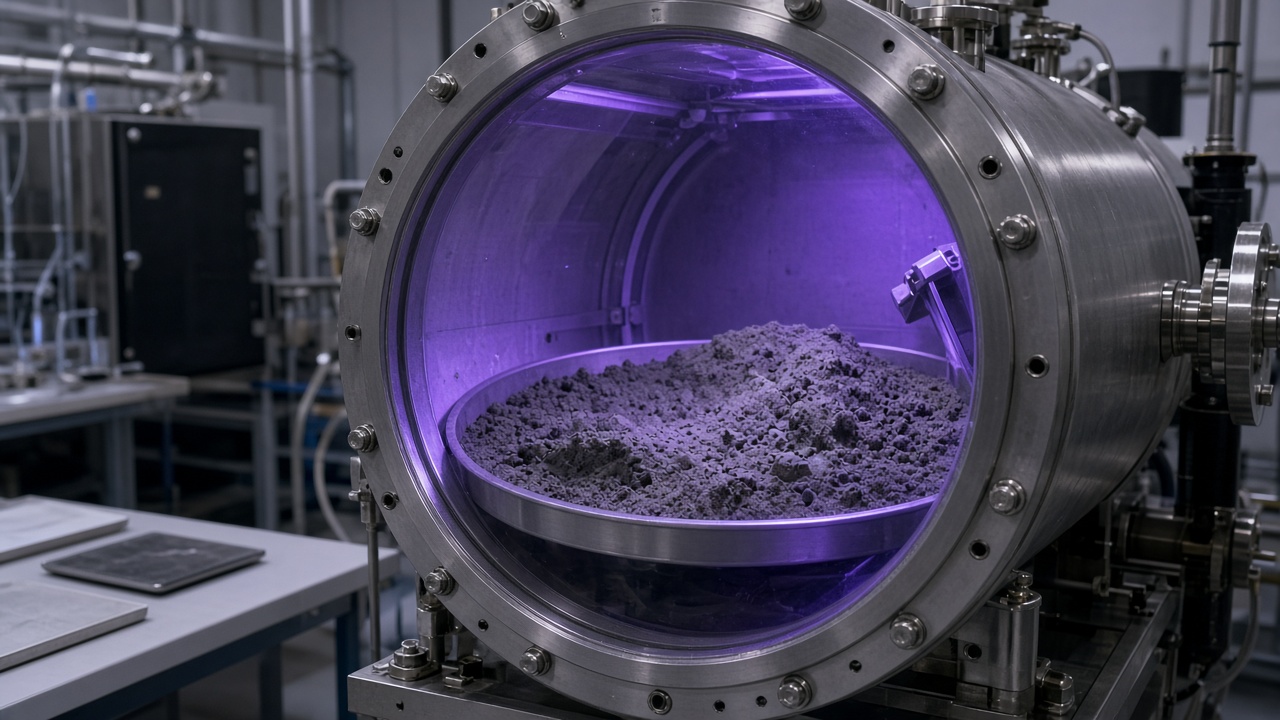
A KAIST aerospace engineering team led by Professor Hyun Jung Kim is advancing a Lunar ElectroStatic Power Generator concept that would harvest energy from negative surface charge on the Moon, offering a path to overnight power without relying on batteries alone.
From maps to megawatts
Researchers began by building one of the first near-global electrostatic potential maps of the lunar surface, then tested early prototypes under simulated lunar conditions. Modeling published through the university's breakthroughs portal suggests a full-scale array could exceed 500 watts under realistic potentials, enough to support instruments during the two-week lunar night that cripples solar-only missions.
Unlike radioisotope or chemical systems, the proposed harvester would tap charge built up on regolith as it interacts with the solar wind and local plasma environment. The approach could complement solar arrays for landers, rovers and eventually in-situ resource nodes that Korea's space agency wants for recurring observation of the peninsula and disaster monitoring.
October rover finals on the horizon
The work arrives as the Korea AeroSpace Administration prepares the 2026 Korea Space Rover Challenge finals in Daejeon on October 23-24, co-hosted by KAIST and the Korea Atomic Energy Research Institute. While that competition focuses on surface mobility rather than power beaming, both efforts feed Korea's push to move beyond single-launch demonstrators toward constellations and sustained lunar infrastructure.
Funding and next tests
The electrostatic power research is supported by Korea Institute of Geoscience and Mineral Resources basic-science funding and earned a silver prize at the 2025 Hanwha Space Hub-KAIST Space Grand Challenge. Ongoing 2026 tasks include circuit integration, large-area array scaling and materials tuned for abrasive regolith.
If flight-readiness reviews eventually green-light a demonstrator, Korea could offer partners a lightweight night-power option distinct from nuclear sources, a niche that matters as NASA and commercial landers plan longer stays at the south polar region.
Industry partners at Hanwha Space Hub say electrostatic harvesting could reduce battery mass on future Korean lunar lander concepts now in early trade studies.
Industry partners at Hanwha Space Hub say electrostatic harvesting could reduce battery mass on future Korean lunar lander concepts now in early trade studies.
KASA's upcoming Nuri launch carrying additional smart constellation satellites will test manufacturing cadence separate from KAIST's power research, but both programs feed export pitches to Southeast Asian partners seeking Earth-observation data.
Editors note that official releases, not market chatter, govern the figures cited above.